


Manchester United CEO Omar Berrada gave an exclusive interview to Sky Sports. In the third part of this interview, Berrada explained in detail Manchester United's transfer strategy over the past two summer transfer windows, discussing the team's midfield, defensive, and attacking personnel, as well as the club's commitment to transfer discipline. He also responded to questions about Bruno Fernandes' contract extension, JJ Gabriel's departure, and how Manchester United balances signing experienced players with developing young talent.
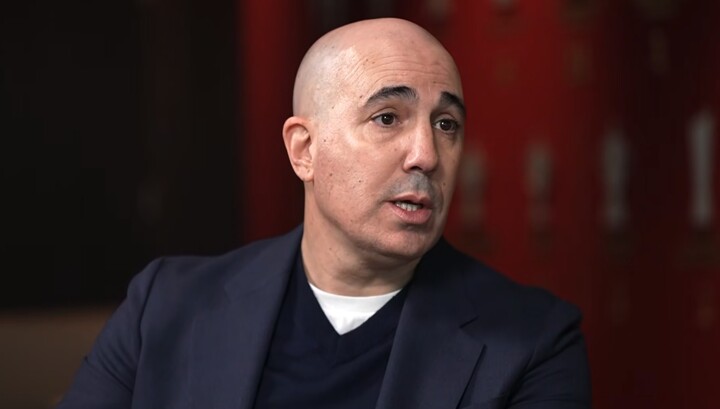
Reporter: Do you feel you achieved that last summer?
Berrada: You have to put it in the context of the last few years. In the summer of 2025, I think the recruitment team was widely praised for signing four players: Senne Lammens, Matheus Cunha, Bryan Mbeumo, and Benjamin Šeško. They performed exceptionally well, helping the team qualify for the Champions League.
Looking back at this summer, we entered the transfer window with clear goals, and of course, different dynamics were at play. This was probably one of the most inflationary transfer windows in terms of transfer fees. Over the past few years, we have publicly and consistently emphasized that we must maintain discipline, make the right decisions, and sign the right players the team needs at the right time and for a reasonable price.
Looking back at the 2026 summer transfer window, I know we received a lot of criticism, but we are actually happy with the players we signed. We believe Carlos Baleba, Tielemans, Andrey Santos, Dalot, and let's not forget we welcomed back Marcus Rashford, who performed exceptionally well during his loan spell at Barcelona. We believe these five new signings fundamentally improved the squad.
Indeed, we lost Casemiro, a top player who gave a lot to the club; we also lost Manuel Ugarte, who suffered a severe ACL injury. Therefore, our focus at the time was clearly on strengthening the midfield because, when the transfer window opened, the only truly available midfielder we had was Mainoo. So, we wanted to strengthen this position, and we did.
Looking at other positions on the pitch, there was a lot of discussion about the defense, but our consideration at the time was that we had nine players in defense who could play various positions in a back-four system, so the squad depth was sufficient. Therefore, our main focus was on midfield signings. However, we were always looking for opportunities, and it was widely reported that we sought to strengthen the left-back position.
Reporter: But looking back now, do you feel the team is a bit stretched at left-back and center-forward?
Berrada: Indeed, Benjamin Šeško's injury was a problem for us, and very unfortunate. But upfront, we have many options who can step up: Zirkzee, Bryan Mbeumo can also play center-forward, Matheus Cunha can also play center-forward, and he sometimes plays center-forward for the Brazilian national team. So, we are not really concerned about the configuration of our attacking players.
As for the defense, we did encounter injuries. De Ligt's injury layoff was longer than expected, and Luke Shaw unfortunately suffered a muscle injury, keeping him out for five to six weeks.
So, could we have signed an additional defender to enhance squad depth and quality? Yes, but only if we could find the right player and sign him at a reasonable price. If we spend forty or fifty million pounds on a player we are not convinced will significantly improve the team, it's meaningless. The key remains maintaining discipline and signing the right people who can drive the team forward when the right opportunity arises.
Reporter: Do you think this "discipline" can bring Manchester United back to the heights it truly desires, such as winning the Premier League? Is this only achievable when you start competing fully and signing players of the caliber and price tag of, say, Elliot Anderson and Morgan Rogers this summer?
Berrada: If you look back at this club's journey over the last five or even ten years, it has always been one of the biggest spenders in world football. So, to bring in top players, investment is certainly required; sometimes you even need to pay more than expected.
But what I mean by discipline is not overspending on players who may not ultimately improve the team. Because when you sign a player who doesn't perform well at Manchester United, it becomes extremely difficult to offload him or recoup the expected transfer fee, and this can drag the team down.
Therefore, maintaining discipline does not mean refusing to spend big money on top players. We have ambitions to win trophies, whether it's the Premier League, Champions League, or domestic cups, and for that, we need top talent. When the right opportunity arises, we will not hesitate to spend.
But we absolutely do not want to spend for the sake of spending. We also firmly believe that we must find solutions from within the squad, whether it's giving opportunities to young players from the academy or being tactically creative and playing players in different positions. It's a combination of all factors. The role of the football director, coaching staff, and recruitment team is to work together to find the best combination and achieve the required level of strength and squad depth.
Reporter: Speaking of players, I'd like to ask about some high-profile players in the squad whose contracts are nearing expiration. Many have a one-year extension option, but I particularly want to ask about Captain Bruno Fernandes. Reports suggest he has rejected several contract offers, and what is the current progress of your negotiations with him? Do you hope he stays with the team long-term?
Berrada: As I said before, we have immense respect for Bruno. We are very fortunate to have him as captain. What he has done for this team over the past six or seven years is incredible, and last year he won almost every individual award available. We are proud to have such a captain. We are indeed in discussions about a new contract, but I prefer to keep that confidential; it's a matter between him and the club behind the scenes.
Reporter: I'd also like to ask about the situation with JJ Gabriel. For talented young players aged fifteen or sixteen, it seems to have become a real battleground for major clubs. Manchester United fans might ask: has the club done everything possible to keep him?
Berrada: We did everything we could, absolutely. Don't forget, JJ is a very young child surrounded by enormous media attention, and our primary concern is his physical and mental well-being. The academy and colleagues who have worked here for many years have put in tremendous effort and greatly helped his development. We still believe that Manchester United is the best stage for him to continue his career and grow. This club has a long tradition of developing and giving opportunities to young players, as everyone has seen with Shea Lacey this season, and Kobe has also performed exceptionally well in recent years. We are never afraid to rely on young players.
But he and his family have decided to leave, and we can only wish him all the best. We want players to want to stay here and view playing for Manchester United as an honor.