


Bruno Fernandes gave an interview to Neville on Sky Sports, in which he reviewed the reasons for the turnaround in Manchester United's season. He said frankly that the team's collapse during the trough was not a tactical problem, but more due to a lack of confidence. He introduced the division of labor between Carrick and the coaching team, saying that the team now works together in tacit understanding. In addition, Bruno Fernandes also said that he has learned to restrain his emotions on the field and remain calm in most occasions, growing into a more mature leader.
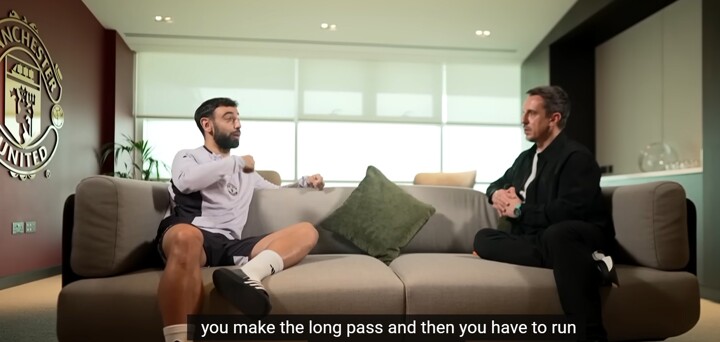
Q: Before Christmas, the team's form was mediocre in the stage against Wolves and Everton. After that, Fletcher temporarily led the team and rebounded somewhat. Carrick took over and faced Manchester City and Arsenal. In a short period of time, the team's entire season trend was completely reversed. What exactly happened during that time?
A: We first played Manchester City. Facing a top powerhouse at Old Trafford, we must show 100% focus and intensity, and the whole team was very motivated.
Fortunately, we then played Arsenal. Facing the top two strong teams in the league in a row will force you to do every detail to the extreme and not dare to relax at all. When playing against mid- and lower-ranked teams, players tend to relax and think, "We've won against strong teams, so this one is a sure win." The defense can certainly remain solid, but once the focus declines, it is easy to lose points unexpectedly. Facing Manchester City and Arsenal in a row kept us highly focused. These two teams have top players, and any mistake will be punished. After defeating the top two strong teams in the league, we gained great confidence and were sure that we could compete with any strong enemy, and then we moved towards higher goals with all our hearts.
After that, against West Ham United, we didn't play badly, but we didn't adapt to their deep defensive tactics. Previously, opponents would give us plenty of possession and time, but West Ham United chose to defend deeply and look for counter-attacks. We underestimated their tactical deployment. Luke Shaw had a great chance to score from a corner kick but failed to seize it, and the game situation was reversed. The opponents launched many counter-attacks and immediately stole the ball back. We ultimately failed to win, and although we had a chance at the end, we could only get a draw. In the past, we would have collapsed mentally once we conceded a goal, but now this mentality has completely changed.
Q: During that trough, the team was demoralized and mentally collapsed once they conceded a goal. You yourself are a very confident player. Why did the team lack resilience at that time?
A: The root cause is still the performance trend and psychological state. During Ruben's coaching period, we controlled the situation in most games and limited the opponent's shooting opportunities in the penalty area, but the number of goals conceded was still high. It was very puzzling: we obviously rarely let the opponent enter the penalty area, but as long as the opponent got a chance, they would definitely score. This is not a one-sided problem for the defenders or goalkeeper, but a hidden danger for the entire team.
We controlled the game, created a lot of chances, but couldn't convert them into goals. The opponent's few sporadic chances were fatal, which seriously hit the team's confidence. We obviously played very well, created good opportunities but wasted them, and the opponent could score with one chance, so morale was inevitably frustrated. Like the game against Bournemouth, we led twice, but in the end we ruined the game and lost points in a similar way one after another.
Obviously the overall performance was dominant, but we were never able to seize the opportunity, and the opponent seized sporadic opportunities to score, so the mentality naturally became worse and worse.
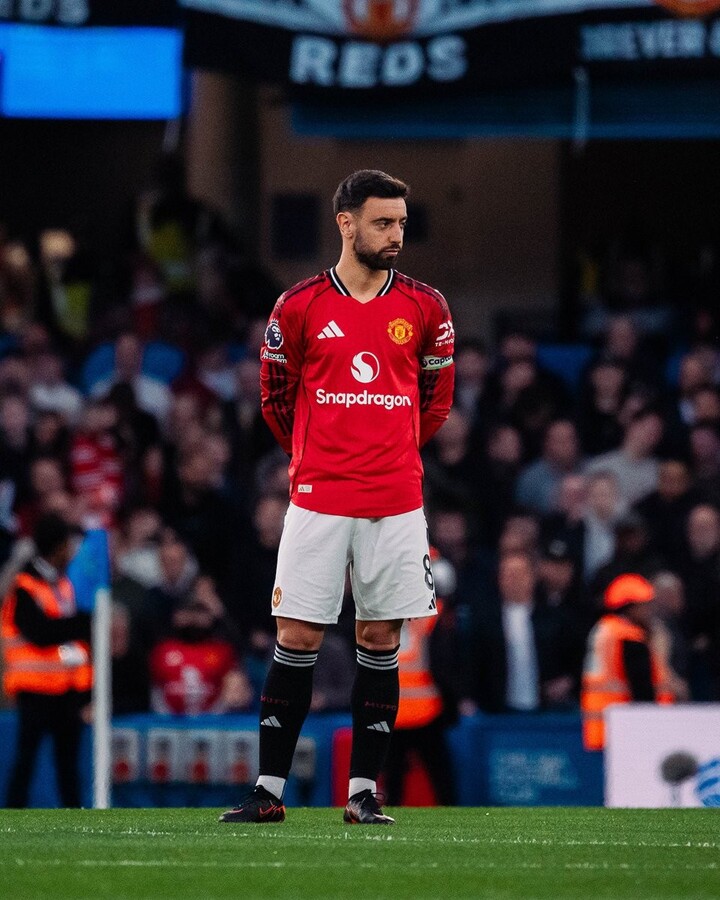
Q: Was the tactical system at the time also a contributing factor?
A: I don't think so. We can limit the opponent from entering the penalty area, which means that there is no problem with the defensive formation and positioning. The offensive end can also create a lot of opportunities, and the expected goal data is also considerable. The problem is purely a lack of confidence.
Q: Just like a striker, after missing consecutive opportunities, even if the training status is good, the confidence in the game will decline. Salah this season is an example. He was originally a top Premier League scorer, but he also encountered a goal drought. This is never a decline in ability, but just falling into a confidence trough. Players will become eager to achieve success and complicate the way they handle the ball, which in turn makes the state worse.
A: That's right.
Q: Let's talk about the division of labor and cooperation between Steve Holland and Michael Carrick. Who leads the daily training? Who presides over the team meetings?
A: Carrick is the final person in charge. All training arrangements and team meetings are led by him, but if Holland has any supplementary opinions at the end of the meeting, Carrick will give him space to speak.
After training, Holland will stay on the field more to communicate with the players. If he wants to speak to the whole team, he will first get Carrick's consent.
The coaching team has a clear division of labor: Trass is mainly responsible for the forwards, and Woody and Johnny lead the defenders. Carrick, with his midfield experience as a player, focuses on coaching the midfielders.
The entire coaching team cooperates very well. Holland does a very good job, often talking to players one-on-one to understand their feelings, confirm whether they have fully understood the tactics and adapted to the current situation, and also collect everyone's feedback on the tactics and schedule.
The two work together very well, and they are both fully committed to training preparation, which is generally coordinated and controlled by Carrick.
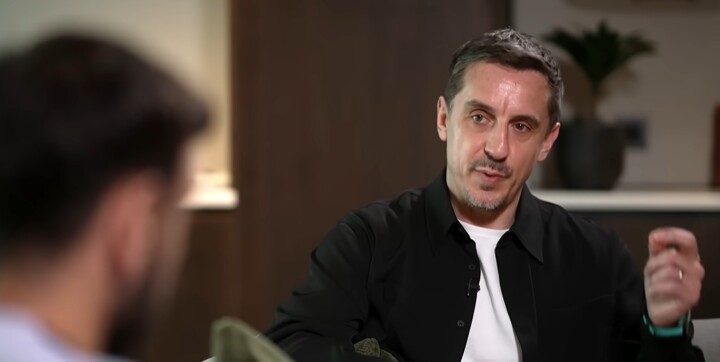
Q: A few years ago, I also made a lot of criticisms of you. Did you think those comments were unfair at the time? Now the public opinion about you has changed, and you seem more calm and composed, and you have gained more recognition. Do you agree with this change? Do you think the criticism was unfair at the time?
A: I wouldn't say those criticisms were unfair. Everyone has the right to express their opinions, and the angles from which they view things are different. I see this very clearly. I have always been deliberately drawing a line between criticism and praise. I will not be blinded by praise, nor will I be defeated by negative evaluations. Everyone in football, of course, prefers to be praised rather than criticized.
As time goes by, I have also learned to better cope with the pressure on the field and media attention. Manchester United is always the focus of public opinion, and the exposure is far greater than other clubs. In the era of social media, traffic and headlines often influence public opinion, which is understandable. What I dislike most is not objective criticism, but unfounded rumors - outsiders do not understand the real situation, and then arbitrarily speculate on my thoughts and intentions, which is what bothers me the most.
Q: Your past on-field physical emotions were very outgoing and full of passion, but you have been much more calm and steady in the past year or two. It can be seen that you are still passionate about the game, but you are indeed much more mature and restrained.
A: People always transform as they grow, learning to adapt to the teammates and environment around them. I am slowly learning how to get along with teammates with different personalities: some people need me to loudly motivate and drive them, while others need gentle communication. Too intense emotions will affect their state. I am still constantly polishing myself and growing in all aspects.
When I first joined Manchester United, my leadership qualities and outgoing passion were praised by the outside world. When the record was low, the same characteristics were criticized. Now that the team's record has rebounded, everyone has re-recognized my leadership.
I have learned to adjust my way of dealing with things. When the team's situation is not good, I still feel lost, but I have learned to stay calm and manage my emotions in most occasions.