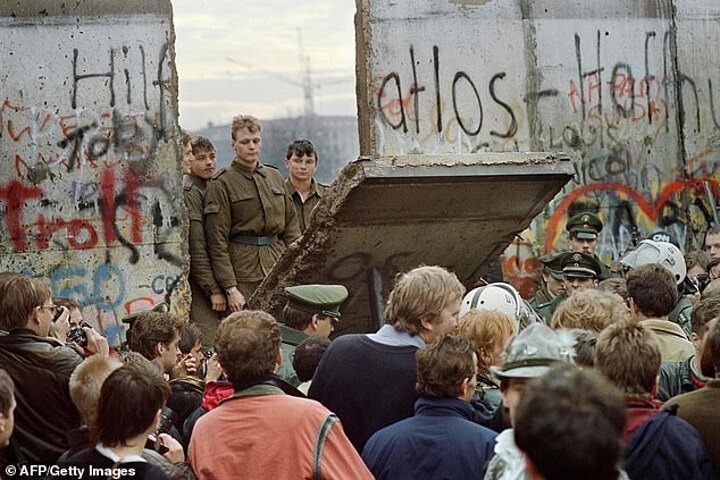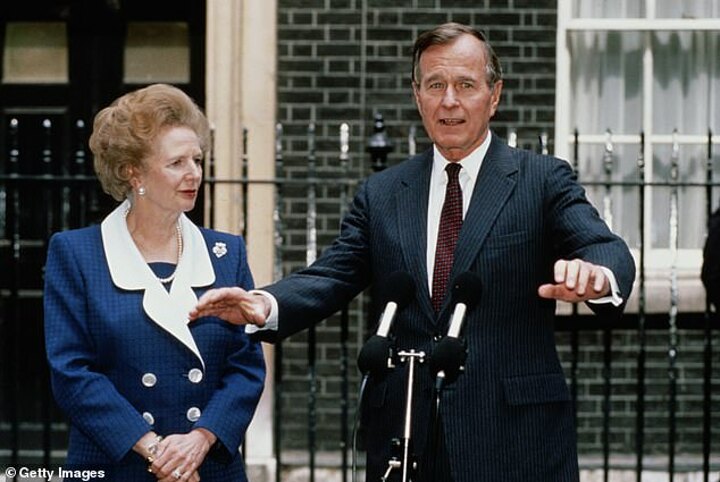


Black Box are top of the UK singles chart with their hit Ride on Time, NASA's Voyager 2 space probe is beaming back images of Neptune and the Iron Curtain is crumbling as Eastern Europe exploded in revolution.

Manchester United have just been hammered 5-1 by their bitter rivals Manchester City at Maine Road and their manager, Alex Ferguson, is facing the sack.
His team have been dismal since the start of the season, taking just seven points from their opening seven games and looking more like mid-table filler to a team who can challenge Liverpool's dominance.

The dreadful performances come against the backdrop of Michael Knighton's efforts to buy the club from Martin Edwards in a £20million takeover.
It is September 23, 1989 and this is the last time United started a league campaign so poorly.
After Ole Gunnar Solskjaer's United drew 1-1 with Arsenal on Monday night, their ninth point from seven games leaving them in 10th position in the Premier League, you have to go back 30 years for a worse start at Old Trafford.
It was a tumultuous time at United both on and off the field, but decisions made during 1989-1990 would prove a turning point in the club's history.
At that time, it had been 22 years since United last won the league championship and 21 years since their famous European Cup triumph under Sir Matt Busby.
Though a useful cup team, the intervening two decades had seen United suffer in the long shadow of their Merseyside rivals Liverpool and to a lesser extent, Everton.
Between 1977 and 1988, Liverpool had won eight league titles, not to mention four European Cups, and memories of Mancunian dominance at home and abroad from the 1960s were fading.
In November 1986, United sacked manager Ron Atkinson and replaced him with a no-nonsense Scot who had built up Aberdeen into a club that smashed the Old Firm duopoly north of the border.
In his first full season at Old Trafford, Ferguson led United to a second place finish in the First Division but the nine-point gap to champions Liverpool confirmed there was much still to be done.
It couldn't be sustained - in 1988-89, United dropped like a stone to 11th, finishing between Millwall and Wimbledon in the table.
Ferguson knew his team was a work in progress, however, and the summer of 1989 had seen old faces Paul McGrath and Norman Whiteside turfed out and some eye-catching arrivals.
In came defender Gary Pallister from Middlesbrough for £2.3m, a club record amount and the second highest fee ever paid by an English club. He was joined by £1.5m Neil Webb and £750k Mike Phelan, both midfielders.
48 hours before the start of the season, news broke of Knighton's takeover bid and the opening game of the season at home to Arsenal is remembered for the sight of Knighton, in full United kit, performing keepie-uppies on the pitch to try and win favour with the fans.


The season started well enough with goals by Steve Bruce, Mark Hughes, Webb and Brian McClair earning am emphatic 4-1 win over Arsenal.
That nourished hopes that United could mount a serious title challenge but things quickly went wrong. Successive defeats to Derby County, Norwich City and Everton in late August and early September fuelled speculation over Fergie's future.
United were a lowly 16th in the table and the papers reported that former Everton manager Howard Kendall was about to be appointed.
They responded by splashing out in the transfer market (these being days long before transfer windows of course) and bought tough midfielder Paul Ince from West Ham and forward Danny Wallace from Southampton.
But things got much worse. The 5-1 thrashing at the hands of City, popularly known as the 'Massacre of Maine Road', represented a fresh low with Fergie looking on stony-faced from the bench as his side were cut to shreds.

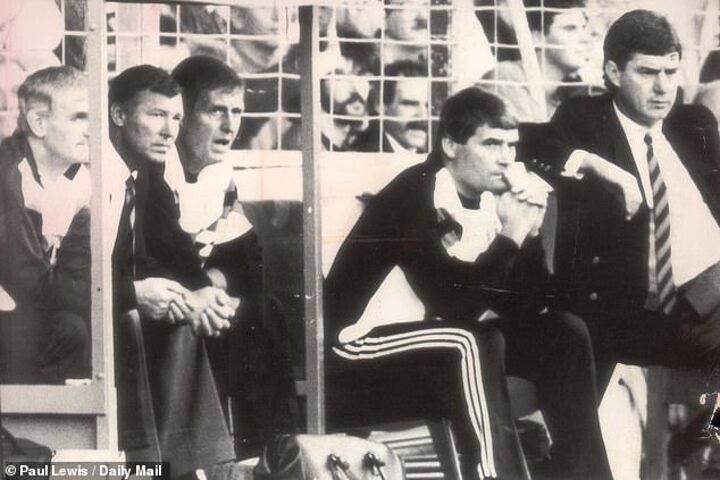
As Ferguson recalled in his autobiography, Managing My Life: 'We were slaughtered 5-1 in the most embarrassing defeat of my management career.
'After the game, I went straight home, got into bed, and put the pillow over my head. A sense of guilt had engulfed me.'
He had been serenaded by chants of 'Fergie must stay' from the City fans in the closing minutes, the away stand long since vacated.
It may have been an injury-depleted United team, with Bruce, Webb and Bryan Robson all missing, but that cut little ice with angry fans.
Pallister recalled being confronted by 'four burly United fans' when he reported for training on the Monday morning.
'They told me I wasn't fit to wear a United shirt, we shouldn't have sold Paul McGrath, I was a 'disgrace' to the club,' he recalled. 'They really ripped into us and it was quite frightening.'

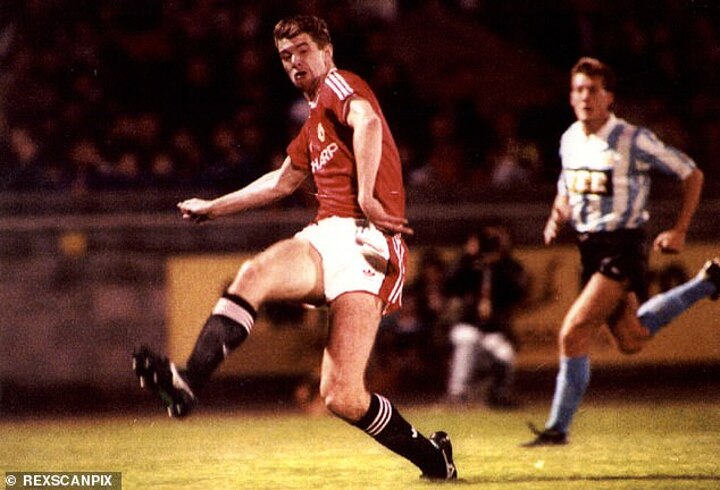
But despite all this, the club kept faith with Ferguson, even offering him a new contract until the end of the 1992-93 season, which he accepted.
By October, Knighton's takeover bid was over and there was a minor recovery on the field.
However, United's form declined dramatically in December with a 1-0 loss at Arsenal on December 3 starting a 10-match winless league run that wouldn't end until February 10. It was relegation form.
On December 9, when United fell behind at home to Crystal Palace, fan Pete Molyneux unfurled the now infamous painted bedsheet that read '3 years of excuses and it's still crap... Ta ra Fergie.'
At the time, it received cheers and applause from fans inside Old Trafford but the turning point wasn't far off.

Ferguson received another vote of confidence from United's board at the turn of the year but before their FA Cup third round tie at Nottingham Forest it appeared the end was nigh.
Although Kendall had been recently installed as City's manager, he remained a candidate to replace Ferguson, as did Terry Venables, Brian Clough and Bobby Robson.
In what proved to be United's sliding doors moment, Mark Robins scored the crucial winner at the City Ground that took United through in the Cup and bought Fergie some breathing space.

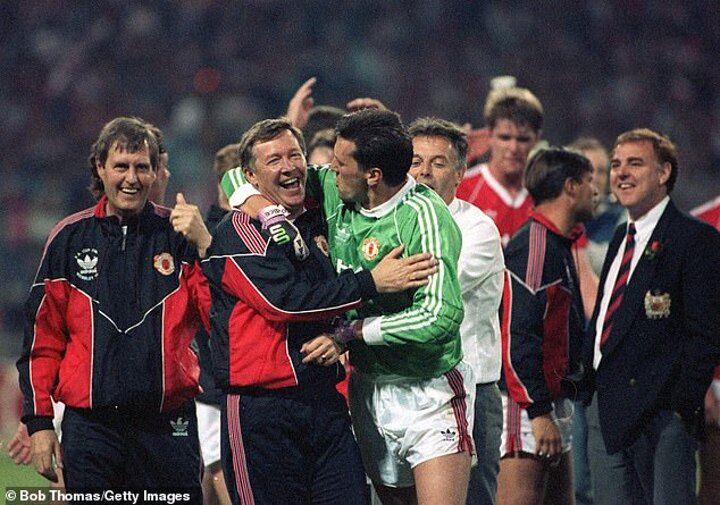
The fact they lost to Derby and Norwich in their next two games - and ultimately finished 13th in the table - proved irrelevant as they went on to lift the FA Cup, beating Crystal Palace in a replay.
It was the first of 38 trophies Ferguson would win as United manager over the next 23 years.
Solskjaer will only hope that this season's below-average start will translate into such spectacular success.
THE WORLD IN 1989