


The arrival in 2011 of Russian billionaire Dmitry Rybolovlev gave a major boost to a club that had already reached significant heights in European soccer.
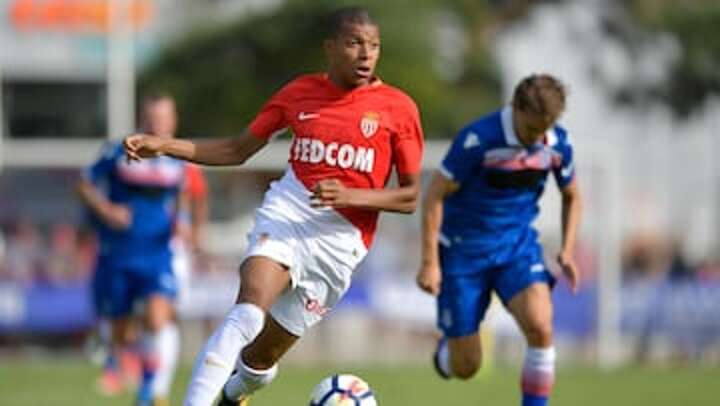
After a few major investments in players such as James Rodríguez and Radamel Falcao – about $49 million each at the time – Monaco built a dazzling team that reached its peak by making the Champions League semifinals in 2017. That outstanding generation of players proved extraordinarily profitable for the Principality club.
Between the summer of 2017 and the summer of 2018, Monaco sold off the backbone of that squad in a series of deals that brought in more than $540 million. Standout sales included Kylian Mbappé ($194 million), Thomas Lemar ($78 million), Benjamin Mendy ($62 million), Bernardo Silva ($54 million), Fabinho ($49 million) and Tiemoué Bakayoko ($43 million). In fact, since 2014 Monaco has come close to $1.1 billion in player sales, a trend that began with James Rodríguez’s transfer to Real Madrid for about $86 million.
Forged in fire
But there is something that makes Monaco even more special. It is not just the art of selling, but the art of making players. Long before the arrival of the Russian magnate, the club’s academy was already one of the most respected not only in France, but across Europe. Its graduates include Thierry Henry, David Trezeguet, Emmanuel Petit, Lilian Thuram and his son Khéphren (now at Juventus), Anthony Martial, Yannick Carrasco and, more recently, French international Maghnes Akliouche. Above them all, though, Mbappé stands apart.
Inside ‘La Diagonale’
The nerve center of this entire talent-development project is La Diagonale, a complex designed with every resource needed to produce elite players. It includes housing and schools, training and recovery centers, a medical clinic and, above all, a comprehensive system of sporting and day-to-day support for the more than 70 players who train there each season. More than 50 staff members work at La Diagonale. “We are proud that Monaco is regularly cited as a leading club in youth development. Developing homegrown talent is part of our DNA,” Sébastien Muet, Monaco’s academy director, told AS.
The French player has become the prototype of the modern footballer, blending technical quality with physical explosiveness, a profile very much in vogue today. “France has a rich cultural diversity and wide access to football, both through clubs and street football, which encourages the emergence of very varied profiles characterized by technical skill, agility and creativity,” Muet explains. “That depth of talent makes it one of the greatest breeding grounds in the world.”
In search of balance
In recent years, Monaco has been trying to strike a balance between maximizing the market value of its academy products and integrating them into the first team. “Without going into financial aspects,” Muet says, “one of our main objectives is to ensure that as many players as possible develop within our first team. Today, 15% of our professional team’s playing time comes from academy players, something we are very proud of.” He adds: “We are delighted to talk about Maghnes Akliouche, who became a full international this season, or players like Mamadou Coulibaly, Lucas Michal, Aladji Bamba and Pape Cabral, because I believe they are the worthy successors to stars such as Emmanuel Amoros, Bruno Bellone, David Trezeguet, Thierry Henry, Kylian Mbappé and so many others.”