


Heskey discussed the topic of the center-forward position in the England national team recently.
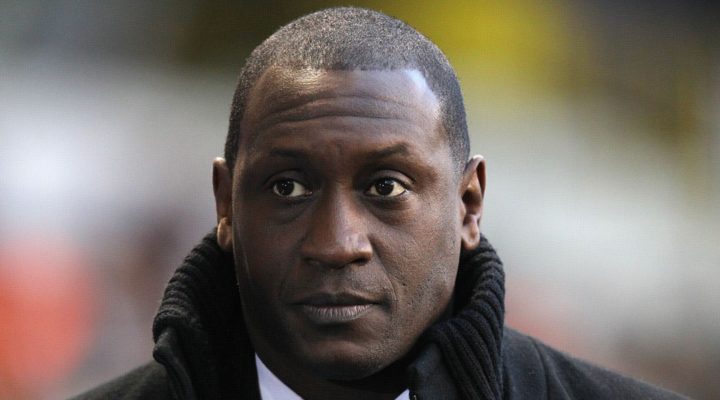
Heskey, who scored 7 goals in 62 appearances for England between 1999 and 2010, drew comparisons with his own era, where a chain of forwards seemed almost guaranteed: Shearer handed over the mantle to Heskey, who in turn was followed by Wayne Rooney. That continuity provided clarity and confidence for managers and fans alike. “We’ve been lucky over the years we could see where the next strikers were coming,” Heskey said. “We had a chain of players who could go from that next level, I came in after [Alan] Shearer and Rooney came after me, but where do we look now? We always had that chain but we are struggling to find [the next one] now.”
The stark reality facing England today is highlighted by Premier League statistics. Only eight English strikers have appeared in the top flight this season, and Liam Delap of Chelsea, at 22, is the only one under the age of 26 who could potentially fill the traditional number nine role. While younger talents are emerging across midfield and wide positions, Heskey argues that the true centre-forward—someone capable of holding up the ball, leading the line, and consistently scoring—is becoming increasingly rare.
Heskey’s comments echo those of Wayne Rooney, who also expressed concern over the modern evolution of football. “I just think it is purely because they don’t want to play number nines now with the way the game is,” Rooney said. “If you look worldwide there’s not many number nines, so it is not just England.” Both Heskey and Rooney suggest that tactical trends and changing styles of play are contributing factors to the decline of the traditional striker. Modern forwards are often expected to drop deep, link with attacking midfielders, or drift wide, limiting opportunities for out-and-out goalscoring instincts to flourish in a conventional centre-forward role.
The current England squad provides a case study in this evolution. Harry Kane remains England’s lynchpin up front, combining poaching instincts with the ability to drop deep and orchestrate play. He exemplifies a modern striker capable of adapting to various tactical systems. However, with Kane in his thirties, England face the pressing challenge of succession planning. Aston Villa’s Ollie Watkins has shown potential, notably scoring a crucial semi-final goal at Euro 2024, but he has been rested from the current squad to manage an ongoing issue. Meanwhile, Delap and other young forwards are still in the early stages of Premier League careers and may not yet be ready to bear the full responsibility of leading the line at a major tournament.
Heskey highlighted another key distinction between his era and the modern game: the physical and tactical demands on strikers have shifted. “Forwards had to be so much more involved when we were playing. You’d have to chase things into the channel, you’d have to win the flick-ons. Now your two number eights are doing more, your wingers are quite wide, you don’t have to get involved as much now.” This change in style has reduced the opportunities for young strikers to hone the traditional attributes—strength, aerial ability, and finishing instincts—that once defined England’s number nines.
This shortage of centre-forwards is a broader reflection of changes in youth development and coaching philosophies. Many academies now emphasise technical proficiency, ball-playing ability, and tactical intelligence across all positions, rather than producing traditional target men. While this has led to highly skilled and adaptable players, it has inadvertently reduced the pool of players trained specifically for the central striking role. Heskey’s concern is that, without a deliberate focus on nurturing out-and-out strikers, England may face a prolonged period of dependency on aging stars like Kane.