


Bluntness is one of the qualities that makes Achraf Lazaar a rare breed in the hypocritical world of modern football.
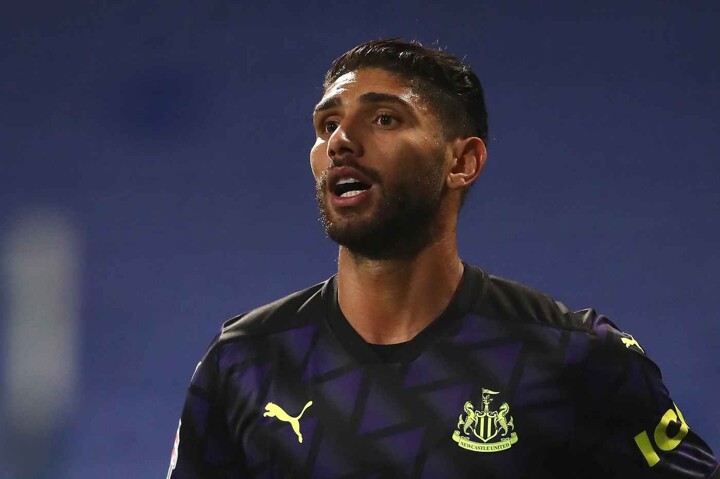
The former left-back from that magnificent Palermo side looks back with us on the defining chapters of his career, holding nothing back: from his damning verdict on Rafa Benítez and Newcastle's training sessions to his longing for Italy and the burning ambition to reclaim his place in the Moroccan national team ahead of the 2030 World Cup.
Flashscore: Let's start with the present. How are you doing physically and mentally? Are you gearing up for a return to the pitch, or are you looking at football from the outside now?
Lazaar: "Mentally, I feel fantastic, despite my entrepreneurial commitments - brands trust me and frequently involve me in various initiatives. Business aside, I am always a footballer: I was born for football and always will be.
"Physically, I am in great shape and waiting for a situation my agent has been working on for months. We had the chance to move earlier, but we decided to start straight with a pre-season training camp, because for me, it's fundamental: it's the fuel for every player. When you do pre-season properly, the whole year goes brilliantly. That's where the real work gets done, and I need it to hit the ground running."
Can you give us a sneak peek at where this new adventure will take place?
"Bulgaria. I also had a couple of enquiries from Brazil, from clubs in the second division, but since I'm opening businesses in Europe and looking towards Dubai, I'd rather stay close. I also want to send a message to the Moroccan national team: since I left, I haven't seen a single pure left-back; they've all been makeshift. I believe I can fill that role as well as I ever have."
Speaking of the Moroccan National Team, the World Cup is just around the corner and the memory of that historic 2022 semi-final is still fresh. Do you think there's more excitement or more pressure to maintain those standards?
"I don't feel any real pressure yet, because it's not like other World Cups. Moroccan fans always look at the latest result; they tend to forget the good times and focus only on the negatives. Right now, they are waiting to see the manager's choices; there has been some controversy because historically ever-present players haven't been called up, like En-Nesyri.
"I'm always partisan and I back the lads in the shirt. It'll be a massive test, not least because opening against Brazil is not something to take lightly."
You wore the national team shirt for a long time. Are you proud of your journey? Is it a door that could still be opened?
"Yes, I am always in touch with the lads and the backroom staff. I still know a lot of people there.
"I was in the mix until 2021 under Vahid Halilhodzic and was ready to go to the Africa Cup of Nations. The national team had also helped me find a club after my spell at Watford, so I could get as much game time as possible: that's why I went to Portimonense in Portugal, where they wanted to give me minutes to be sharp for the tournament. Unfortunately, in 2021, I suffered a nasty injury: a fractured fibula, which sidelined me for almost a year. That set me back right when Regragui arrived, and he completely overlooked me.
"It's understandable, since I was without a club, but I would have expected at least a phone call out of respect for what I've always given to the national team, a token of respect owed to someone who was always part of the group. At that point, I distanced myself from the staff and kept working on myself with a top-class fitness coach.
"I hope to get back on track and finish my career on a high, perhaps playing one last World Cup before hanging up my boots."
As an out-and-out left-sided player, what's your take on current Moroccan full-backs like Hakimi and Mazraoui? Has your role changed much over the years?
"As a player, I've always been attack-minded; the defensive phase bored me a bit. I was always looking to get forward, and my philosophy was to stay high up the pitch to press the opponent tightly, often playing in a back five. By staying high, I could anticipate the opponent during their possession, so that as soon as I won the ball, I was already in their half. It's a style I was already playing at Palermo and Varese, and today it has become the modern way.
"I am proud of teammates like Hakimi and Mazraoui, who are among the best in the world. Sometimes I think I was born in the wrong generation: if I played today the way I played back then, maybe I would have reached even higher milestones, perhaps the Champions League.
"Anyway, I accept what God has written for my journey, and I am proud of what I've achieved, but I remain a highly ambitious person who doesn't stop at the first hurdle."
In Italy, your name immediately brings to mind that great Palermo side under Iachini, featuring Dybala, Vazquez, and Belotti. What are your memories of that?
"My fondest memory is exactly Palermo: no city and no fanbase are quite like them. The dressing room we had is also hard to come by; in all these years, I don't think I've ever encountered a squad like that again.
"I am truly sorry for what happened to Zamparini (former chairman who passed away in 2022); he was a man who really understood football, regardless of his temperament. I think it's very difficult for today's Palermo to build a team like that again."
Today, Palermo is part of the City Football Group. Why do you think they are struggling so much to return to Serie A despite the investments?
"Sometimes investments don't guarantee results; you can drop 60 million on a player and he turns out to be a flop.
"Zamparini signed me for peanuts, around 1.2 million, and he did the same with talents like Dybala. Today, it's hard to unearth talents like Vazquez, Barreto, Abel Hernandez.
"Many of the guys who were with us and perhaps didn't even start are now captains and superstars in Italian clubs. Football has changed: every year there's less quality, you no longer see the talented kid who can turn a game on its head single-handedly. It's a robotic game now, you have to play one or two touches like robots and just follow the manager's instructions."
[image alt="Achraf Lazaar and Paulo Dybala celebrate a Palermo goal." id="feb651c2-7608-47b9-9b62-ad288c019383" credit-line="ČTK / AP / Alessandro Fucarini" guid="ab873ed3-07c1-4d18-9766-c32278d875ae" original-width="1092" original-height="1395" /]
What has Italy given you on a personal and tactical level?
"Italy has given me so much, I feel Italian too because I grew up here, even though I was born in Morocco. It gave me my education and culture; I have countless Italian friends.
"I am deeply tied to Varese, where they love me like a son, and I am trying to give back to the city by investing in the local area. I frequently speak with institutional figures and professionals, like Emanuele Monti or the lawyer Montalbetti, to do something for the kids and the youth, to breathe new life into the city.
"Tactically, if it hadn't been for Italy, I wouldn't have known how to maximise my qualities to their fullest. I remember when I arrived from Raja Casablanca, they told me I was on another level technically, but Italy made me tactically flawless.
"Now I hope to help youngsters with my experience, perhaps through academy projects, because youth football today is in terrible hands."
Besides Italy, you had significant spells in England. What differences did you notice?
"English football is the strongest in the world, but in Italy, it's a religion, and I'm sad that this feeling is fading today. In England, despite playing for clubs like Newcastle, Watford, or Sheffield Wednesday, I didn't really feel like a footballer off the pitch.
"At Palermo, I was worshipped and pampered like a king; at Newcastle, instead, the fans were cold. The stadium was magnificent, always packed with 55,000 people, but on the street, no one knew who I was. I could drink a coffee next to them, and they'd barely say hello. I missed that beautiful Italian pressure where the fans give you hell if you lose.
"Furthermore, in England, before matches they would dance and blast music in the dressing room; I, on the other hand, needed silence and focus, I just needed to hear my studs on the floor."
How was your relationship with Rafa Benitez?
"Personally, I didn't have a good relationship with him. Even though he had strongly pushed to sign me, at Newcastle he never gave me a real chance to play.
"In my first game, I was fouled a lot, and he immediately told me, 'This isn't Serie A.' I felt lost, I didn't speak English, and my former agent, after pocketing his cut of the transfer, had practically abandoned me.
"Benitez would play me once every three weeks: it's impossible to build match fitness like that. His training sessions were different: we never ran, it was just possession drills for 40 minutes and then home. At Palermo I was flying, whereas at Newcastle I was getting tired immediately because I had lost my stamina.
"In England, they did a lot of gym work, and taking a leaf out of Cristiano Ronaldo's book, I started doing heavy lifting programs. I bulked up too much, and the muscle injuries started.
"I was incredibly stressed out because I went from being chased by the whole of Serie A and Lyon to warming the bench in the Championship. I used to go out at night with friends until two or three in the morning just to escape that situation, even though I didn't drink.
"Benitez used to tell me I didn't know when to play one or two touches and stopped me from taking men on. I once told him that if he wanted someone who was only good at passing, he shouldn't have signed me, considering he chased me when I had Inter, Milan, and Roma at my feet.
"He was a fake man: he used to badmouth Real Madrid players, saying it was their fault because on Thursdays they would fly to Marbella on private jets."
Is that why you then decided to return to Italy, to Benevento, to relaunch your career?
"President Vigorito is a man of gold; he treated me like a son. I went there as a personal challenge against Benitez and against the world; I wanted to prove I could still be a leader.
"Unfortunately, in modern football, they don't give you time: if you're not ready straight away, they write you off as a bad player. A player coming back from a layoff needs time and a pre-season to get match fit, but today they want everything instantly, even from the youngsters."
What was the best game of your career?
"Palermo-Napoli in February 2015, when I scored my first Serie A goal. I was flawless that day, I didn't put a foot wrong.
"I flicked the ball over Higuain's head and he said to me, "What are you, Maradona?" Then I picked up the ball in midfield and, even though I heard Barreto calling for it, I was fully in the zone and unleashed an absolute rocket from distance.
"We won 3-1 against Benitez's Napoli; I think he wanted me at Newcastle partly because of that, or maybe he disliked me because we had beaten him."
The best teammate you've ever played with?
"Saying Dybala would be the easy answer, but the one who impressed me the most is Ayoze Perez. He has a talent and a touch that I've never seen in anyone else.
"He takes a size 10 boot, despite being the same height as me: we used to give him banter about it, but he could make the ball disappear. He looks skinny, but his core strength is incredible, and his technique is insane: you never know what he's going to do."
Where do you see yourself in five years? Still in football, or doing something else?
"A year ago I would have said yes, but today I don't like football; it's a world full of fake people and little humanity, where people lose themselves over a few pennies. If I return to playing, it's purely out of passion and to bring respect and fair play to the dressing room, seeing as I was bullied as a youngster and suffered a lot to provide for my family.
"I have already launched several businesses: an interior design firm with a team of graduates handling residential and commercial projects. Furthermore, I am acquiring stakes in a hospitality company for lounge bars and restaurants, starting in Varese and expanding to Milan, Madrid, Ibiza, and Dubai.
"In the future, I might focus on a youth academy or psychomotor projects, but my goal right now is to bow out of the game by taking part in the next World Cup in 2030."