


Manchester City will host Ipswich Town in the seventh round of the Premier League. Ahead of the match, Maresca attended the team's press conference, he discussed his expectations for the match and his thoughts on Haaland.
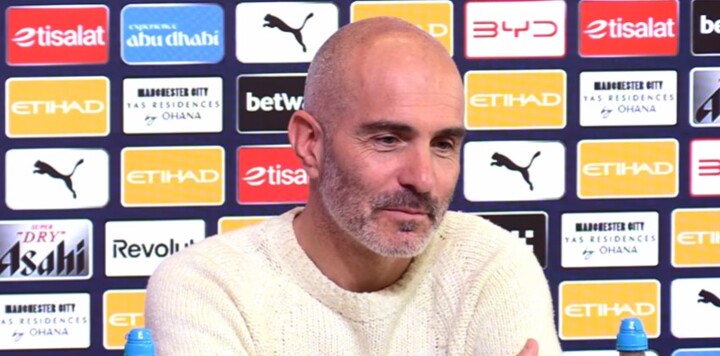
After conceding the third goal on Wednesday, Haaland, Rúben Dias, and several other players huddled together for a brief exchange on the field. Is this what you want to see: players taking responsibility and making adjustments themselves on the field?
They weren't trying to immediately turn the situation around; after conceding, we actually slowly found our rhythm again. It was just a difficult moment, and everyone was coming together to encourage each other, which I think is positive.
You are constantly getting to know your players better. After falling 0-3 behind, their strong comeback in the second half—did that give you a new perspective on the players?
Indeed, I rewatched the match against PSG this morning, and the feeling is the same. Before conceding the first goal, we actually had chances. Semenyo had a chance, and Enzo hit the post once. But we conceded one goal, and then another a minute later. At that moment, the distances between the players became chaotic, and the defensive shape collapsed.
Against a top European team, conceding two goals in two minutes can easily put you on the back foot. But we played exceptionally well in the second half. To be honest, we deserved more from the final result. That's football. Both the problems exposed in the first half and the comeback in the second half taught me a lot and were valuable learning experiences for me and the entire team.
Haaland scored twice and is now in excellent scoring form. How do you help him maintain his scoring touch and physical condition?
I think we'll have to give him a rest or a break sooner or later. Not just Haaland, but many other players are constantly playing club matches and international games. Akanji, Enzo, Guéhi, Haaland, and Rúben Dias are all in that situation. We need to find the right time to let them recuperate.
Against PSG, you made three substitutions at halftime, and Bouaddi's entry, in particular, had a significant impact. The midfield became much more stable, and the team gained more control. In similar matches in the future, will you need more midfield control? Given Buadi's excellent performance, will you use him more often going forward?
Yes, I completely agree. I've played against PSG before. When we beat them in the Club World Cup final, our midfield was very strong, with Caicedo and Reece James partnering in midfield. This time, I initially chose Ayyoub, who is more technical and less physically demanding.
Against such strong teams, the midfield must have intensity. They have skilled players like Vitinha, Fabián Ruiz, and João Neves. There were other reasons for the problems in the first half, but the partnership of Bouaddi and Elliott-Anderson can be an option in the future.
You've been frequently using the midfield trio of Elliott-Anderson, Enzo, and Cherki recently. They performed well at Anfield, but against top teams, will this midfield easily expose weaknesses?
I don't think it's necessarily impossible to defend. In some games, we need a more aggressive midfield, so we'll play three defensive midfielders. We can also play attacking midfielders like Cherki and Foden. It all depends on the tactical setup before the match.
In your opinion, what did Bouaddi bring to the team when he came on?
Bouaddi is a top player. His greatest strength is that when he's on the field, the performance of his teammates around him also improves. Only top players can do this; as soon as he comes on, everyone around him plays better.
Why is that?
There are just certain types of players where, when you play with them, the level of your teammates elevates.
AF's PC site is now live! Browse full news, comments, match details and stats on your computer. Visit: www.allfootballapp.com