

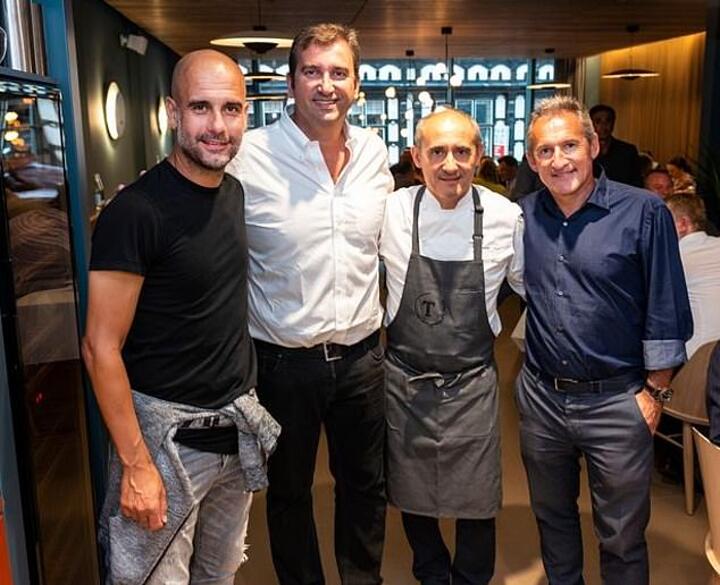
Guardiola and his immediate backroom staff devoured the food. The wider team behind them were largely made up of locals and the English staff, mostly from the medical department, often made a point that they weren’t here for the cuisine. They were only here to drink.
The whole place would be booked out for City. Nutritionist Silvia Tremoleda, credited with fixing Lionel Messi’s fitness problems at Barca, went over to check the restaurant’s suitability for a Christmas meal for the players but the little spot, on one corner of the city’s longest road, was mostly used for nights out.
There was a karaoke machine that suffered a hammering by staff. Parry, who would take over from Tremoleda in 2021, is renowned for his renditions of Michael Jackson hits. Guardiola encouraged dancing and lots of it. His staff could even watch big matches in the room downstairs. Friendships were formed in Mata’s slice of Spain until Guardiola went in on a Catalan restaurant, Tast, just round the corner in 2019. Both have since shut.
The evenings out were so regular that staff joked they could not keep up. Despite warnings to take a taxi, Guardiola always walked home in the dead of night to his lavish apartment building at No 1 Deansgate.
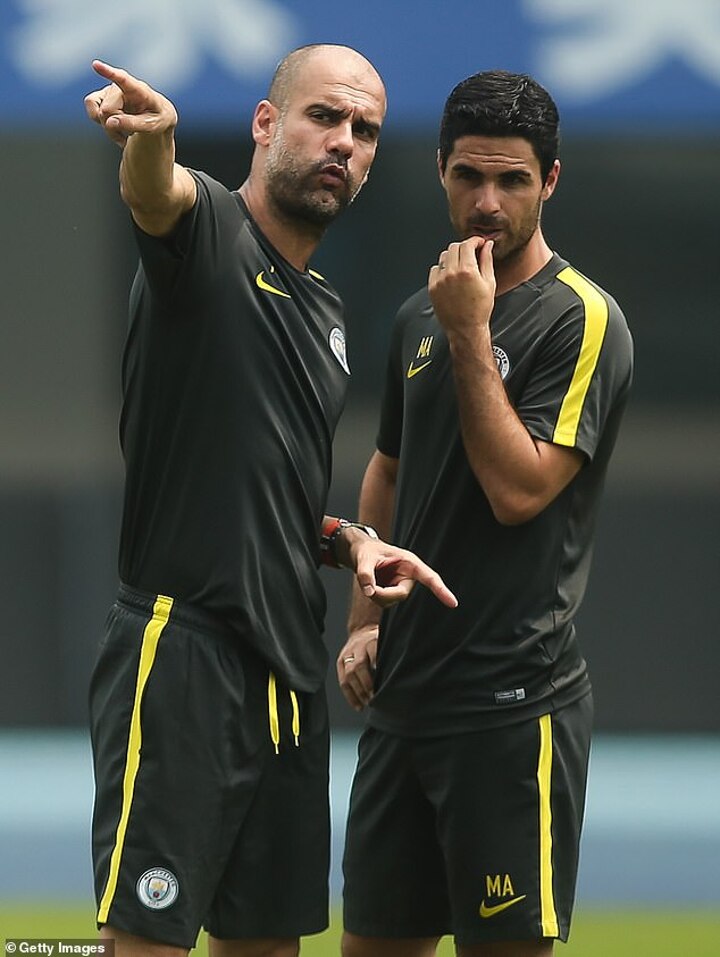
Begiristain, assistant Domenec Torrent and first-team coach Mikel Arteta were in there as well. Arteta, now manager of Arsenal, was hired for his understanding of the Premier League – of opponents, managers and even specific stadia – and threw himself into the camaraderie that Guardiola was manufacturing against the backdrop of iffy results.
The No 1 was only a temporary solution for Guardiola, who wanted a view of Manchester’s industrial vista. A complex named City Suites was under construction, opening in February 2017, and he took a gigantic space on the 14th floor.
Guardiola would find it strange when hotel customers at the nearby Premier Inn peered over to his window, the two parties staring blankly at each other. Allies helped him settle and Begiristain had taken Guardiola’s wife, Cristina, to look at schools for the three children.
These preparations had been ongoing for over 12 months before Guardiola arrived on the first day with one confused security guard unaware of who he was and telling the world’s best manager to try another gate to gain entry to the training ground.
In terms of the football, Guardiola had thought about how things ended at his previous club Bayern – engaging football, three Bundesliga titles but a gnawing angst at how the Champions League magic deserted him. In Bavaria, he hadn’t managed to progress beyond three semi-finals. Spanish clubs did for him each time and he arrived in Manchester carrying specific regret at ignoring his own philosophy before losing 4-0 at home to Real Madrid in 2014.
At City, there was to be no compromising. Or so he told himself.
The big idea going into the first season was how best to accelerate a team spirit that had dissipated in the months prior to his unveiling. Wi-Fi in the training ground dressing room was cut, to make sure players spoke to each other. Amusingly, the ban only lasted three days. Not because of a revolt but because the medical department were unable to send important files from a nearby office.
Guardiola had to pivot, players told to leave their phones outside instead, and to this day some sound sceptical at how weak the signal appears to be inside that area of the training complex.
The squad were made to eat breakfast and lunch together, sometimes even evening meals – all of which were free of sugar and gluten. White fish featured prominently on the menu, with mixed bags of nuts handed to players after matches. After they had flown to Sweden for a friendly against Arsenal, losing 3-2, Guardiola admonished the airline for the presentation of in-flight meals.
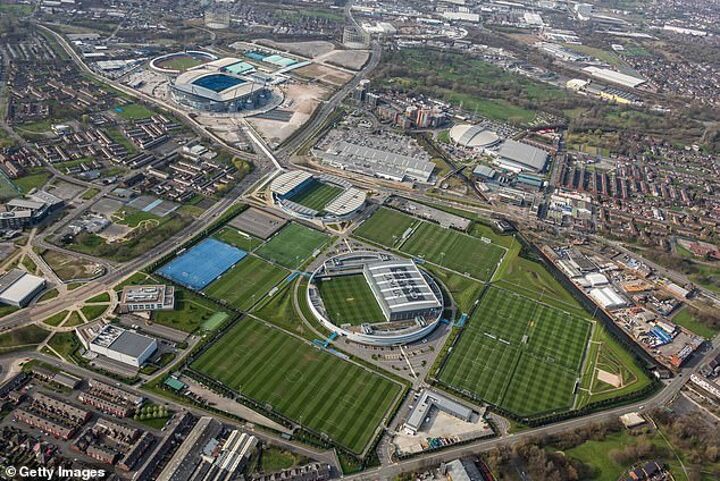
Some moves were less easy to make. City had designed their new training ground – the City Football Academy – meticulously and prior to its opening in 2014 made something of the fact first-team players and up and coming academy stars would inhabit the same building.
Guardiola changed that, the Elite Development squad moved out of the first-team environment because staff felt they required more space. That building was invite-only, completely off-limits to anybody on the outside.
The CFA also boasts living quarters, akin to a budget hotel, and Guardiola scrapped the overnight stays that were commonplace under Pellegrini before games. Guardiola wanted them to spend as much time with families as possible and was forced into denying that he’d imposed a 'no sex after midnight' rule.
Changes continued, with ground staff told to paint lines on a training pitch to define the ‘half space’ in between the centre circle and penalty box, an area Guardiola would concentrate on to improve their attacking during relentless sessions. All grass was to be cut at 19mm, just as in Catalonia and Bavaria, only for him to be told that the climate wouldn’t allow for that. They eventually negotiated at 23mm.
One battle Guardiola did win without much fight was regarding the netting of the Etihad’s goals. A fashionable black netting irked the manager, who argued strongly that the colour hindered his forwards.
This came to a head after 18 shots and 71 per cent possession in his sixth home game only yielded a 1-1 draw against Middlesbrough. That was the third consecutive 1-1 home draw immediately following the Bournemouth win and that short-lived conversation about winning all four available trophies. The first signs, on reflection, that this was going to be an altogether more difficult campaign that many had presumed.
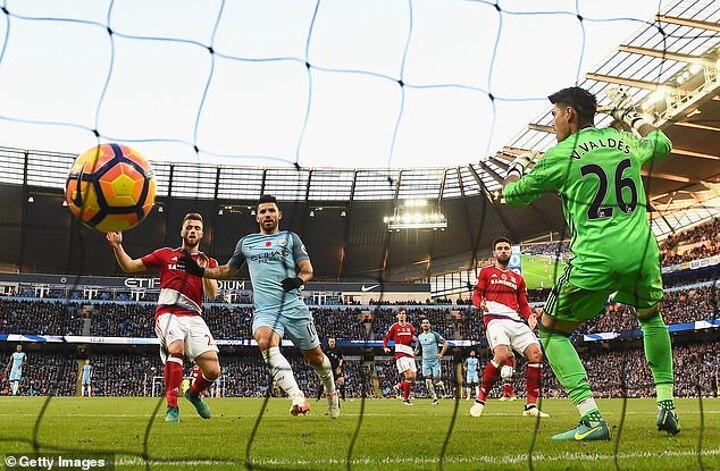
Ground staff insisted the netting made the frame more prominent but Guardiola wasn’t having it. The nets were changed to white and it worked, although not in the way he intended. Chelsea went there and won 3-1 in the very next Premier League fixture.
Fernandinho and Aguero both saw red in stoppage time that day, the striker for an unsavoury lunge at David Luiz. Aguero might have scored 10 Premier League goals by that point in early December yet also knew that in a month’s time, teenage Brazilian Gabriel Jesus was landing from Palmeiras. Much like Kompany’s training episode, insecurities were threatening to boil over and Aguero was to miss three matches for violent conduct.
A developing theme of the season was defensive disarray and Guardiola was sensitive about it. In one press conference an overly expressive Guardiola leaped to shield John Stones from public blame by claiming the centre half had ‘more b***s’ than anyone sat in the room.
That apart, Aguero – the charismatic, dashing last-minute hero of the 2012 title win – was becoming the story of a difficult campaign and Manchester hummed with conjecture about the star striker’s relationship with the new boss.
Those inside the dressing room say the professional stand-off between the pair was not easy for anyone involved but the idea of a falling out is disputed. Aguero could not understand why he needed to defend with vigour from the front, something that had never been asked of him before. Guardiola, understandably, was unbending.
Aguero would often seek out journalists after matches to offer little nods and winks that he’d rather his situation change, while he was almost sold to Chelsea later that year. He decided to stay after being persuaded by chairman Khaldoon Al-Mubarak and it was just as well.
Later crowned the club’s greatest-ever goalscorer, the Argentinian flourished once more after he and Guardiola came to understand each other, a process that began during a meal between the pair at the Italian eatery Salvi’s (near the window, easy to photograph), where the boss laid out what was expected of his No 10.
Aguero plundered 95 goals in his first three seasons under Guardiola and eventually defended in much the same way as Jesus, who never became the natural successor that everybody had hoped. Ironically, that 2016-17 campaign, with its tetchiness and bruised egos, was the most prolific of Aguero’s entire career.
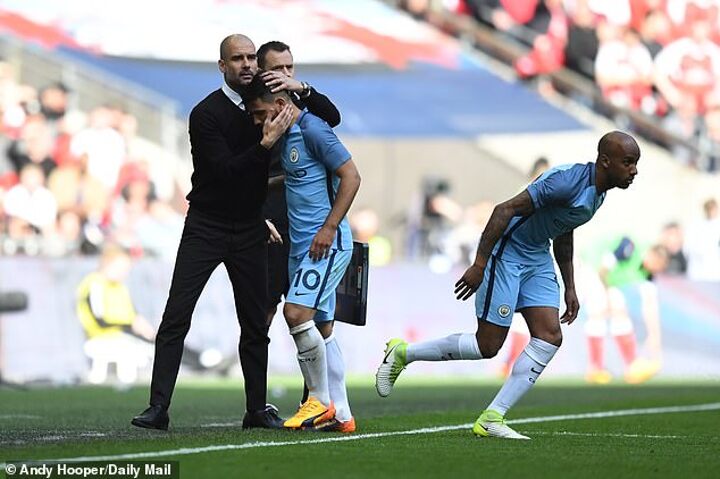
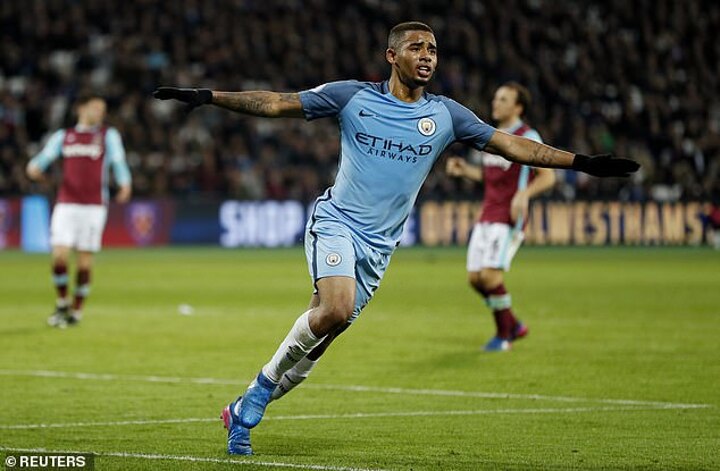
The early winter Chelsea defeat featuring that Aguero red card came towards the end of a run of only four victories in 15 games across all competitions, a spell that well and truly introduced Guardiola to the unique rigours of an English season.
It all began when – after winning their first 10 games of the season – they played out a scarcely believable 3-3 Champions League draw with Brendan Rogers’ Celtic on a night when City were almost swallowed whole by the Parkhead crowd.
A decade on, one staff member recalls the mood that evening and how they now believe it shaped the dominance to come. In a nutshell, the reaction was as if they’d lost 3-0.
‘Dead,’ the staffer says now. ‘Wow, this is a change.’
David Silva, the great City midfielder, spent 10 years at the club and four under Guardiola. At times, he feels like he is still processing it all.
‘When we lost or things weren’t going the way they should, they always wanted to have a meeting to see what was happening,’ Silva says now.
‘That’s a sign that people care and want to win. At that time, whenever something small happened we were always discussing it and not letting it pass. Sometimes teams let one thing lead to another, but I think it’s important to talk about it and try to take action.’
There was a lot of talking as City bumped and banged through that first Guardiola season. The real effect of change would come later, in the most glorious of ways. First City had to go backwards to go forwards and their manager often leaned into introspection. On occasion, Guardiola’s reaction to setbacks was extreme.
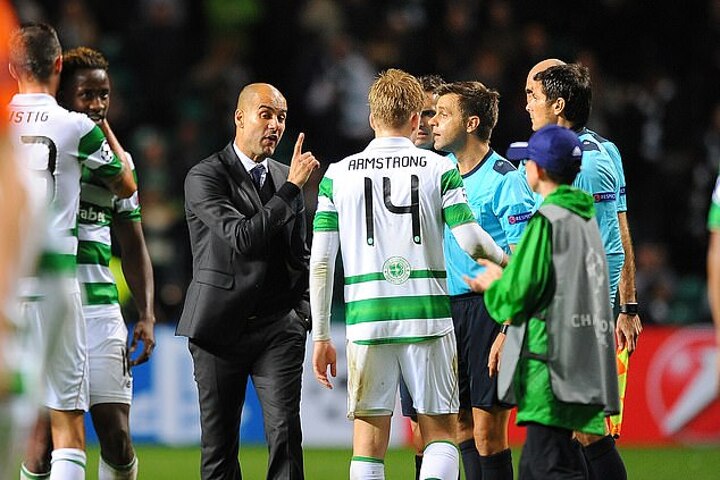
For example, Guardiola confided in biographer Marti Perarnau that he was a 'nervous wreck' before a 1-1 November draw with Borussia Monchengladbach, saying the build-up had been 'torture'. Prior to that, in the October, he admitted to fearing the sack before facing Barcelona at home – they won 3-1 – having lost by four in the Nou Camp two weeks earlier. Beset by his team’s problems, he even cancelled a trip to Munich for Oktoberfest over the November international break.
This was a period that would define a season to a degree, a league campaign Guardiola actually declared over at Goodison Park in January after that 4-0 reverse that saw Stones look a shell of himself on a first return to Everton.
Three days later, with Guardiola still pressing ahead with the nights out and bonding exercises, the entire squad and staff were invited to Manchester’s gaudy Printworks complex to watch the movie La La Land in celebration of the Catalan's 46th birthday.
There was no shortage of noise at the time. The 2-2 home draw with Spurs that followed the Everton bashing meant City had won only nine of the 23 games that followed Celtic’s ending of the 10-game winning sequence in late September.
It was proving to be a hard winter and the Daily Mirror’s columnist Stan Collymore reached for his pen to accuse Guardiola of being ‘deluded’ for not changing his principles in the aftermath of a 4-2 defeat at Leicester City, one of the worst displays of his entire reign.
‘I’m not a coach for the tackles,’ Guardiola said after a defeat, lent some credibility by two late consolations. Many felt those comments – delivered with a derisory snort – directly and purposefully pitted him against the sanctity of English football.
In reality, no professional manager coaches tackling but here stood the greatest of his generation picking fights with those who were as equally withering about his own apparent lack of adaptability. Daggers seemed to have been drawn between the newbie and the Premier League establishment and, for as long as it lasted, it made for fascinating viewing.
In 2020, Richard Keys and Andy Gray even offered the opinion from their Qatar TV bolthole that Guardiola should bring in their old friend Sam Allardyce as a defensive coach. As far as we know, that call was never made.
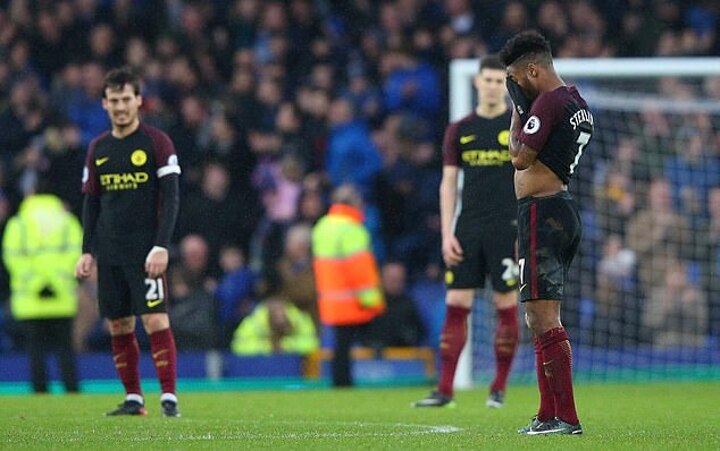
Guardiola does occasionally need a bit of animosity to get him going and the truth is that all the fuss deflected from his real worries over the performances of the big summer signings, Stones and German winger Leroy Sane. Gundogan, meanwhile, did his ACL and missed almost the entire campaign.
As much as the Premier League was learning to live with Guardiola, he was also learning how to exist in this country. Maybe he became an honorary Brit when the trains presented an unlikely foe.
One left without them after a win at Palace, City’s bus having been caught in London traffic en route to Euston. Severely agitated and two minutes late, Guardiola wanted to know why the Virgin train had not waited for their distinguished guests. It’s plausible that he was unaware that City were booked on a public service and the ramifications are felt to this day. With Guardiola convinced that long coach journeys stiffen up players’ muscles, City tend to mix up their domestic travel between trains – when they feel they can rely on them – and flights.
The refereeing, it must be said, is not something Guardiola easily hopped on board with either.
‘I still don’t understand referees in this country,’ he said memorably after beating Burnley 2-1 before Christmas.
Incredulity at officiating remains a constant 10 years on, although Guardiola has rarely been critical if City have dropped points in a game. Away from the cameras is something of a different matter.
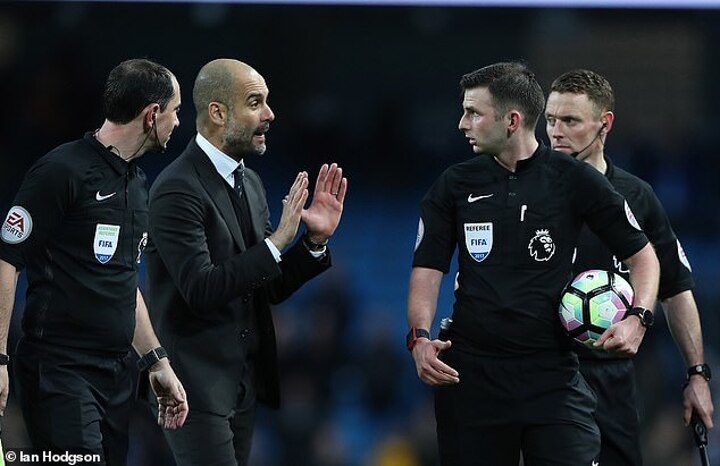
Guardiola and his players, for example, crowded around a Sky Sports monitor during half-time of a 3-1 defeat at Liverpool in 2019, flabbergasted at the decision to allow Fabinho’s opener despite a Trent Alexander-Arnold handball in his own area earlier in the move. Guardiola has long taken umbrage with officiating at Anfield, dating back to the Champions League quarter-final in 2018. Guardiola can occasionally head to the referee’s room to argue calls.
By his final year in situ, Guardiola would pay plenty of attention to Ref Watch on Sky Sports News, the Monday morning segment with ex-referee Dermot Gallagher, to take the temperature of how pundits viewed the league’s contentious calls.
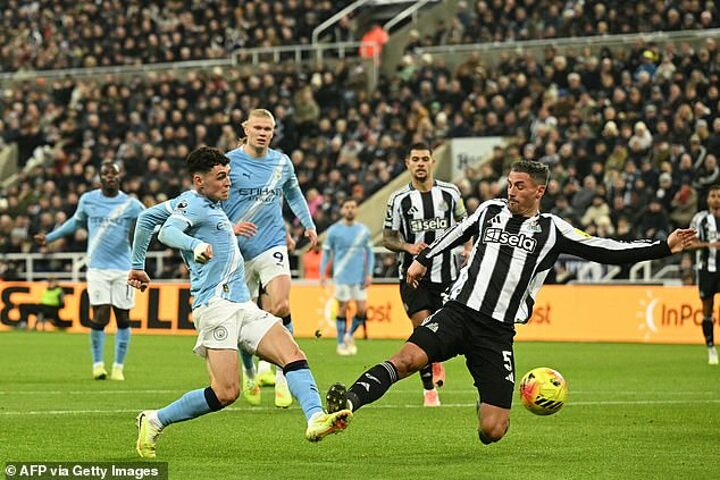
And he kept notes. That Gallagher backed referee Sam Barrott’s decision not to award a penalty for Fabian Schar’s lunge on Phil Foden away at Newcastle in November 2025, before holding a different opinion on a similar incident the week later, was jotted down.
On the same show, he even noticed that ex-Tottenham midfielder Jamie O’Hara had flipflopped on an opinion around a possible Dominic Solanke foul on Marc Guehi as Spurs scored during a draw three months later. He didn’t reference O’Hara by name, presumably because he doesn’t know who he is, and instead labelled him ‘the guy’.
Sky Sports News is beamed on countless large televisions across City’s training base. Some of Guardiola’s staff have privately queried the wisdom of this.
The canteen is the place where they will stand around, gesticulating at the TVs. Then it becomes the conversation over coffee. Then it’s suddenly deep-seated.
The anger at decisions through January and into February of his 10th year led to the unusual step of referees’ chief Howard Webb heading into the City Football Academy.
Webb was there for hours, to discuss recent decisions that went against them. Webb was seen deep in conversation with a club analyst following the 2026 FA Cup final.
Usually the two parties keep their distance. Guardiola is the only manager in the entire league not to turn up to PGMO meetings and never has done, pre-season or mid-season. He does this job his own way and that first season, the torture and the intrigue of it all, proved that Manchester City’s messiah was not to be cowed.
By the time it ended with flourish – 15 goals spread across four straight league wins – the scale of the task ahead was clear. There had been a Premier League uptick on Pellegrini’s final season – 12 more points and four fewer defeats – but they were still 15 points off the pace set by Antonio Conte’s Chelsea – who beat them twice – and the cups had been disappointing.
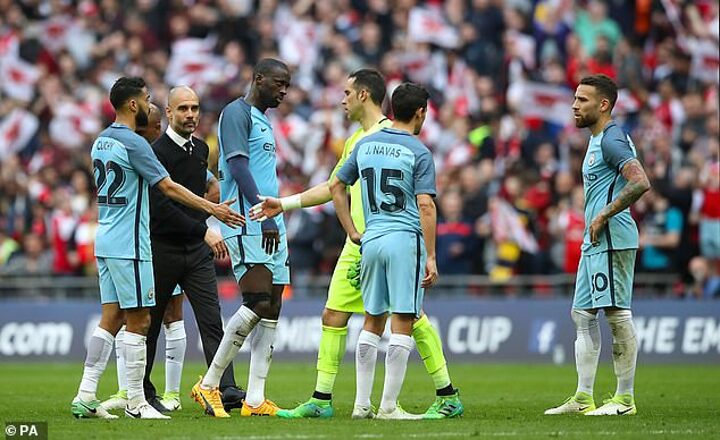
Some of the commentary was laced with relish while Guardiola’s allies accused the English media of wanting the new City manager to fail.
That wasn’t true. It merely felt spellbinding to observe Guardiola’s struggles as, deep down, nobody really expected them to last. And they didn’t.
Guardiola’s City won next season’s title at a canter, racking up 100 Premier League points in one of the most astonishing displays of dominance ever seen on these shores.
COMING TOMORROW: Read part three of Pep and Man City - The Untold Decade: The journey to the Treble