


Recently, The Athletics published a long article, discussing the changes made by Arteta to Arsenal, and where may the future of Gunners and their coach be. Below is the article.
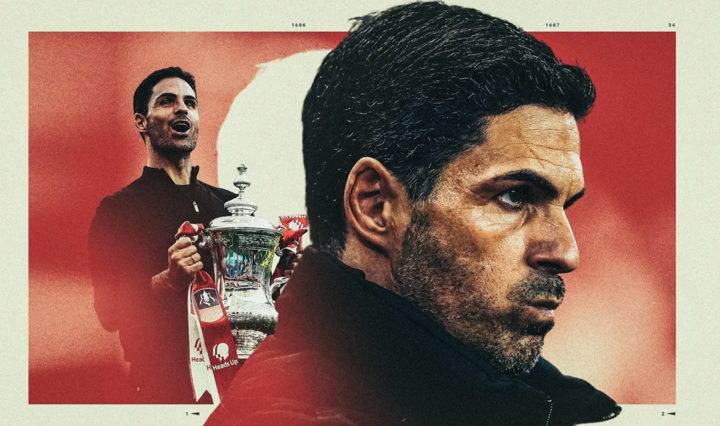
In 2019, a freshly appointed Mikel Arteta watched from the stands as Arsenal and Everton played out a 0-0 draw.
By a quirk of fate, Arsenal face the same fixture this weekend, as Arteta marks six years in the managerial dugout. The men’s football department has been wrought in his image. It is increasingly difficult to imagine an Arsenal without him.
But the only certainty is that such a day will come. How long will Arteta remain in north London? And when he leaves, when and where might he go?
Remarkably, this six-year stretch makes 43-year-old Arteta the second-longest-serving manager in the Premier League behind Pep Guardiola, who is closing in on the 10th anniversary of his appointment. That length of reign is increasingly unusual: Arteta, who signed a new three-year contract in September 2024, is now the third-longest-serving manager in England’s top four divisions.
Sources close to Arteta, speaking anonymously to protect relationships, say he has never sought to be a long-standing manager in the vein of Arsene Wenger or Sir Alex Ferguson, whose rivalry stretched across decades. Some even consider the idea of him following suit with Guardiola and staying at Arsenal for a full 10 years unrealistic.
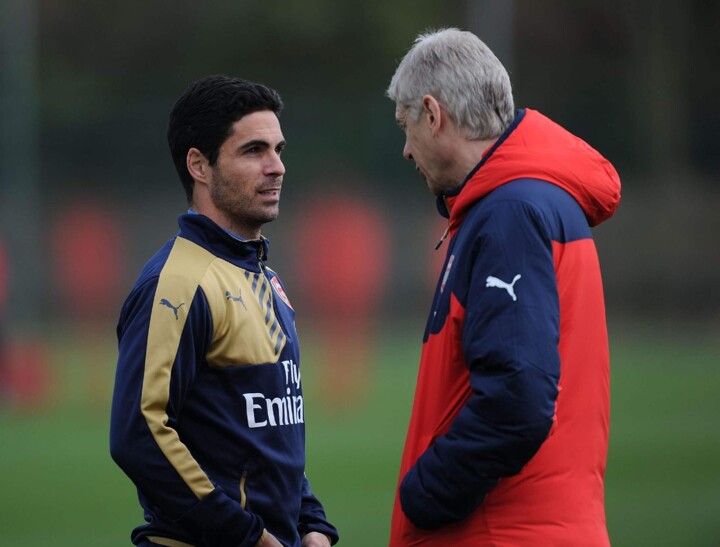
Mikel Arteta, pictured here in 2016, played under Arsene Wenger at Arsenal (Stuart MacFarlane/Arsenal FC via Getty Images)
Potentially unhealthy, too. Arteta lives the job with a zealous intensity. Reinvigorating Arsenal has been an exhaustive, exhausting project. There is an acceptance that sooner or later, Arteta will need a break.
The case to carry on at Arsenal, however, is compelling.
Twelve months ago, Arteta marked the fifth anniversary of his arrival by saying, “Now we have to go to another level.” Arsenal are on the precipice of transitioning from contenders to winners. They have an excellent squad in prime age, who are almost all under contract for the foreseeable future. Arsenal are arguably at the beginning of a new phase — one in which Arteta stands to reap the rewards of the rebuilding project he has overseen.
Stepping away from that would be difficult, maybe even illogical. Guardiola never set out to do a decade at City, but winning has an addictive allure. Arteta won the FA Cup in 2020, but there has been no credible silverware since. Having waited for so long, surely he would want to capitalise on Arsenal’s ascension.
There is also the significant matter of his personal life. Arteta and his family are settled in London. The upheaval of a move, most likely to another country, would surely weigh on his thinking.
Would Arteta wield the same power he does at Arsenal anywhere else? Over the last six years, he has established dominion over the men’s first team. Arteta’s ambition is the cleansing fire that helped transform Arsenal — and his influence extends across almost every department of the club.
The criteria for any club attempting to lure Arteta would presumably be two-fold. They need money — both to meet Arteta’s sizeable salary and recruit elite talent. He’d also need to feel he can win there.
It leaves a relatively short list of possible destinations. The likes of Paris Saint-Germain, Barcelona, Real Madrid and Manchester City might fit the bill. Intriguingly, three of those are clubs with which Arteta has a deep personal affinity.
In his short career as a manager, Arteta has already fielded expressions of interest from more than one of these potential suitors. The Athletic reported on Thursday that Enzo Maresca is high among the candidates Manchester City are considering in case Guardiola exits the Etihad Stadium next summer. The growing expectation that this could be Guardiola’s final season could well become leverage for Arteta in any negotiations with Arsenal — even if all parties recognise such a move would be politically delicate.
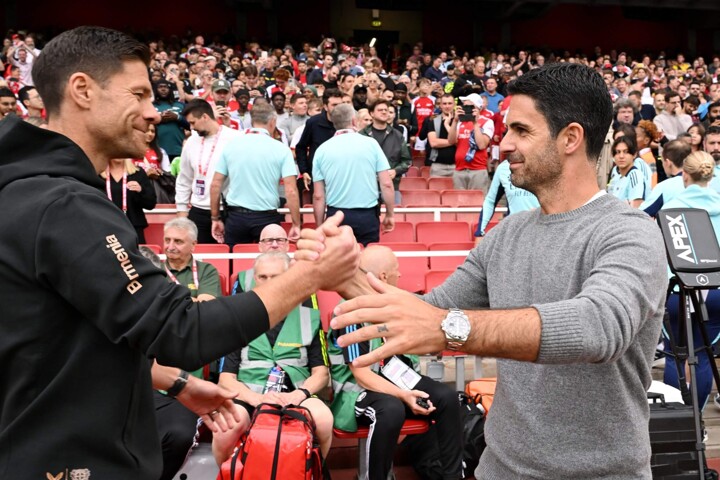
The experiences of Xabi Alonso at Real Madrid might give him pause for thought. Alonso, a close friend and contemporary of Arteta, left Bayer Leverkusen for the Spanish capital this summer, swapping his first managerial post for a traditional European superpower. It has been a difficult transition.
Arteta’s friend Xabi Alonso left Bayer Leverkusen for Real Madrid (David Price/Arsenal FC via Getty Images)
Arsenal have built one of the most formidable squads in Europe, and at some price. The summer expenditure of a further £250million ($334m) took their net transfer spend over the past six years to more than half a billion. Arsenal have gone all-in, because they sense an opportunity to win now — to win with Arteta.
That kind of summer outlay may not be possible year on year. While Arsenal hope on-field success and improving commercial revenues will unlock future spending, the likelihood is that at some stage there will have to be a redressing of the balance.
The Kroenkes — who own the club through Kroenke Sports & Entertainment (KSE) — have permitted (and underwritten) a transfer spree that has put Arsenal in a position to win. They are fighting toe to toe with clubs bankrolled by nation-states.
In the mid to long term, however, can a sustainably run, financially responsible Arsenal be serial winners? And if Arteta senses that the money could stop flowing as freely, might that influence his decision? Remaining competitive — truly competitive — would be a necessary condition of any extension.
However aligned the manager and club may be, renewing Arteta’s term is rarely straightforward. He is a manager in demand, and securing his future comes at a price. Consequently, he is one of the highest-paid managers in world football.
Then there’s his backroom team to consider. Arteta signed his deal in September 2024, but Arsenal then had to find agreements with his coaching staff. That was a protracted and costly exercise. Another three-year deal for Arteta and his staff will make for an expensive package.
Last time Arteta’s contract was negotiated by then sporting director Edu, with oversight from executive vice-chair Tim Lewis. Neither are at the club now, so responsibility will most likely fall to new sporting director Andrea Berta and chief executive Richard Garlick, with ultimate sign-off — as ever — coming from the Kroenkes.
Arteta has a season and a half remaining on his deal. Ordinarily, one would expect negotiations to begin around March, with a view to having an agreement in place before the manager enters the final year of his contract.
Perhaps there will be no great hurry this time. Arteta’s focus is on the here and now, and winning. It may be in the interests of both Arsenal and Arteta to wait until the end of the season, when it will be clear whether the manager has delivered the success the club craves.
That, of course, raises the difficult question of what happens if Arsenal don’t win. Would Arteta have the capacity to get up and go again? Would Arsenal indulge him? Another season without silverware, after such heavy investment, would leave Arsenal facing some difficult questions.
Those are questions that Arsenal would rather not face. Arteta is at the centre of their plans, their key protagonist.
Finding an elite manager is not easy. Arsenal are often described as reaping the rewards of their patience with Arteta. It is as true that they are the beneficiaries of an enormous gamble, having hired an untested manager who looks to be one of the brightest and best of his generation.
They deserve credit for their audacity and for holding their nerve, but it is not a model that can easily be replicated. Few managers recover as Arteta did from the difficult winter of 2020, or make such great strides in their first years of management. Arteta is the exception, not the rule.
Talks with Arteta over his future are on the horizon. With Arsenal leading the way in the Premier League and the Champions League, for now at least, it is the Arsenal manager who holds all the cards.