


This article is reproduced and translated from The Athletic, originally written by Michael Cox, and published on July 21st, Beijing time (CEST).
Introduction: Conceding only 1 goal in 8 matches, never trailing throughout, the Spanish team, without the backing of top superstars, clinched the championship with an extreme team performance. In this seemingly unexciting possession-based system, how exactly did they secure every victory?
Introduction:
This Spanish team doesn't have a superstar striker like the 1970 Brazil team who could decide a game on their own, nor did they create countless legendary moments like the 1986 Argentina team, nor did they have an easy run to the final like the 1998 France team.
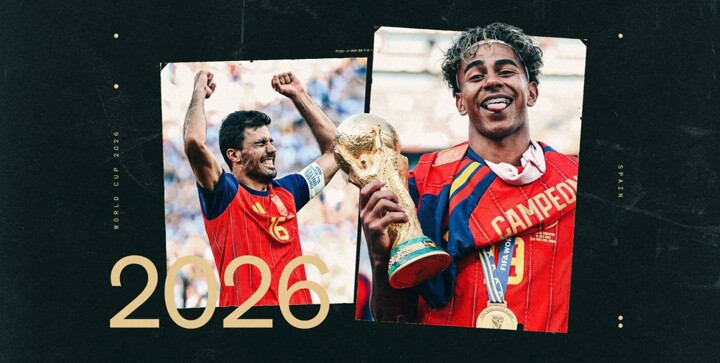
However, the 2026 FIFA World Cup-winning Spain is definitely the most convincingly dominant champion team in FIFA World Cup history. Throughout the 8 matches of the tournament, they conceded only 1 goal, never trailed, firmly controlled the pace of the game in midfield, and their possession-based style was not passive or dull, with their offense always aggressive.
Ultimately, due to Argentina's somewhat rudimentary tactics in the final, Spain won the match with overwhelming superiority.
Coach:
This tournament saw more star coaches than usual—Pochettino, Ancelotti, Tuchel—yet the final was a showdown between two managers who had achieved almost nothing at the club level: the Spanish team led by de la Fuente defeated the Argentina team coached by Scaloni.
As a player, de la Fuente was a diligent left-back who helped Athletic Club win two consecutive La Liga titles in the early 1980s. After becoming a coach, he spent four years coaching Athletic Club's youth team, had a mediocre spell at Alaves, and then began coaching Spain's youth teams, leading them to a U19 FIFA World Cup title in 2015, a U21 FIFA World Cup title in 2019, and an Olympic silver medal in 2020.
He took charge of the senior team after the 2022 FIFA World Cup, then won the UEFA Nations League in 2023, the European Championship in 2024, and now the FIFA World Cup in 2026. He has essentially won every title, but it's still difficult to define his coaching career or pinpoint any key principles of his coaching philosophy.
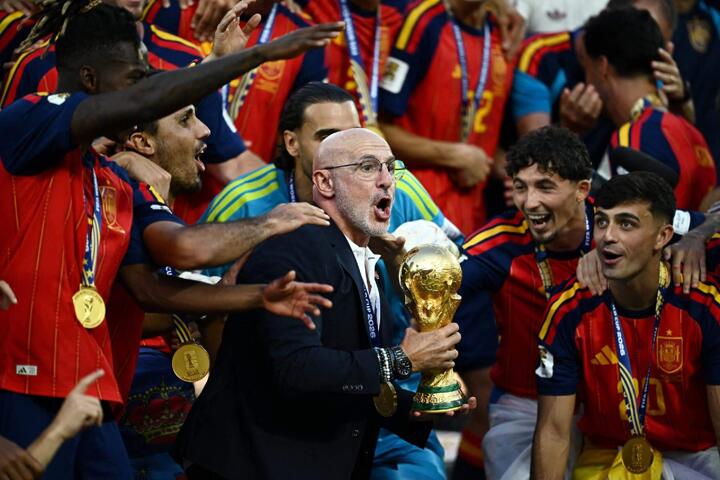
But he is 100% Spanish and knows the strengths of his players. During the FIFA World Cup, he told The Guardian: "In my opinion—and I say this with no offense—we have the best midfield in the world, and we have two of the best players in every position."
Star Players:
In an era of unprecedented individual talent, where all stars—Messi, Haaland, Mbappe—dominate their respective teams' offenses with astonishing authority and fiercely compete for the Golden Boot, the Spanish team stood out with teamwork. On their offensive end, while Oyarzabal and Baena deeply understood the tactical system, they were not widely considered world-class players.
Yamal (who turned 19 midway through the FIFA World Cup) on the right flank was hailed as the new Messi, but he was still recovering from injury when he participated in this FIFA World Cup. He occasionally showed flashes of brilliance but ultimately contributed only one goal and no assists, failing to fully demonstrate his potential.
Ultimately, the FIFA World Cup Golden Ball was awarded to Rodri, who also received the same Best Player award at the 2024 European Championship, which was somewhat surprising: in the group stage, data agencies offered odds of 66-1 for Rodri to win the FIFA World Cup Golden Ball, as he sometimes appeared slow; by the start of the final, his odds had dropped to 6.5-1, by which time he had already shown some even better performances.
Rodri and the four defenders were all eligible for the team of the tournament, but none of the attacking players' individual abilities could compare to those competing for the Golden Boot.
This is the beauty of it all.
Tactical Approach
Overall, the Spanish team maintained their consistent pass-and-control system and style. De la Fuente seemed capable of rotating players flexibly, and the team's overall performance was largely unaffected by personnel changes, though there were some subtle yet significant modifications.
For example, in their opening group stage match, Spain drew with first-time participants Cape Verde, encountering the same problems as in their 0-1 loss to Switzerland in their first match of the 2010 FIFA World Cup: a lack of width and penetration, with Gavi deployed as a left-winger but often occupying the same space as Pedri.
From the second match onwards, Gavi was dropped, and Baena started as the left-winger, aiming to create space and make more forward runs. Another key change was the introduction of Olmo, just as he had replaced an injured Pedri midway through the 2024 European Championship.
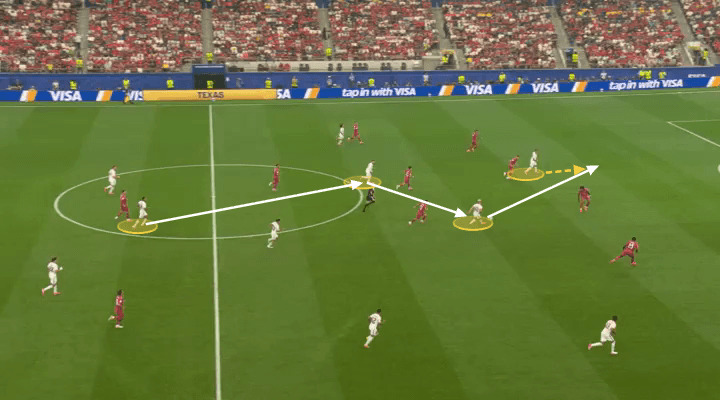
Olmo played as an attacking midfielder rather than a central midfielder, and he was very adept at finding gaps between defensive lines, which allowed Spain to play more vertical passes.This was evident in the match against Portugal; unfortunately, after he delivered a through ball, Oyarzabal's shot went wide, otherwise it would have perfectly showcased Olmo's ability to tear apart defenses with his runs and precise through passes.
Meanwhile, from the quarter-finals onwards, de la Fuente brought in Fabian Ruiz to replace Pedri. Fabian Ruiz was arguably Spain's best player in the 2024 European Championship; in the match against Belgium, he scored a rebound in the penalty area, opening the door to victory for his team.
Baena's wide runs, Olmo's central runs, and Fabian Ruiz's penalty box incursions—these three adjustments complemented each other, transforming Spain's tiki-taka from pointless passing into a more direct and dangerous attack, evolving from a mere possession-based team into an offensive machine constantly creating scoring opportunities.
Spain pushed their full-backs very high—Porro and Cucurella performed brilliantly in the 3-0 victory over Austria, which was also Spain's best performance of the tournament. Porro scored in that match and in the semi-final win against France. Laporte was arguably the best center-back of the tournament, and his partner Cubarsi was named the best young player of the tournament.
While Oyarzabal wasn't a traditional number 9, he wasn't a true false 9 either. As the image below shows, his positioning was deeper than Olmo's, but his actual involvement in attacking plays was far less frequent than the public perception of a typical Spanish forward.In the match against Cape Verde, he went an entire 30 minutes without touching the ball.
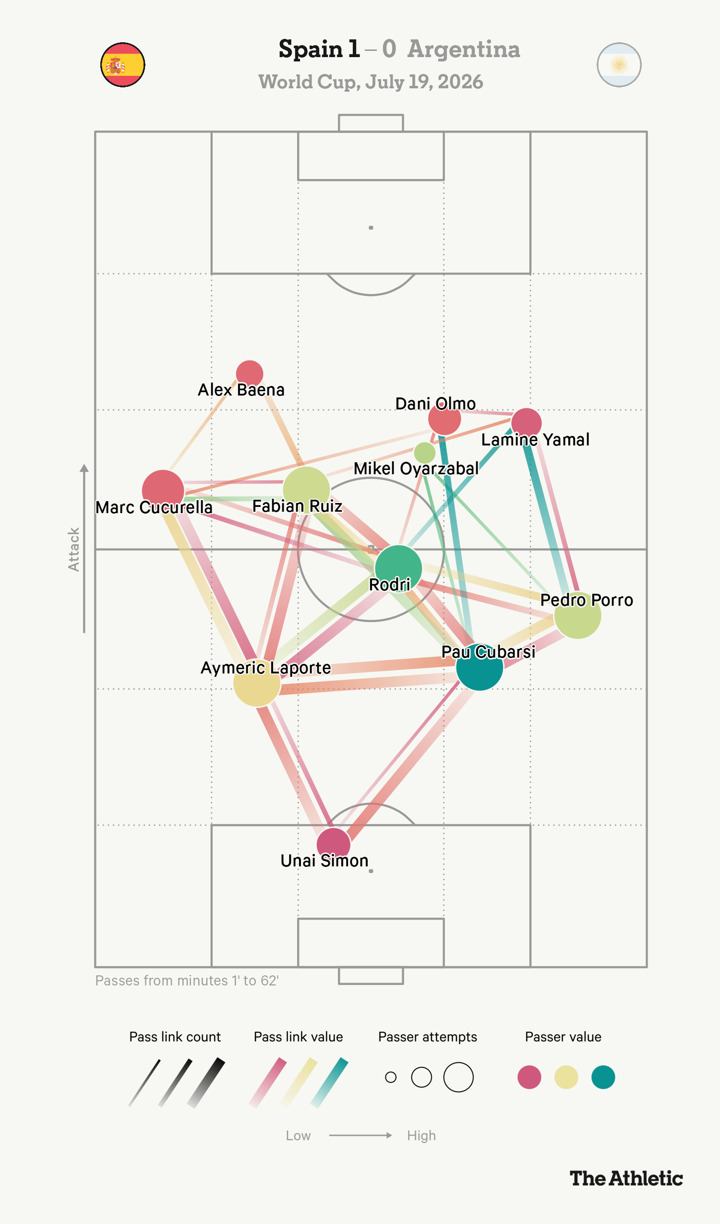
He and Ferran Torres, who came on as a substitute in the final and played a crucial role, were more like wingers playing as forwards, rather than midfielders converted to forwards, as Spain has often used in the past.
The Crucial Role of Unai Simon
One might forget that before the FIFA World Cup began, Unai Simon was considered Spain's third-choice goalkeeper by most, as David Raya was one of the core players for Premier League champions Arsenal, and Joan Garcia had a standout season at Barcelona.
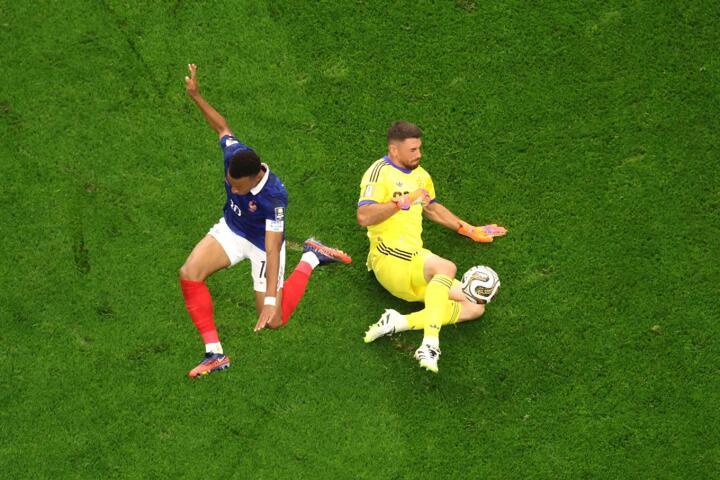
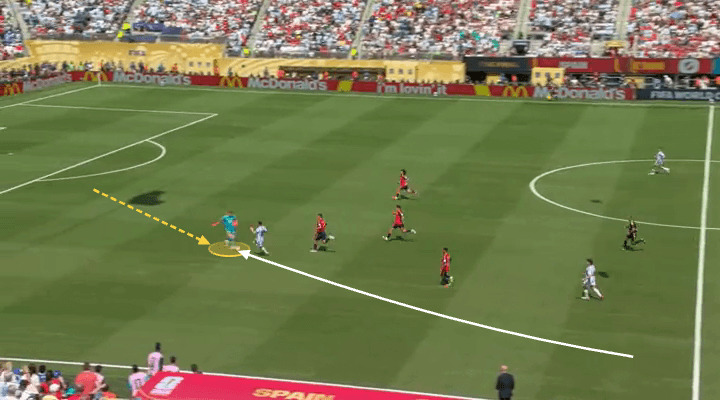
But Unai Simon conceded only one goal in 8 matches. On one hand, he had very few opportunities to make saves—opponents only had 10 shots on target in 8 games, with only De Ketelaere beating him;on the other hand, he was bold in rushing out of his box, defusing several dangerous situations with his charges in tough matches against France and Argentina.
The Final
This might not have been the worst final in FIFA World Cup history, but it was certainly the most disappointing.
On paper, Spain against Argentina seemed like a perfect match-up: the European champions against the Copa América champions (and defending FIFA World Cup champions), Yamal against Messi, a control-oriented team against a versatile team.
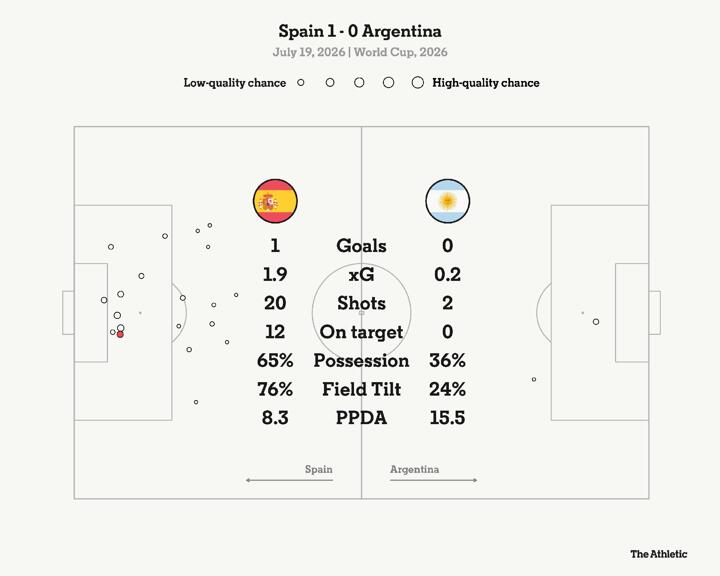
But the final was unusually dull. Spain predictably dominated possession, but Argentina posed no threat on the counter-attack.
Scaloni surprisingly opted for N. Gonzalez on the left wing, which provided some vertical thrust to the team, but Gonzalez was substituted at halftime. Scaloni brought on an extra defensive midfielder, Paredes, who received a yellow card less than five minutes after coming on, and Argentina immediately reverted to their aggressive pressing style.
Argentina did not have a single shot on goal in the first 90 minutes, and when Enzo Fernandez received his second yellow card and was sent off, it seemed only a matter of time before Spain would break through.

However, Spain itself didn't play at its best either: Olmo's runs stretched the defense, Yamal occasionally delivered delicate touches, and the team's characteristic one-touch passing occasionally created threats, but it wasn't until extra time that they created genuinely clear-cut scoring opportunities.
Their best scoring chances came from crosses, an often underestimated aspect of this team. First, Pedri chipped the ball behind the opponent's defense, but substitute Nico Williams couldn't connect. Second, Nico Williams crossed, and another substitute, Merino, headed wide.
Third, Porro's crosswas slightly high, Nico Williams headed it back, and Ferran—yet another substitute—slammed it into the net. At this point, Argentina still hadn't had a shot on goal, and most of the world breathed a sigh of relief.
When was the decisive moment?
Ferran Torres's last-gasp goal was perfect enough to win the FIFA World Cup, but throughout the tournament, Spain failed to produce a classic goal that perfectly encapsulated their style and would be remembered for generations. Many memorable moments were created by opponents, while Spain steadily controlled the flow of the game from start to finish.
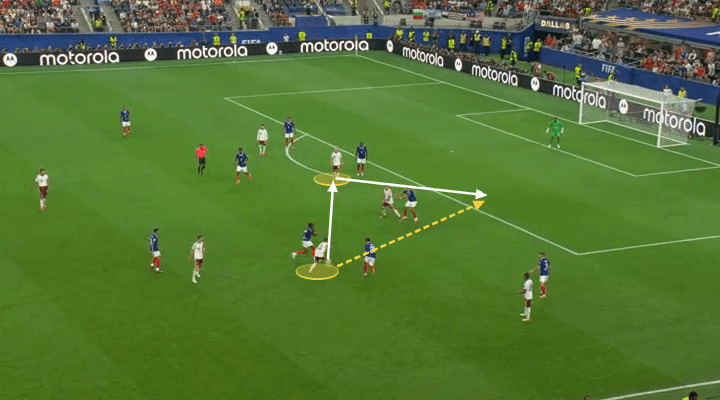
Throughout the tournament, Spain's spectacular goals were few: one was Fabian Ruiz's rebound goal against Belgium, resulting from a rebound after a fluent attack down the right flank; Porro contributed two brilliant goals, one was an unmarked header against Austria, which concluded a game-long series of continuous passing (although Spain nearly conceded several times in that match, maintaining possession through 50-50 challenges); the other was a superb one-two with Olmo, helping Spain to a 2-0 victory over France.
Is this Spanish team truly the strongest?
It seems to be a common occurrence in FIFA World Cup history that the greatest challenge for the champion team often comes in the semi-finals. France were favorites in the semi-finals, possessing stronger attacking firepower: Mbappe, Olise, and Dembele. Spain was slightly weaker, but their control of the midfield and fluent attacking combinations allowed them to control the game and perform exceptionally easily in the second half.
Compared to the inconsistent Argentina team, they were the closest in strength to Spain in this tournament, but Spain ultimately defeated them fairly and squarely.
AF's PC site is now live! Browse full news, comments, match details and stats on your computer. Visit: www.allfootballapp.com