


Recently, The Athletic published an in-depth feature examining the central contradiction Mohamed Salah faces with his national team: widely regarded as the greatest Egyptian footballer of all time, his legacy remains incomplete due to his persistent failure to win the Africa Cup of Nations.
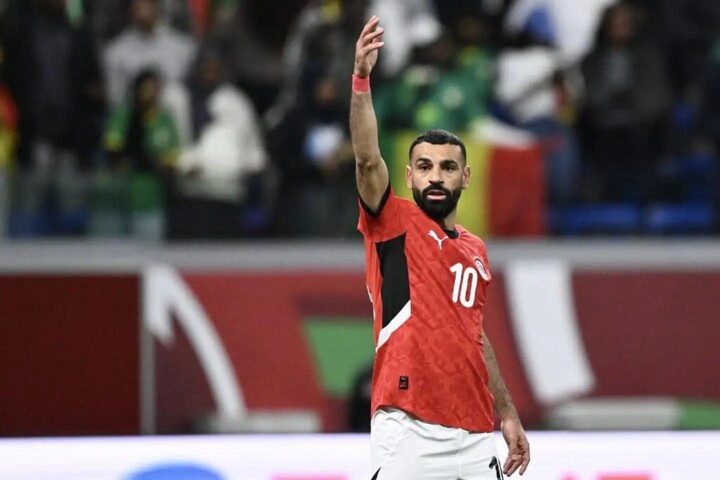
This tension is especially poignant in direct comparison with his former Liverpool teammate Sadio Mané. —Repeated crucial defeats have transformed their personal rivalry into a national-team-level psychological burden. The article notes that, much like Messi before winning the Copa América, superstar legacies are ultimately judged by collective honors. Yet, Messi’s story also offers hope. For Salah, the 2025 Africa Cup semi-final was another 2025 “unfinished” chapter , but ahead lie the 2026 World Cup and the next Africa Cup—key battlegrounds where he can still seek closure for this unfinished quest. Below is the full feature article.
When Sadio Mané scored a powerful strike with 12 minutes remaining to put Senegal ahead and ultimately send them to the final, Egypt were still waiting for their first shot on target in the match.
Think about that carefully.
Egypt, fielding the attacking duo of Liverpool’s Mohamed Salah and Manchester City’s Omar Marmoush, had found scoring relatively easy in earlier matches of this tournament. —Indeed, by this specific metric, it was shaping up to be Salah’s best-ever Africa Cup performance.
Yet, you get the sense that even if they’d dragged the game into extra time last night with exactly the same expected goals (xG) as at kickoff, they would have considered themselves fortunate.
Manager Hossam Hassan later argued that Senegal had more time to prepare for this match (their quarter-final was on Friday, Egypt’s on Saturday) and had been based in Tangier since mid-December, unlike Egypt, who had to travel from near Agadir—a situation he called “unfair.”
Admittedly, Egypt’s physical condition was inferior, but their ultra-defensive tactics created a repetitive rhythm: Senegal took long-range shots, goalkeeper El Shenawy hastily cleared the ball without concern for accuracy, seemingly relying on luck to find a teammate.
Senegal played with more adventurous spirit, though their performance wasn’t particularly impressive either, and they showed little sign of breaking through. Their victory could hardly be called deserved—but in that decisive final moment, Mané reminded us why he and Salah are jointly regarded as Africa’s two greatest players of the past decade.
His goal from outside the box didn’t stem from sustained Senegalese pressure. The ball bounced up, Egypt failed to clear it properly —as they had done multiple times before —and he seized the opportunity. It must be emphasized that 37-year-old El Shenawy reacted to the incoming threat like a veteran cricketer in a local league, his knees creaking as he lumbered across the outfield.
Egypt never gave the impression they could create even one comparable chance for Salah throughout the entire match. Nearly every pass to him came as long diagonal balls from the opposite flank, leaving him isolated far from his teammates, forced to conjure miracles alone while his teammates, fearful of Senegal’s counterattacks, refused to push forward boldly.
Given that this scenario never materialized, one is tempted to conclude that Salah once again failed in this tournament—not because he lacked individual brilliance, but because he couldn’t elevate his less-talented teammates to a level they normally cannot reach.
In fact, the 2025 Africa Cup in Morocco exceeded many Egyptian fans’ expectations for the team. For Salah, it was also a respectable tournament. —After the third-place playoff against Nigeria this weekend, he should return to Liverpool with confidence. Yet, given his stature, it’s hard to imagine he’ll look back on his past four weeks in Morocco and consider “respectable” sufficient.
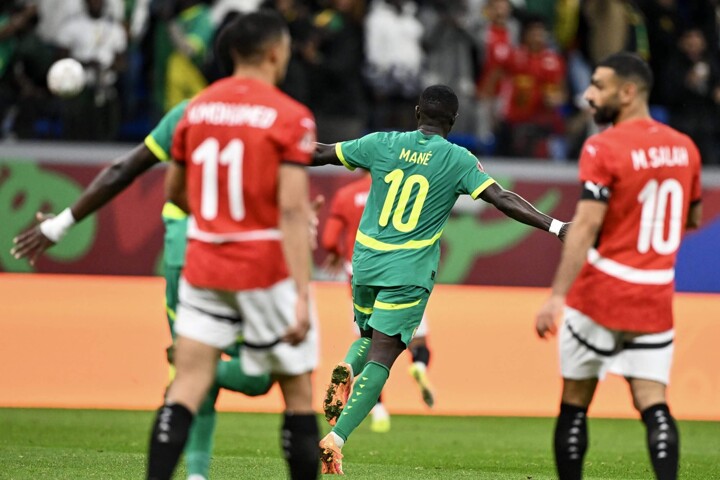
What stings most is that Senegal——a nation with a population smaller than that of Cairo alone——has once again, and especially through Mané, gotten the better of him. The two were, of course, former Liverpool teammates, and their personal ambitions occasionally turned them into rivals during their club days.
On the international stage, the scoreline now stands at Mané 3–0 Salah: the final of this tournament four years ago, the World Cup qualifying playoff a month later, and now this semi-final—all won by Senegal.
There is no doubt that Salah is Egypt’s greatest footballer ever. For context, Ivory Coast won the Africa Cup in 2015—just six months after Didier Drogba retired without ever lifting the trophy, yet he remains widely regarded as Ivory Coast’s greatest player.
Still, a distinction must be made in this discussion. Salah’s greatness doesn’t necessarily entitle him to the title of “the greatest Egyptian international in the history of the national team jersey.”
Perhaps it’s unfair to judge him against the generation that achieved the unprecedented three consecutive Africa Cup titles just before his career began—none of whom played amid the sociopolitical turmoil that fractured Egypt during Salah’s rise. Conversely, none of those legends ever did what Salah has: qualify Egypt for the World Cup twice.
But Salah understands how history judges. If he were to retire today without an Africa Cup, it would remain a glaring void in his career.
Like Messi, who faced the same dilemma before leading Argentina to Copa América glory in 2021——his first senior international trophy at age 34——Salah will turn 34 on the day Egypt opens its 2026 World Cup campaign against Belgium.
Messi’s story reminds us that time hasn’t run out. Unlike Mané, who is also 33 and declared this his final Africa Cup, Salah will have another chance next June and July —when the tournament is co-hosted by Tanzania, Kenya, and Uganda; and if CAF keeps its promise to shift the Africa Cup to a four-year cycle starting in 2028, he might even get one more shot.
After stopping Salah in this tournament, Mané urged him to “never give up on your dream,” a remark that sounded slightly awkward.
Those who know Salah understand that if he ever steps onto such a stage again, he may well use those words as fuel.