


According to reports from *AS*, in response to the market pressures exerted by Premier League clubs, LaLiga is shifting its strategic focus toward youth academies and has launched the second phase of a program aimed at certifying elite youth training centers, thereby driving structural reforms across its clubs.
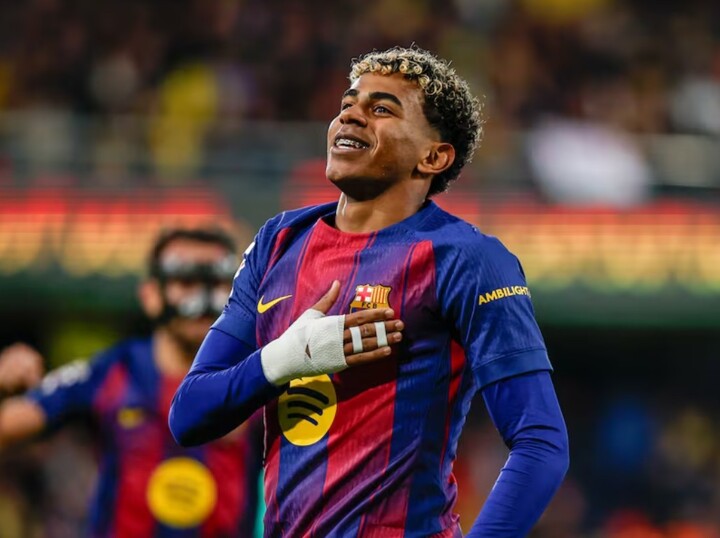
The report states that youth development systems are becoming the cornerstone for Spanish clubs both now and in the future. Faced with a high-spending transfer market fueled by Premier League capital, LaLiga is reinforcing its model of homegrown talent development—a long-term investment with dual significance. On Wednesday and Thursday of this week, clubs from LaLiga and the Segunda División gathered in Madrid to learn detailed information about the second phase of a plan that, since its launch in 2022, has already shown initial success and is reshaping the overall structures of clubs.
Spain has long been a global benchmark in football player development, with its graduates highly sought after in the international market. To consolidate this advantage, LaLiga has decided to take further action by partnering with AENOR (the Spanish Association for Standardization and Certification) to grant official quality certification to the best-performing academies. Obtaining this certification requires meeting a series of stringent criteria. This move is seen as a crucial step to push all academies toward excellence. Clubs must achieve at least 80% of the parameters established in the first phase of LaLiga’s youth development program to be eligible to apply. Thanks to sustained investments in recent years, ten clubs already meet these requirements—a scenario that would have seemed unimaginable for many just a few years ago. The number of qualifying clubs is expected to increase significantly in the coming years.
Juan Florit, Head of Sports Projects at LaLiga, noted: “Back in 2015, very few clubs truly embraced a youth development mindset. Now, it’s rare to find a club that doesn’t invest in this area. This represents a fundamental shift in philosophy, and currently around 30 clubs are solidly advancing this work.”
He also previewed: “Our goal is to see the first certified clubs emerge by the end of this season. The breakthrough might not happen immediately, but it will certainly come soon. Some clubs that traditionally paid little attention to youth development have already invested four to five years and are doing exceptionally well. Within the next two to three years, they will draw significant attention for their player development and transfer sales.”
The dual benefits of youth academy investment are becoming increasingly evident.
First, clubs can effectively control costs by promoting internally developed players instead of making external signings. Sometimes, merely promoting one reserve-team player to the first team can offset the entire year’s investment in the youth system. Selling a homegrown player who cannot secure a spot in the senior squad may generate returns sufficient to cover several years of investment. Second, revenue from selling academy graduates continues to rise, peaking at €286 million during the summer 2025 transfer window—an asset that generates such substantial and consistent cash flow, which is rare in football. Meanwhile, the sporting returns are equally impressive: thanks precisely to this deep-rooted commitment to youth development, Spain has won more major titles than any other nation over the past decade, both at club and national team levels.
Although top young talents still occasionally move abroad, the value of those remaining in LaLiga is significant: the total market value of Spanish-trained players currently playing in LaLiga exceeds that of their counterparts in the Premier League by €400 million. LaLiga is leveraging this successful model to counter the financial dominance of English clubs. Addressing the academy directors attending the meeting, Florit stated: “We are riding a wave of positive momentum.”
A revolution in youth development
Since the launch of LaLiga’s youth development program in 2022, nearly all Spanish clubs have embraced this philosophy. They have thoroughly reformed their sporting strategies, reducing excessive emphasis on short-term results and placing greater importance on long-term gains through sustained investment in younger age groups. Specifically, investments have focused on addressing previous weaknesses, such as infrastructure (compliance rates rising from 49.4% in 2022 to 73% today—a 34% increase) and comprehensive player care systems (from 38.3% to 76%).
However, one metric has shown relatively modest growth: the rate of progression into professional football (rising only slightly from 43.1% to 47.7%). This means that although more academy players are making first-team squads and earning playing time, the promotion ratio still has room for improvement. In this regard, Spain already leads Europe’s top five leagues: last season, homegrown players accounted for 19.78% of total minutes played in LaLiga, compared to just 13.50% in Ligue 1, which ranked second.
This slower growth stems from multiple factors. First, head coaches sometimes adopt conservative approaches and hesitate to give young players ample opportunities. Second, the systemic investments initiated in 2022 have yet to fully bear fruit. Returns from investments in infrastructure, specialized personnel, and personalized player support often require time to materialize. A “breakthrough period” in youth development outcomes is expected within the next two to three years.
Manuel Higuera, president of Racing Santander, was among the most resolute voices at this week’s Madrid meeting. Speaking before nearly 100 attendees representing 42 clubs from LaLiga and the Segunda División, he declared unequivocally: “The only sustainable model of success in football is one that is stable and long-term. While some still view youth development as a cost, we see it as our most critical strategic investment.” His Cantabrian club has become one of the standout examples of youth development among Segunda División teams within LaLiga’s framework.
Higuera elaborated further: “Returns sometimes come quickly, sometimes slowly. But for us, youth development is essential—it’s part of our club’s identity. The payoff isn’t just financial; it’s also about belonging and closeness—fans feel deeply connected to the club because of its strong academy system.”
He insisted that evaluating youth programs should not overly emphasize match results from younger age groups but should instead focus on the holistic development of individual players: “I’m fully aware that competitive results are temporary and shouldn’t be the decisive criterion for measuring our long-term efforts. Real rewards will inevitably come.”
LaLiga officially launched the second phase of its youth development program this week, aiming to further solidify its position as the global benchmark in football talent creation. It is anticipated that AENOR’s authoritative certification will drive continued investment and serve as a powerful example for clubs that have not yet firmly committed to this sporting model. The league has already begun studying incentive policies designed to reward clubs that achieve tangible success in promoting academy players to their first teams, without excessively impacting their salary cap limits.