


On May 26, in an interview with FIFA, Cape Verde national team coach Bubista stated that the Cape Verde national team is showing the world that "small countries can also make history," and will face strong opponents "fearlessly" at the 2026 World Cup.
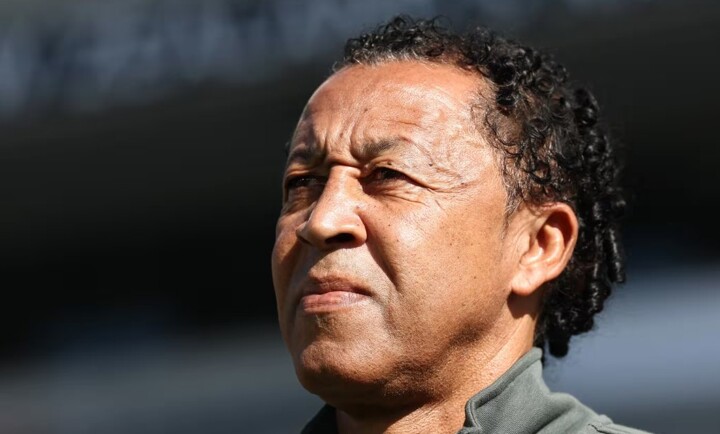
Bubista recalled his childhood experience of watching the World Cup in his hometown and how he grew from a child playing football in a small island village to a head coach leading a team into the World Cup. He said that as a child, he was deeply influenced by legendary players like Maradona, and this passion continues to this day.
Bubista, whose real name is Pedro Leitão Brito, lived in the village of Vila on Boa Vista Island, Cape Verde, when he was young. He often gathered with neighbors to watch World Cup broadcasts, but with only one TV in the village, it wasn't easy to watch the matches.
He recalled that the first football stars he remembered included Lothar Matthäus, Pelé, and Maradona, who formed his earliest World Cup memories.
Bubista stated that these scenes ignited his passion for football, eventually leading him to become a professional player and, years later, the national team coach.
Bubista, who served as the captain of the Cape Verde national team for 11 years, is now more widely known by his nickname "Bubista," which comes from the Creole name of the island where he spent his childhood.
Today, he leads the Cape Verde national team, known as the "Blue Sharks," to their first-ever World Cup finals, marking a major breakthrough in the nation's football history.
Bubista said: "I was very small when I was a child, and there was only one TV in our village, so it wasn't easy to watch World Cup matches. I remember those great players, they made me fall in love with football."
In a World Cup qualifier on June 5, 2004, the former center-back represented Cape Verde in Bloemfontein, South Africa, where the team lost 2-1 to South Africa.
He said: "Football has been a part of my life since childhood. When I was little, my mother would even make us footballs out of socks to play with."
"My whole day revolves around football, it gives players and fans very positive energy. We always believed we could do better, and now we are achieving that."
He further emphasized that Cape Verde's qualification for the World Cup is not only a national honor but also an important symbol for African football as a whole.
He said: "The World Cup is a huge opportunity for the people of our country and for the entire African continent. We are a small country with a population of just over half a million, but we are proving to the world that no matter how small a country is, with hard work, it can reach the highest stage like the World Cup."
Cape Verde will face three experienced strong teams in Group H of the 2026 World Cup. They will play against favorites Spain on June 15, two-time World Cup champions Uruguay on June 21, and traditional Asian powerhouse Saudi Arabia on June 26.
Bubista said that after the draw, he had expressed a desire for the team to play against the strongest teams in the world, and now they have gotten their wish.
He said: "We are very calm. It is an honor for us to be in the same group as the world's top teams."
Bubista also pointed out that the key to Cape Verde's historic World Cup qualification lies in a change in the team's mindset.
They achieved a breakthrough by defeating experienced Cameroon in the qualifiers.
He emphasized that this "daring to believe in ourselves" mentality was the key to success.
Regarding the upcoming World Cup finals, Bubista said the team will not change its style.
He said: "We will face one of the best teams in the world, but we will not fear any opponent. We also want our elders in the country to experience this historic moment. We have no fear, we are not afraid of anything."