


After Arsenal won the Premier League title, Carlos Cuesta, a former Arsenal assistant coach who is currently coaching Parma, was interviewed by The Telegraph.
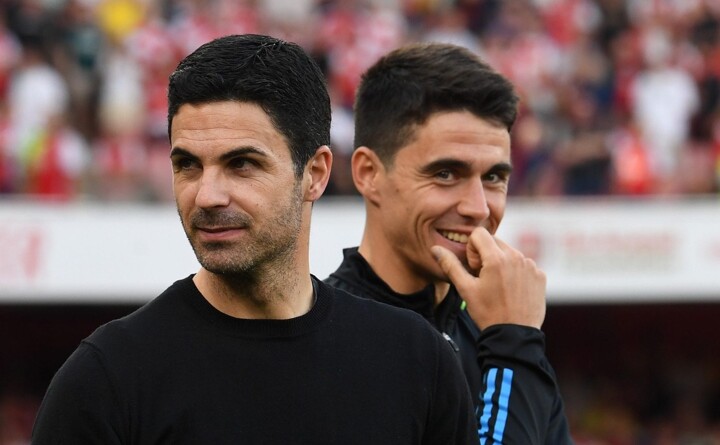
Before the interview with Carlos Cuesta, The Telegraph reporter spoke with Parma’s CEO, Federico Cherubini, who made the 30-year-old Spaniard the youngest head coach in Serie A in nearly a century.
“Sometimes I think it’s really not easy for Carlos because he came to Italy, a young coach from Spain, who worked with Arteta. So, everyone in football says he’s the new Pep Guardiola,” Cherubini explained, admitting he hired a “rookie” but adding it was an “easy choice” because Chivu was poached by Inter Milan last summer.
“I haven't heard that before,” Cuesta later responded with a smile when asked about Cherubini comparing him to Guardiola. “I think he’s more talking about the style of play. I guess what he said is linked to Mikel and how he worked with Pep, and how I worked with Mikel.”
Whether talking to Cuesta or about Cuesta, it’s hard to avoid Arteta. The two worked together at Arsenal for five years and had a very close relationship before Cuesta left for Parma. There, he further enhanced his growing reputation by comfortably securing a Serie A spot with a young and much-changed team.
At Arsenal, Cuesta served as a first-team development coach—a role similar to the one Guardiola gave Arteta at Manchester City—before becoming an assistant coach. His influence was profound, evident from his interactions with players like Saka and Ben White in the club's 'All or Nothing' documentary. His proximity in age to the players also helped, but more importantly, it was his caring approach to people.
“For the players, the focus is: Are we going to win? Am I going to play? But there is a third focus: Am I growing?” Cuesta said. “And as coaches, we always make collective decisions for the team, and many times, this doesn’t exactly align with what each individual wants most. But at the same time, you have to try to build a process where every player feels cared for, appreciated, and is progressing.”
So, how difficult was it for him to leave Arsenal on his “journey” after they had just won their first Premier League title in 22 years and were preparing for Saturday’s Champions League final?
There was a long pause here — a very long pause, in fact — before Cuesta said: “Very difficult. Very difficult.”
Another pause.
He added: “For many reasons. Many reasons. Especially because of the people there, and the beauty of the project. I know, I firmly believe, I firmly believe the best is yet to come. Especially because of those people, especially Mikel. The Mikel people see is already excellent. But his best side is what people don't see. He is excellent as a person, a leader, and a coach. And everyone in the entire club organization. They deserve all of it because of all their hard work. Not just hard work, but high-quality work. Vision. Strategy. Belief. There is so much to commend. So, credit goes to them.”
Perhaps because he is now managing independently, and at a club the size of Parma, Cuesta did not want to talk too much about Arsenal, although he said he still contacts Arteta “often.”
“I understand the connection, Arsenal was a very important part of my life. And at the same time, they are reaching new heights now. They totally deserve all of it,” he said.
All of this ultimately led Cuesta to decide to embark on the head coaching path alone. He has been undergoing psychological counseling for the past four years.
“It’s like people who go to the gym and get a personal trainer,” he explained.
“You don’t only see a psychologist when you feel bad. That’s like only going to the gym when you get fat. No, you go in advance. You go when you need it. I know it’s very personal. Everyone is different. For me, it has been very helpful in all aspects of my life, including my relationships with my family, with myself, and with my players. It’s just another tool, and I think it’s very normal.”
“When we take care of others, when we manage others, too often we only think of others. And that's fine, and it should be. But at the same time, I always say the same thing: The best way to improve others is to first improve yourself. So, if I don't spend time on myself, if I don't strive to be a better version of myself, then one day, perhaps I will…” He made a sudden downward gesture.
To explain who Cuesta is, we have to go back to when he was 15. That's when he realized he would be a far better coach than a player.
“Because I didn’t think I was good enough to be a professional player. Not because of injuries. For me, the problem wasn’t in my knees, but in my feet,” Cuesta said.
Born in Mallorca, Cuesta later began studying for a sports science degree in Madrid and used his time in the Spanish capital to proactively contact staff at major clubs, even reaching out to people at Real Madrid and Atletico Madrid via social media.
“I tried to think, okay, how can I stay in Madrid and coach? I started writing for the journalist Martí Perarnau on a website called 'The Tactical Room,' and contacted people at big clubs, and later I got an interview at Atlético Madrid,” he said.
After working at Atletico, he spent a year visiting other clubs, meeting coaches, and attending seminars. Arteta was one of the people he met there.
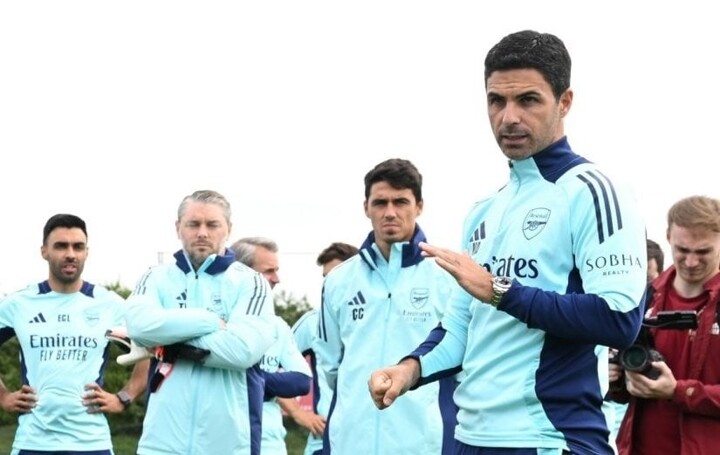
“He was working at Manchester City at the time,” Cuesta said. “I got to know him, and from then on, we started exchanging ideas about football. For many years, we kept exchanging views. He was following his path at City, and I was following mine at Atletico and Juventus. Then, thank God, I had the opportunity to start working with him.”
When Parma made an offer, Arteta did not stop him from leaving. But was leaving a risk?
“Everything is a risk. You have to weigh the risks against the opportunities,” Cuesta said.
“I knew I was coming to a generally traditional country. No playing experience, no head coaching experience, and I was a foreigner. In everyone's eyes, there would certainly be a lot of curiosity.”
“The reality is, my credibility was zero. Because I had no background, no support, other than the trust others placed in me. So, my credibility, in fact, was the trust of those who chose me.”
“But at the same time, I don’t think everything in life is logical. From a rational perspective, we could say this is an adventure. But life sometimes relies on feeling. And I felt at the time that this was the right place. And that feeling paid off.”
The reporter reminded him of a quote from Mourinho, who, when he first emerged 20 years ago, said he was "an overnight success 20 years in the making," because he had dedicated so much of his life to climbing the coaching ladder.
“Absolutely. I mean, I’ve been coaching for 15 years. That’s exactly my point,” Cuesta said.
“I was at Atletico for four years, then Juventus for one year (where I first met Cherubini), then five years as an assistant coach at Arsenal. Then I became a head coach. I wouldn’t say overnight, because it all happened gradually. Maybe it's just stepping into the spotlight as a head coach. But half my life has been coaching, building dreams, striving to work with people, and making a positive impact.”
Talking about Mourinho also allowed Cuesta to explain his coaching philosophy.
“This quote wasn’t originally Mourinho’s, but he said it: He who only knows football, doesn’t truly know football. This was originally said by César Menotti. So, you have to know many things,” he said.
“Knowledge is transferable: whether it’s a CEO in an industry or a football coach, the principles of managing people, creating culture, and staying at the top level long-term are actually very similar. I like learning from all kinds of people, from people in different industries, and trying to apply these experiences to football.”
Cuesta then detailed his experience visiting a local winery. The winery belonged to Parma's legendary coach Nevio Scala.
“His son explained to me how plants grow, how wine is made, and so on. And there was a lot in common with football,” Cuesta said, then explaining in detail why they don't give plants too much water too easily.
“They don't want to create a lazy plant. The plant has to find a way to get water itself, to create resources internally,” he said.
“And it’s often the same in football. Coaches always give too much information, we arrange everything too well. So, when difficulties arise, players can't cope, they can't have that resilience. These parts resonate strongly with me.”
This story also brings to mind the management style of another head coach — Arteta — such as his use of light bulbs during team talks or hiring professional pickpockets at dinner parties to keep players on their toes.
Would Cuesta adopt a similar approach?
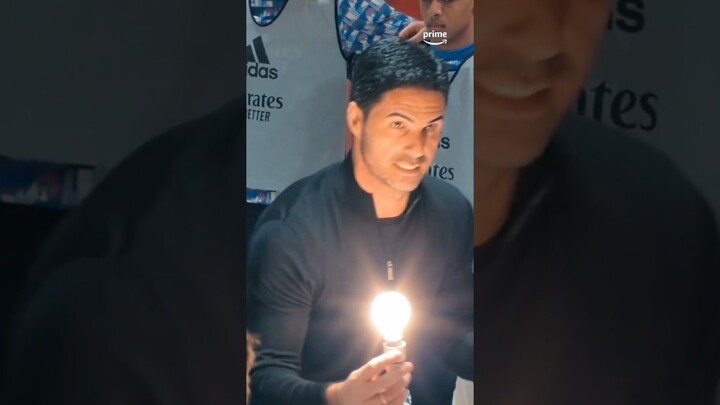
“He definitely does more than me,” he said, laughing.