


According to English media reports, Graham Potter, head coach of Sweden, spoke to Lawrence Ostlere about the "strange" emptiness after being eliminated from the World Cup, his experience with tournament football, and the challenges of building a team that can compete with the strongest teams in Europe.
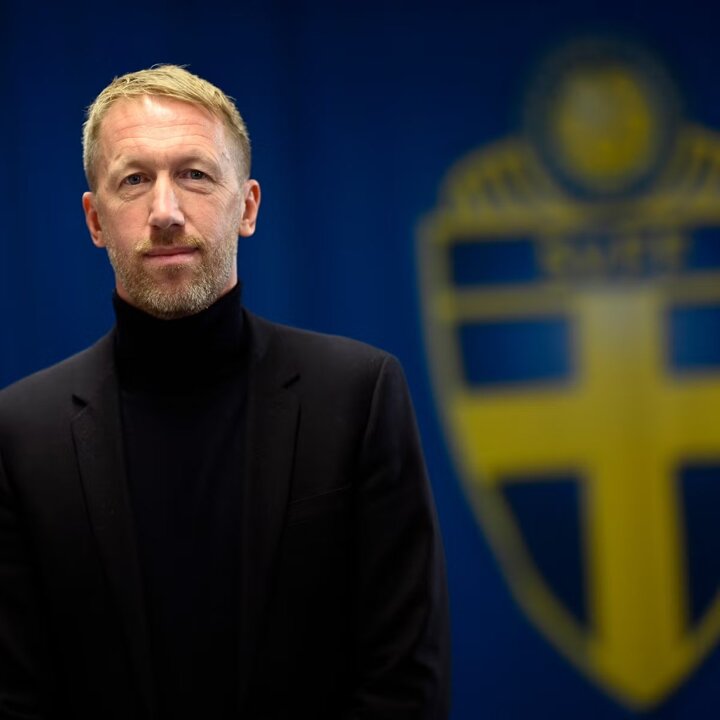
Graham Potter, head coach of Sweden, spoke to Lawrence Ostlere about the "strange" emptiness after being eliminated from the World Cup, his experience with tournament football, and the challenges of building a team that can compete with the strongest teams in Europe.
Want to save your favourite articles and stories to read or reference later? Become an Independent Premium member today.
What does it feel like to be eliminated from the World Cup? For weeks, you're in your own bubble, like a brotherhood going to battle every few days. Then you lose 3-0 to France, and everything comes to a screeching halt. Hotels and flights are cancelled, no more matches, no more training sessions, no more team meetings. A coach recently described the desolation after such a loss perfectly: as players and staff rushed to the nearest airport, he curled up alone in his hotel room, dejected.
"That's a very apt description," Graham Potter nodded. His Sweden team was defeated by France in the round of 32 this summer. "For about a week, you're in a completely empty state. It's something I've never experienced before. For weeks, you eat, sleep, drink, and work with these people, living in an incredible bubble, and then it's all gone. You don't even know if this group of people will ever get together again."
Sweden had one last night before going their separate ways, and they were just a short distance from Manhattan. "We were staying in a hotel in New Jersey, so we managed to go to New York, had a meal and some drinks with the staff, just enjoyed one last night together. Then everyone went their separate ways, which felt very strange."
After the dust settled, Graham Potter gathered his assistants and analysts to conduct a detailed review of Sweden's World Cup campaign – "that's a very interesting part of this job," he said. Some joined via video conference, while others met at the Swedish FA headquarters in Stockholm, including former Sunderland midfielder Seb Larsson, whose voice Graham Potter often hears. "I haven't played international football, and certainly not for Sweden, but he has played 130 games, so his experience and understanding of the national team are excellent," Graham Potter said.
Emotions were complex. The World Cup started perfectly, with Sweden beating Tunisia 5-1. But a 5-1 loss to the Netherlands and a 1-1 draw with Japan meant Sweden finished third in their group, running into an unstoppable France team, who completely dominated them in New Jersey.
"Losing never feels good, but sometimes you have to say, 'Okay, maybe the better team won.' But then you start thinking, 'Could we have played better?' Those thoughts don't necessarily get detailed that night, but your mind quickly goes there. You have to step back and tell yourself, 'Okay, we're disappointed now, and it feels terrible. But if we knew this would happen before we came, would we accept it? Of course, we would.'"
When Graham Potter was interviewed by The Independent in London, Sweden was in the midst of an excellent Nations League campaign, just one step away from promotion to the top tier. As his first job coaching a national team, he was enjoying the wild ride. Graham Potter said he already felt Swedish, singing the national anthem with that West Midlands gusto.
This improbable romance began when the 35-year-old Graham Potter, fresh from earning a master's degree in leadership from Leeds Metropolitan University, took on a job nobody else wanted—moving to remote Östersund. The Potter family arrived in mid-winter, with huge snowdrifts piled along the roads and the sun shining for less than five hours a day. His wife cried every day for those first few months.
"She quit her job and left her old life. It wasn't like moving to Monaco, especially when we arrived in January, it was minus twenty-something degrees outside, and it got dark at two in the afternoon. It was a great place, but it was really tough at first. It was only the fourth tier of Swedish football then. So there were times you'd think, 'Okay, is this really right for me and my family?' But you have to give it time. Luckily, we stuck together and persevered, and it was the best decision we ever made. It was all worth it."
After 15 years of ups and downs in club football, Graham Potter took over Sweden last October, after his predecessor Jon Dahl Tomasson led the team to a disastrous World Cup qualifying campaign. Sweden had one last chance to salvage their qualification through a playoff in March.
He quickly learned two characteristics of international match rhythm. First, time: a lot of time, almost excessively long and empty. Graham Potter has a house in Sweden, but still lives near Brighton, and he flew all over Europe during the four-month playoff waiting period to meet new players. One day he was in the center of Borussia Dortmund, the next he was in the medieval streets of Bergamo, and then he flew to London, Liverpool, Newcastle United, and Glasgow.
"My passport was almost bursting because you just have a half-hour, 40-minute coffee with the players and chat. It's good to know what stage of their career they're at, how things are at home, how they view the situation, because things weren't good when I took over. I found that building relationships was very useful, and understanding what they were doing at their clubs was also very useful."
Then, suddenly, there was no time. The players flew to Valencia on Monday for the playoffs, and on Thursday they faced Ukraine in the semi-finals. Graham Potter said: "We only had a day and a half [of preparation time], and this was a World Cup playoff. So, would this game be about intricate passing from the back and beautiful attacking patterns? We needed to win two games. So our starting point was defensive stability, focusing on set pieces and counter-attacks, because we have players like Viktor Gyökeres and Anthony Elanga who are good at exploiting large spaces, and their ability in wide attacks is second to none."
Viktor Gyökeres scored a hat-trick to defeat Ukraine, and then a late winner against Poland to send Sweden to the World Cup. There, Graham Potter learned another thing: the cruel end of knockout football and the shock of a journey cut short midway through.
After speaking with each player throughout the summer, he found a consensus: they enjoyed the World Cup, but were also eager to compete against strong teams like the Netherlands and France when they left. Despite the wide scoreline, Sweden showed some signs of life against the Netherlands. Graham Potter switched to a more aggressive formation after the first hydration break, and Sweden maintained the upper hand until halftime. However, the match against France was completely one-sided.
"How do we get to a point where we can beat France? The reality is, if you're Sweden, you need Isak firing on all cylinders after an excellent season, and he probably wasn't at that stage then. You need Kulusevski, one of your best players. Isak Hien also couldn't play, and he's our number one center-back. So you hope to come here with your strongest squad.
"Look at players like Viktor Gyökeres, Isak, Kulusevski, Yasin Ayari, and Bergvall; they have a common trait, and you have to build around that, actively pressing any opponent. That's probably the most disappointing part, and a lesson we learned – we couldn't do that against France. If I had to lose, I'd rather lose the way we did against the Netherlands than against France, even though that scoreline still hurts.
"These players are at a stage where they want to play this kind of football. They want to be proactive, they want to play aggressively, and that's the most exciting challenge."
Sweden's strong start in the Nations League has already shown signs of a shift towards a proactive pressing team, with 3 wins and 1 draw, taking control of Group H with Bosnia and Herzegovina, Poland, and Romania. Another win against Bosnia and Herzegovina on Saturday would secure promotion to League A, where they would compete with Europe's strongest teams.
Viktor Gyökeres is the top scorer, having scored in all 4 Nations League matches and tallying 10 goals in 11 appearances since Graham Potter took over Sweden. His appearances for Arsenal this season have been inconsistent, but Graham Potter isn't worried.
"Honestly, it doesn't matter, because whether he plays every week for Arsenal or not, he plays very well for us. What happens at the club is part of what you can't control. You just have to accept that and then, from a workload management perspective, ensure he's properly protected when he returns to the squad. But he's very professional, in excellent physical condition, and loves playing for Sweden."
Kulusevski missed the World Cup due to injury but finally returned to Tottenham Hotspur last month. Before the game, Graham Potter sent him a text message. "It was really great to see him back on the pitch. I haven't worked much with him because he's been out for so long, but everyone in the national team says he's very important and influential."
In Kulusevski's absence, his prospective brother-in-law became a key figure. Yasin Ayari, engaged to Kulusevski's sister Sandra, has been central to Brighton & Hove Albion's strong start to the season and has performed equally well for Sweden, scoring 2 goals at the World Cup and playing a starring role in recent Nations League matches. Graham Potter smiled and said, "His progress, starting from last November, has been truly astonishing."
The next task is to transform this generation of most talented Swedish players into a team that can directly compete with the world's strongest teams before the 2028 European Championship, and to stay in the game for as long as possible before the final whistle blows.
"We all share the same feeling that the World Cup was a fantastic experience. But we want to keep moving forward, we want to improve, we want to get better. We are not satisfied with what we have already achieved. We did many good things, and the group atmosphere was excellent, so we took a significant step forward. But at the same time, you hope it continues. We are not ready to go home yet."
Join the thought-provoking discussion, follow other Independent readers, and check out their replies.