


This article is reproduced and translated from The Guardian, originally published on July 3, 2026, local time, by Alasdair Howarth.
Introduction: Cape Verde, an island nation of only 500,000 people with no professional league, is the biggest dark horse of this FIFA World Cup. Goalkeeper Vozinha became an overnight sensation, and football fever is spreading, with the excitement moving from the Gamboa Beach music festival to the entire world.
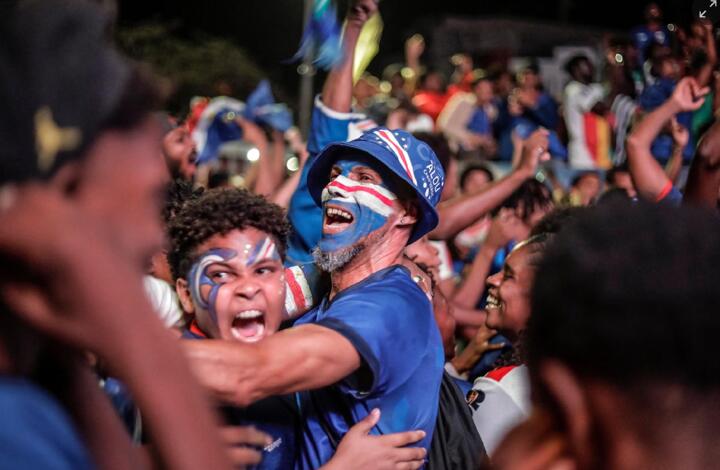
The Gamboa Music Festival is the largest music event on Santiago Island, Cape Verde. Since its inception in the early 1990s, this narrow beach at the foot of the Praia Plateau is completely transformed every festival weekend. On weekdays, only a dozen fishing boats are moored here, but during the event, it becomes one of the country's largest carnival venues, attracting thousands of enthusiasts. Previous festivals have featured top Cape Verdean musicians performing local styles such as Morna, Funaná, Coladeira, Batuque, and Tabanka.
But on the opening night of the three-day festival last Friday, the stage spotlight shifted to the most popular new group in Cape Verde – the Blue Sharks band, which is also the national team, the Blue Sharks Legion.
After the opening act, Sumara, finished their performance, the venue was immediately transformed into one of the largest FIFA World Cup viewing sites in the country. Countless Cape Verdean fans sat down, nervously watching the thrilling 90-minute match: the national team star Vozinha led the team in their final group stage match against Saudi Arabia.
After 90 agonizing minutes, the celebration continued all night, lasting until after the festival closed at 8 AM. The people of Cape Verde celebrated the 0-0 draw with the opponent, and the team successfully advanced to the FIFA World Cup knockout stage. This Friday, they will face Argentina in Miami.
Janice Miranda, who watched the game on the beach with thousands of others, told The Guardian: "The scene was incredible. Watching countless compatriots and a large number of tourists celebrate this historic moment with us was an unforgettable experience. Our Blue Sharks' FIFA World Cup journey has been amazing, and everyone is incredibly proud of them."
Amazing is indeed the right word. From drawing with Spain, to Kevin Pina's miraculous goal against Uruguay, to goalkeeper Vozinha's social media account gaining 17.5 million followers in two weeks, Cape Verdeans have been immersed in the joy of their national team's achievements since the FIFA World Cup began.
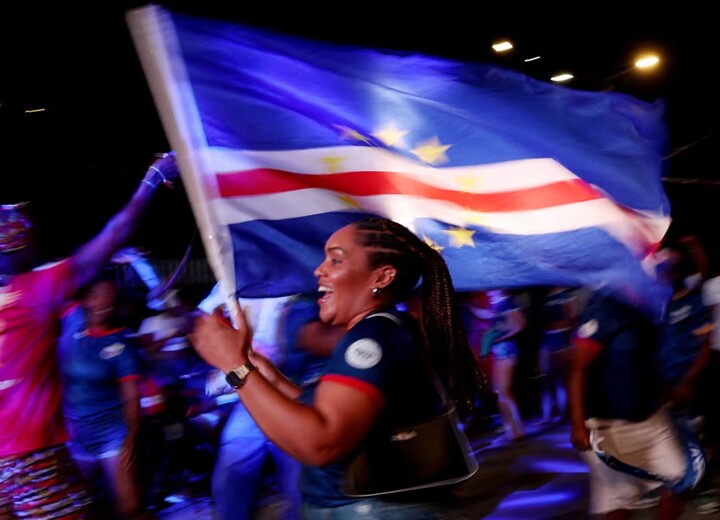
João Pina, a journalist based in Praia, told The Guardian: "For the match against Spain, all companies gave employees a half-day off, and in reality, almost no one was diligently working that day."
Cape Verde only participated in FIFA World Cup qualifiers for the first time in 2000, yet this team managed to draw with pre-tournament favorites and European champions Spain, with the entire nation watching with bated breath. Since then, the entire country has been almost daily immersed in a celebratory atmosphere.
Anníbal Lizardo, a teacher in Mindelo, the second largest city on São Vicente Island, said: "There are parties everywhere, a carnival after every match. Before the tournament, everyone said we only had a one percent chance of qualifying, but we don't care about the odds, we just want to celebrate to the fullest."
The celebration venues are everywhere: from Gamboa Beach, to the Blue Sharks' traditional home stadium, Estádio da Várzea, and to Alexandre Albuquerque Square in the old town. The entire city of Praia and all nine inhabited islands of Cape Verde have set up free fan viewing areas.
Every day, on match days and between matches, regardless of profession, citizens all wear the national team's blue, white, and red jerseys. The Cape Verdean jersey has become the new national attire.
Janice said: "Before the FIFA World Cup, our national flag could only be seen at the presidential palace and some public buildings, but now it flies everywhere on houses, cars, and motorcycles. Everyone proudly displays their national flag."
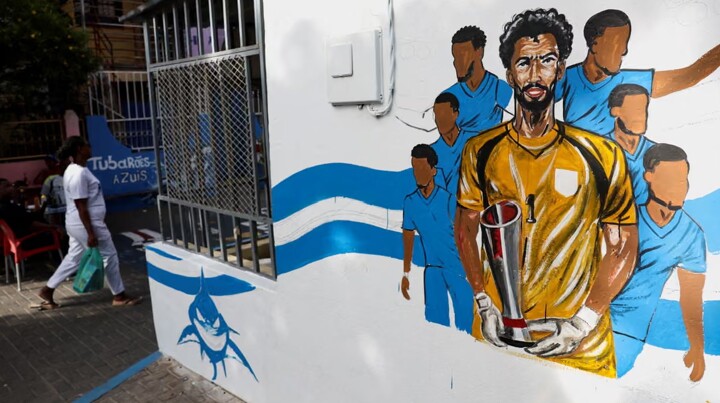
"Everyone on the street talks about football, about Cape Verde. After every match, no matter how late, people drive through the streets to celebrate."
Cape Verde has no professional league, making the team's current success a miracle. A well-managed football association, a sound youth training system that sends players to Portugal, and active recruitment of descendants of overseas expatriates have all contributed to this small football nation rising to the world's biggest stage. This Friday, they will become the smallest country by land area to participate in the FIFA World Cup knockout stage in history.
This success has brought Cape Verde to the world's attention, and for a small country of only half a million people, this exposure is incredibly valuable."Before this, no one knew where Cape Verde was. Now people will be curious to come here, learn about the local culture, and wonder why such a small country can make waves in the football world."
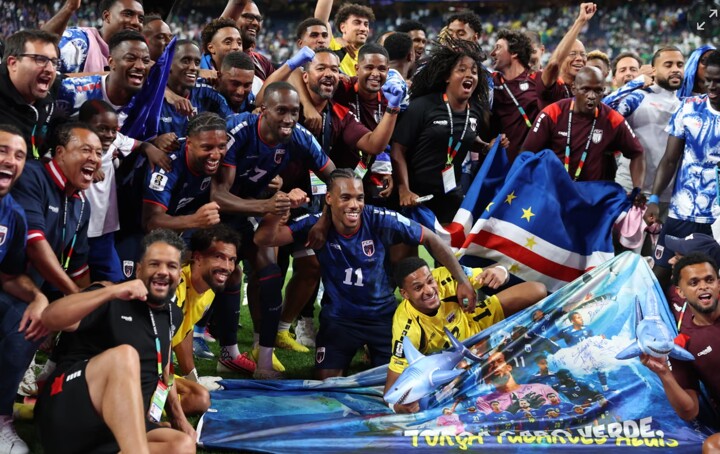
Now they are about to face world champions Argentina, led by Messi. This is not only a dream for all Cape Verdean fans, but also for goalkeeper Vozinha.
"It's my dream to play against Messi," Vozinha admitted after the draw with Saudi Arabia. "I will proudly tell my children later that I once played against him."
After three tough group stage matches, confidence is high across the island. "We can beat Argentina," Janice said. "We know Argentina is the strongest team in the world, but I firmly believe we can defeat them and continue our legend."
Regardless of Friday's outcome, this team will be considered national heroes.
Although the Gamboa Music Festival has ended, the grand performance of the Blue Sharks Legion is not over yet.
The celebration spreads from Gamboa Beach to all ten islands of the nation, and even to every corner of the world.
AF's PC site is now live! Browse full news, comments, match details and stats on your computer. Visit: www.allfootballapp.com