


Anyone who witnessed it will never forget the utter chaos of Carrick's last game at Old Trafford. But as the departing Manchester United manager barely salvaged some dignity in the frantic conclusion against Aston Villa, the man who now best represents Manchester United's dismal decline sat on the bench in a training kit.
Dalot is an honest, and reportedly fully committed, Portuguese full-back who has been with Manchester United for over eight years.
In 2018, Mourinho saw his youthful potential and brought his compatriot to Manchester United, but he never managed to make further progress. He was never quite good enough for a truly top English club, yet he has made over 250 appearances for the most famous club and played under five different permanent managers.
On Sunday, when he was substituted in the 60th minute, he was booed by his own fans. He played particularly poorly that game, but the boos were not truly aimed at him.
No, the fans were not targeting Dalot, but rather the fundamental problem he represents: the steady, brutal, and unforgivable decline in Manchester United's footballing standards. This actually began in the final years of Ferguson's last tenure and has never stopped since.
It is this that has taken Manchester United from Ferguson's farewell championship in 2013 to their current position in the bottom three of English football's top flight. It is this that has drained Manchester United's influence and prestige. It is this that has cost yet another Manchester United manager — the seventh — his job.
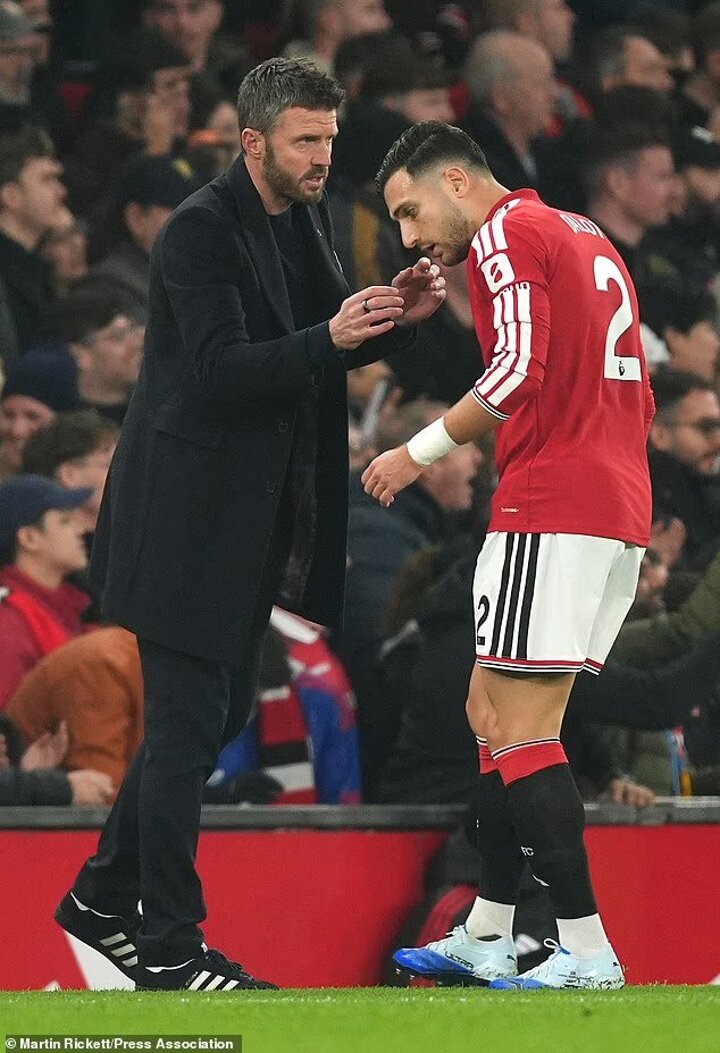
Carrick was not a qualified manager for Manchester United. Sir Jim Ratcliffe and the unreliable, fanciful people now in charge of football affairs made this appointment an emotional mistake, just one of many they have made.
With a better manager and a better coach, Manchester United should have been in the top half of the league. Now they have fallen to 18th place, looking like a Sunday league amateur team that only starts playing once the hangover wears off, and the responsibility for this lies with him.
However, Manchester United is a club whose purpose is to win trophies, regardless of what the Glazer family has said recently. Only when they buy better players—and I mean better footballers, including better people—will Manchester United win major trophies again.
This sounds simple, even cliché. But it is the plain truth of football. As long as Manchester United continues its habit of spending big money for too little return, the difference a manager makes will be at most six or seven places in the league table. To end this vicious cycle of self-harm, Manchester United needs far more improvement than that.
Modern Manchester United is plagued by off-field problems, many of which begin and end with Sir Jim Ratcliffe's terrible arrogance and narcissism. This man, overly confident and spectacularly wrong, still insists on having a journalist he hired to write about Manchester United's path back to glory follow him everywhere. It's safe to say that book won't be written before Christmas this year.
But the thread connecting Ferguson and CEO David Gill's final years, the years of Woodward, Richard Arnold, and John Murtough, all the way to the dark period of Sir Jim Ratcliffe and INEOS's reign, is simple: the players are not good enough.
Despite being financially burdened by the Glazer family's control, Manchester United has still spent approximately £1.75 billion on their first-team squad over the past decade.
To take a club backward and still manage to do that truly takes skill. To reach this point and only acquire one player – captain Bruno Fernandes – who can claim to have consistently performed during his time at the club, is truly not easy.
But Manchester United has done it, and this ugly trail of poor judgment and waste follows the team every time they step onto the pitch.
Manchester United is weak off the pitch and even weaker on it. Their football reflects their off-field strategy: messy, wasteful, and lacking stability.
A few years ago – when former CEOs Woodward and Arnold were trying to fix the broken club – they brought in Ferguson, Sir Bobby Charlton, and former captain Bryan Robson to help define what a Manchester United team should look like.
The keywords they set were "exciting, brave, confident, humble." But where did these things go?
Manchester United is once again facing a big decision on a new manager. There aren't as many suitable candidates as they might think, and Manchester United is not as attractive as it once was. High demands with a shaky foundation is not a good combination.
A good coach could have improved the team. Carrick's coaching staff included two former center-backs: Evans and Jonathan Woodgate. What exactly have they been doing for the past two or three months?
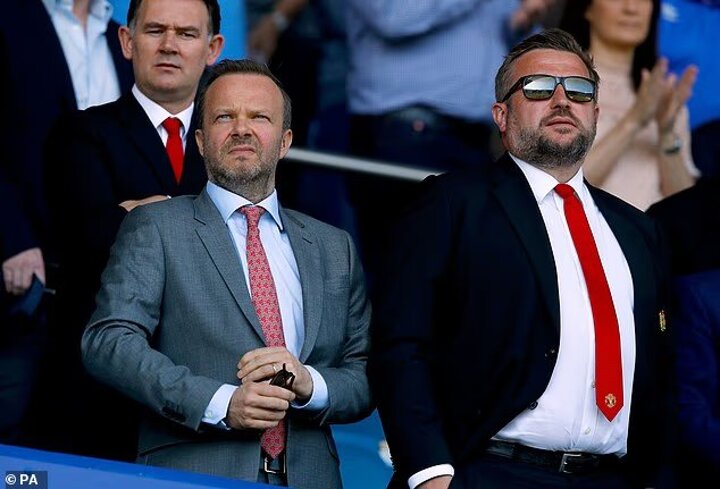
But Manchester United is still four or five decent transfer windows away from the level they truly need to reach. The last time they made a string of good signings at Old Trafford, Carrick was probably still in the first team.
Manchester United not only needs truly talented players, but also truly suitable people, not those who would rather complain to television cameras after a loss than go home and reflect on their own responsibility in what just happened.
Last summer's strategy looked like it was copied directly from ChatGPT, which is very bad for current Football Director Jason Wilcox. Trying to "fix" the midfield with three signings while delaying the problem of needing to fix the back four for another 12 months is less a strategy and more transfer suicide.
The view that Wilcox should also go with Carrick is not without merit. Looking through the autumn haze on Sunday afternoon, Wilcox's face was as grey as his recent resume. Another view is that bringing in players like Bryan Mbeumo and Matheus Cunha at least to some extent shows that returns are picking up.
Whichever path you take, it must ultimately lead to improvement—the only critical area that can nourish or starve a club. Based on this, the first question a potential manager should ask is: who is buying the players, and based on what long-term plan?
This Manchester United under Carrick has looked exactly like what it is this season: a group of individuals assembled by different people, under different principles, for different managers. Strangely, it hasn't worked.
It's well known that Manchester United needs a left-back this summer. Lewis Hall of England and Newcastle United might be an option. But Manchester United ultimately put their trust in 31-year-old Luke Shaw, who has a long history of injuries.
The result is not surprising: Shaw is now injured again. This brings us back to the beginning: on Sunday against Aston Villa, right-footed Dalot was forced to awkwardly deputize on the left side of Carrick's defense.
You could say it was all predictable. Many saw it coming. Both in the dressing room and in the stands at Old Trafford. Carrick? He knew it too, but he was only the head coach after all.
He will be upset for a while when he leaves. He is a person with high emotional intelligence and empathy, and the trauma of the past ten weeks will leave him reeling. However, time will make him understand that he really should leave there. Last summer, when he took over, Ferguson reportedly worried about the impact the job would have on him. As usual, Carrick's old boss was right.
Manchester United's structure is designed to fail, and Carrick's successor will soon realize this. When he walks into the first-team dressing room for the first time, looking for those who can consistently help him, too many eyes will be looking at the floor.