


According to the Spanish media outlet Sport, former international player Manolo Jiménez looked back at the 1982 World Cup in Spain and is optimistic about the Spanish team's chances for the 2026 World Cup.
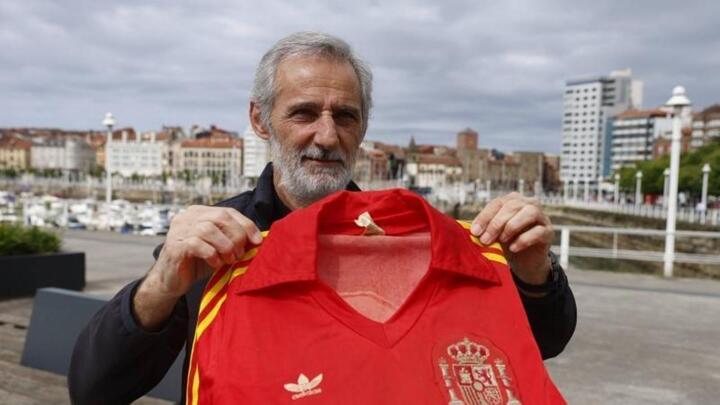
When you think of the 1982 World Cup in Spain, what first comes to mind?
The first thing I remember is that in the year before the World Cup, the Spanish Football Federation formed two teams: the senior national team and another team we called "Avis". Because the World Cup was being held in Spain, they wanted more players to train with the team. If the A team went to play abroad, we would play another match domestically. I played 6 matches for that team, and they said these matches would count as international games, but later they were not officially recognized.
How did you make your national team debut?
That was in the 1981-82 season. I participated in many training camps and warm-up matches, but my only official match was against Poland. That was also the only match I was officially recognized for in the national team.
What are your memories of that debut?
Very good. I had been with the team for some time and was very close to having the opportunity to play in the World Cup. Whether it was making my debut or getting into the final squad, everyone was full of anticipation.
How did you experience the wait before the announcement of the final World Cup squad?
Very tense. We went to La Molina with a squad of 22 players, but there were only 2 goalkeepers. Everyone knew there was one person missing, which also meant someone would be left out. Players who had less playing time felt the most insecure.
Was that uncertainty difficult to endure?
Very difficult. I remember Rubio was the fitness coach for Sporting Gijón at the time and also worked with the national team. He told us that if we felt any discomfort, we should not say anything. We could go to him at night, but don't raise your hand, because the first person to say they had a problem might be out.
What was it like to play in the World Cup on Spanish soil?
It was very special. For any player, representing their country in the World Cup is an honor, but playing in your own country is even more different. To be one of those 22 players, representing Spain in front of millions of people, you feel very lucky.
Is it generally believed that Spain's performance in that World Cup was disappointing, do you agree?
Yes, of course. We first drew with Honduras, then lost to Northern Ireland, which meant we had to go all out for a win against Yugoslavia. We won and advanced, but then we faced very tough opponents like Germany and England. And our football wasn't particularly good either.
Do you feel the team could have done better?
Of course. We were playing at home, and expectations were very high. Both in terms of results and performance, we felt we could have delivered a better showing.
To what do you attribute the failure?
It's hard to explain, because there were many excellent players at the time. For example, Arconada, Zamora, and Satrústegui from Real Sociedad, who had just helped the team win the league title. Individually, they were all very strong, but as a team, we couldn't really click.
Many people talk about the so-called "disgraceful match," which was Germany versus Austria at El Molinón.
We were in Valencia at the time, and we didn't pay too much attention because we had enough of our own things to deal with. However, this kind of thing often happens in football. If a draw benefits both teams, it's hard to expect one side to take unnecessary risks.
Do you think that goes against sportsmanship?
Everyone wants to win, but if a draw benefits both sides, statistically, such matches often end in a draw.
After winning the European Championship, Spain is now going to the World Cup again. What do you think of the prospects for De la Fuente's team?
I think they have everything. The group stage gives you some leeway, but in the knockout stage, anything can happen. A bad performance, or a bit of bad luck, can knock you out. However, Spain is certainly one of the favorites to win the championship.
Which teams do you think will be Spain's main competitors?
We always think of Argentina or Brazil. Then there are the strong European teams, such as France, Germany, or England. In addition, a dark horse usually emerges in every World Cup, taking a step forward.
Do you think this Spanish team relies on individual stars, or is it more of a strong collective team?
I think this is a very cohesive Spanish team. For a long time, we have maintained the same game philosophy, with technical quality at its core. We used to have Xavi and Iniesta, and now we have Pedri, Rodri, and Gavi. There is a lot of talent in midfield, which makes this team highly competitive.