


Before reaching the milestone of 592 games in charge of Everton, Moyes was interviewed by the club's official matchday program, reflecting on his managerial career and his expectations for the team's future. He then equaled the club record for most games managed, held by Harry Catterick, in a match against Coventry City.
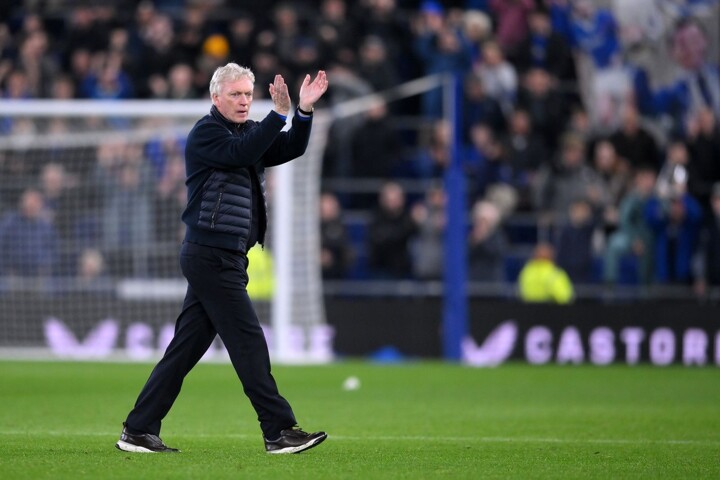
In the spring of 2002, Everton was at a low point. The team had been eliminated from the FA Cup by Middlesbrough and was 16th in the Premier League, a worrying situation. In the previous 11 seasons, the Toffees had finished in the bottom half of the league table in 10 of them. Then, a red-haired, driven young coach took over as Everton manager, bringing about a huge change for the club. In the following 11 seasons, Everton failed to finish in the top half of the table only once.
During this period, Everton participated in European competitions for four seasons, reached one FA Cup final, and finished higher than Liverpool in the league table for three seasons. In January 2025, when Moyes returned for his second spell as Everton manager, the team was only one point above the relegation zone. In the previous three seasons, Everton had finished 16th, 17th, and 15th, respectively. In Moyes' first full season back, the team was even in contention for European qualification.
At the time of this interview, Moyes was about to oversee his 592nd match in charge of Everton, equaling the record held by legendary manager Harry Catterick. At that time, no other Everton manager had managed more games than that number.
On reaching this milestone
Speaking at the Finch Farm training ground, which he helped design, Moyes said: "Yes, I am proud. I feel very proud when I think that I will be the manager who has managed the most games for Everton. I really hope to add trophies to this record. But in the period we are talking about, we did not have the same financial support that Harry had. When I became manager, Bill Kenwright told me: 'We don't have much money, David. I can give you £5 million a year to use, and if you can get funds through other means, that's yours too. But I can only give you £5 million a year.'
I told him: 'That's fine, Bill, as long as I can manage the players as I see fit, take them out, and provide them with the best facilities.' He shook my hand and we had a deal, and he kept his promise. That's how it was, and that's how we worked. By the way, I was always trying to get more money out of him! But I understood the situation at the time.
Looking back at my first spell at Everton, I hope we don't take the goodness of that time for granted. We really were very close to success. Now looking back, people tell me how many times we finished above Liverpool, how many times we qualified for European competition. At the time, we were in it, but we felt quite disappointed, because I always wanted to break through the ceiling set by the top clubs. At that time, I was thinking: 'Oh my god, I can't catch up with those top teams, it's driving me crazy.'
We didn't have a large budget, but we still qualified for the Champions League. Duncan Ferguson's goal against Manchester United that night was brilliant. And there are other things that have always stayed in my memory. From the first day of management, Unsworth's goal against Fulham impressed me. The FA Cup semi-final against Manchester United was also unforgettable.
That semi-final was played on a Sunday, and we won on penalties, and then we had to play Chelsea on Wednesday night. So we stayed locally, and the atmosphere among the players was excellent. A few days later we played Chelsea and drew with them. We were competitive against all teams.
I also remember one time when we lost 0-2 away to Fiorentina in a European match, and then we came back and won 2-0 at Goodison Park in an incredible atmosphere. I still get excited talking about it now! That night, Andy Gray's goal against Bayern came to my mind, and I felt the atmosphere was very similar to that time. We were very close to advancing, but we were knocked out on penalties in the end. Sometimes I think back, that was a really great team.
So, if you ask me if I am proud to have managed 592 games? Yes, I am proud. But what makes me even prouder, perhaps, is bringing in some players who later became England internationals, because in my opinion, they got better with our help. To do that, the team also needs to achieve good results and become more attractive, so that players are willing to come here. At that time, people were indeed interested in joining Everton. In that era, only four or five teams qualified for European competition each season. It was not easy to get into the top five of the English league."
During that period, Moyes' opponents included Wenger and Sir Alex Ferguson. At the time of the interview, these two were the only managers with more Premier League games managed than Moyes. However, Moyes' coaching career initially stemmed from his desire to become a better player. As a center-back, Moyes won the Scottish League with Celtic FC in the 1981-82 season and was also selected for the Scotland youth team. The ambition and drive that later characterized his coaching style were already evident in his early twenties.
Moyes said: "I got my coaching badges very early. I think leadership was one of my strengths as a player; I captained most of the clubs I played for. I thought getting my coaching badges might give me an advantage. I became a qualified coach when I was about 21, purely to try and become a better player."
A young, driven Moyes even obtained his coaching badges twice.
Moyes said: "I got my coaching badges in Scotland. It started with a C license, then a B, then an A, and then you could become a coach. But when I left Celtic FC and joined my first English club, Cambridge United, I thought: 'I don't know if this certificate will be recognized here.' So I started taking courses in England again! I actually went through all the courses again. I only needed to do it once, but I did it twice. I thought at the time that the Scottish certificate might not be as recognized in England. But in fact, the Scottish coaching certificate is highly recognized worldwide, and still is. So I did it again at Lilleshall, and qualified as a coach twice. It's a bit like going to university, and then studying the same degree at two different universities!
My father coached youth teams in Glasgow, and I grew up in that family environment and was always interested in it. I always wondered what I would do after retiring. I felt I might not be qualified enough for other jobs, so maybe I hoped these certificates would help me find a job. But ultimately, I got my badges mainly because I wanted to be a better player.
I was in the Scotland youth team and also an international for the Scotland student team. When I saw the players I needed to try and surpass... in that era, as a center-back, it was really hard to do that, and those certificates helped me a lot. I had a good career. I think I played over 600 games, and the clubs I played for helped me a lot because they taught me how the lower leagues worked, and that you didn't have all the modern facilities there.
I always remember my early days at Celtic FC. I believe I learned all the qualities of a good club there, and I understood what winning meant. At Celtic FC, I learned about the pressure of being in a big club, what it felt like to play for such a club, and had the opportunity to work with Scotland internationals. At the time, I was a young player at Celtic FC, and that team was as good as any team in England. Celtic FC could play against any team in England and give them a lot of trouble. The level of the players I worked, trained, and played with gave me a deep understanding of what a truly big club is like."
Moyes' manager at Celtic FC was Billy McNeill. The legendary captain led Celtic FC to the European Cup and, as a coach, won four Scottish league titles, including a league and cup double in the club's centenary season.
Moyes said: "He was the first person who truly inspired my coaching career. He gave me my debut, and he was also a center-back himself, hoping I would do well. He was probably the first, but there were others along the way who also helped me immensely. At the time, becoming a coach might not have been my most important goal; I wanted to be a better player.
I always learned from many coaches, and they impressed me for different reasons. Terry Cooper was my manager at Bristol City, and he was very good at managing players and was very good to all of us. He was also an excellent player. Then there was Iain Munro at Dunfermline Athletic, and John Beck at Cambridge United. He may have had a certain reputation, but he had some very excellent ideas. Some of his ideas might have been extreme, but there were also many very good things in what he did. I also met some coaches where I would look at them and think: 'Okay, I won't do that later!' Obviously, my father also inspired me a lot, because he coached youth teams, and I would watch how he did it.
But the most inspiring people for me were probably three Scots: Andy Roxburgh, Walter Smith, and Sir Alex Ferguson. They were probably the ones who motivated me the most. They were all Scottish, so even though I was already qualified as a coach, I would go to coaching courses almost every year, just to be around them. They were probably the most inspiring people to me."
One of these three Scots who inspired Moyes facilitated his first appointment as Everton manager in 2002. Under the energetic young manager, Preston had just lost in the promotion play-off final at the Millennium Stadium in Cardiff, failing to achieve consecutive promotions and reach the Premier League. At the time, Everton were hovering near the relegation zone, having just been eliminated from the FA Cup by Middlesbrough, and the club subsequently decided to part ways with manager Walter Smith.
Moyes said: "I spoke with Walter. I went to his house in Lymm. Walter is a very good friend. When I was in the Scotland youth team, he was Andy Roxburgh's assistant coach. They are both very good people, and I have great respect for what they achieved in coaching. So I called him and said: 'Can I come and see you?' I went over and told him: 'They want me to manage Everton.' He already knew, because Bill had mentioned me to him before. He was very good. He said: 'You must take this job, it's a great job.'
But what really stuck with me that day was when he said: 'You know what? You're really lucky, we have a very good player in our youth team.' At the time, my attention wasn't entirely on that, because I was more focused on the job, but that kid was Wayne Rooney."
After meeting Walter Smith, Moyes prepared to travel to London to meet with then-Everton Vice Chairman Bill Kenwright. However, the hardworking coach first made a detour to Bristol.
Moyes said: "I actually drove to Bristol Rovers first, because I wanted to watch one of their center-forwards, considering whether to bring him to Preston. My scout, Clive Middlemass, was in the car with me. We drove to Bristol Rovers to scout that center-forward, and then we went to London to see Bill. As a result, I arrived in London quite late. I had also had opportunities to manage other Premier League clubs before, like Sheffield Wednesday, Nottingham Forest, jobs like that.
But there was an elderly director at Blackpool whom I occasionally met. He used to tell me: 'The club for you is Everton.' That always stayed with me."
A few hours later, Moyes was offered the Everton job, and his deep connection with the club began, a connection that has not faded 24 years later. Moyes' first game in charge of Everton was against Fulham. Just 32 seconds into the match, David Unsworth scored the first goal of the Moyes era, followed by a second from Duncan Ferguson 13 minutes later. Although the game was less than half an hour old when Thomas Gravesen received a red card, causing a setback, Moyes led his new team to the first of his 246 victories as Everton manager.
On his feelings when he first arrived at Everton
Moyes said: "I don't think anything about the club surprised me. I was very familiar with football and watched games frequently, so I knew exactly what kind of place I was coming to. But perhaps what impressed me the most was driving into the city. I've told this story before, but it's absolutely true. It was a beautiful spring evening. I remember it was still light, and looking out the car window, everywhere I looked there were Everton shirts.
That's my deepest memory. I was relatively young at the time, and somewhat inexperienced in some aspects, but I had been in all levels of football. I remember thinking: 'My goodness, everyone on the streets of Liverpool is an Everton fan.'
The phrase 'The People's Club' came to mind then. I think, in a way, that might have helped me gain acceptance. Many people said: 'Oh, you must have thought of that phrase beforehand.' But I didn't. It really just came to me as I was driving into the city.
Did I think then that I would still be there 10 years later? Probably not. But looking back and comparing myself then to now, I was really driven, I would challenge everything, and I wouldn't give up easily. I believed in my coaching ability, and I believed that if I had the chance, I could do something. Part of it was that we didn't have much money at Preston, but we still succeeded, and at the time our opponents included Graeme Souness's Blackburn, Jean Tigana's Fulham, and Allardyce's Bolton.
When I came here, I had a deep understanding of the lower leagues, I had seen many players play with my own eyes, and I knew some people who could give me useful information. I thought at the time, if I could recommend some good young players to Bill, maybe we could sign them?"
Moyes then made a series of shrewd, low-cost signings that proved to be highly successful in Premier League history.
Phil Jagielka, Stones, Tim Cahill, and Joleon Lescott all joined from Championship clubs; Baines had only played two Premier League seasons when he joined from Wigan Athletic; and Seamus Coleman joined from Sligo Rovers in Ireland. Jagielka, Stones, Lescott, and Baines later made multiple appearances for England; Cahill became an Australian World Cup legend; at the time of the interview, Coleman had made 81 appearances for Ireland, many of them as captain. In addition, there was a goalkeeper whom Moyes considered his best signing as manager.
Moyes said: "Nigel Martyn was probably our best signing, but there were many other excellent signings. However, you can't take all the credit yourself. For example, with Baines, James Alan Irvine went to watch England U21s in a European competition. He came back and told me: 'We have to sign him.'
I remember going to Burnley to watch Jagielka play for England U21s, and he was playing right-back then. We were always out looking for players. I once drove Bill Kenwright to Millwall, and our car was hit on the way into the ground! We were actually going to scout Lucas Neill, but we came back raving about Tim Cahill. So, we were always looking for players we thought could make a difference to the team.
I think football has changed a lot since then. Now there are so many games on TV, you can watch whatever you want. But back then, we were always out watching games, and so was my staff.
I used to say to my staff: 'If you want to work for me, you have to understand there are no days off now. You'll get days off at some point, but not now.'
If you want to work for me, you have to accept that way. Because I felt that the only way to try and reach the level of some of the other managers in the Premier League was to work harder than them, know more than them, or know a little bit more that could help me."
Moyes' efforts paid off. He was named League Managers Association Manager of the Year three times and also led West Ham United to victory over Fiorentina in the Europa Conference League final, winning the club's first major trophy in 43 years. Approximately 18 months later, Moyes returned to Goodison Park, leading Everton to their first Premier League victory in six games and remaining unbeaten throughout February, earning him another Manager of the Month award.
On returning to Everton
Moyes said: "It wasn't hard to come back, but it was scary! I left here, and obviously many people were disappointed that I left, but for various reasons, I also genuinely felt it was perhaps the right time to leave. Everton never left me, so having the opportunity to come back was a great opportunity. But could I keep them up? I wasn't sure. But leaving Goodison Park meant a lot to me.
The impact of the new stadium wasn't as great as leaving Goodison, because Goodison was where I worked for 11 years. I told a few close friends that Everton had invited me to manage, and they all said: 'Oh, you have to go.' But I said: 'What if they get relegated? Then I'm finished! I'll have to move back to Scotland.'"
Subsequently, Everton went nine games unbeaten, including a three-game winning streak and a memorable 2-2 draw with Liverpool, and the team quickly escaped the shadow of relegation.
In Moyes' first full season back, Everton were challenging for European qualification until they dropped out in the final two weeks of the season.
Moyes said: "When I came here, I knew things wouldn't be easy, and I knew there would be big changes. But given our situation at the time, some players' contracts expiring, new people joining the club, and me needing to re-adapt to Everton, I genuinely thought last year's performance was excellent.
I felt last year was a great season. This year, our squad is smaller, and the situation at the top of the club has changed again, but my idea is to keep improving the team. I truly believe that we can build the team year by year. I hope it doesn't take 10 or 11 years to reach the level we once were. But looking back at what we did before, it didn't actually take 10 or 11 years, but two or three years. So I hope we can do it faster this time.
I did it at West Ham United. They were in relegation trouble, and we eventually qualified for Europe. I dream of doing that with Everton as well, and I must say, we are very close to that dream. This year seems even more difficult. In some ways, it might be harder than last year, because our squad is smaller. It might be difficult to achieve some of the goals set last year, but I still hope we have enough ability to do something special."
At the time of this interview, Moyes was about to oversee his 592nd game in charge of Everton, having already achieved a special milestone.
Moyes said: "I am incredibly proud to be the manager of Everton. I believe Harry Catterick, Howard Kendall, and Joe Royle must have been incredibly proud too. This club will move you, and if you understand this club, you will know how great it is. I have great respect for all managers in football who have been able to manage a club for a long time, such as Brian Clough, Sir Alex Ferguson, Wenger, and Bobby Robson. They are all managers who have had long spells at clubs.
Everton means a lot to me and my family. My son David traveled with the team to many places and even sang with the players; my father has also been with us through all of this, watching it happen. That's why it's so important. It's also important that I will always strive to do the right thing for Everton Football Club."
For Moyes, as Everton manager, that will never change.