


On January 1st, 22, in the 7th round of the UEFA Champions League league phase, Slavia Prague lost 2-4 to Barcelona. After the match, The Athletic analyzed the game, pointing out that Barcelona exposed defensive instability, and Pedri’s hamstring injury further cast a shadow over the team’s prospects.
Below is TA’s analysis:
After their defeat in La Liga last weekend, Barcelona quickly returned to winning ways, comfortably defeating Slavia Prague on the road, further strengthening their hopes of directly qualifying for the Champions League knockout stage—despite falling behind early in the match.
The match took place in Prague, where temperatures dropped to minus 7 degrees Celsius that night. The home side opened the scoring in the 10th minute, with Kusej giving Slavia Prague the lead from a corner kick. This was Barcelona’s 12th goal conceded in this season’s competition (later increased to 13), highlighting their defensive vulnerabilities during the league phase.
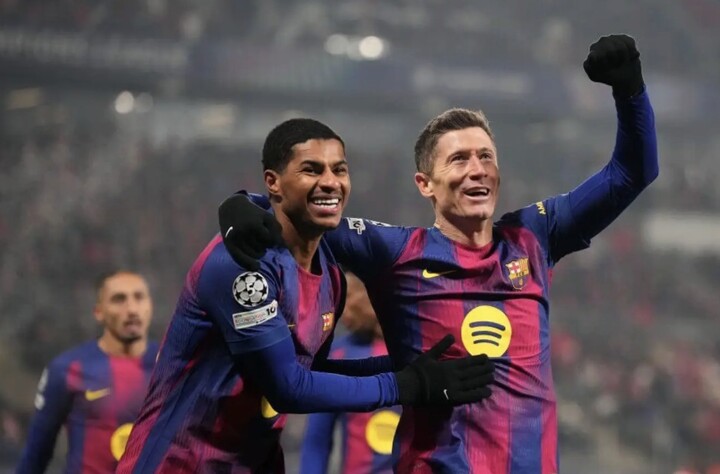
However, Barcelona gradually took control through superior possession. Fermín López scored twice to put the visitors ahead 2-1. Just before halftime, Robert Lewandowski unfortunately scored an own goal, leveling the score once again. But after Olmo struck a brilliant goal to restore Barcelona’s lead, Lewandowski netted his first Champions League goal of the season in the 71st minute, securing the victory. This win lifted Barcelona to ninth place in the standings with 13 points—level on points with Paris Saint-Germain, Newcastle United, and Chelsea, who occupy sixth, seventh, and eighth positions respectively.
What does this mean for Barcelona’s chances of finishing in the top eight?
This victory keeps Barcelona’s realistic hopes alive of finishing in the top eight and directly advancing to the Round of 16. However, the race is expected to be extremely tight: Barcelona is tied on 13 points with seven other teams, with rankings determined solely by goal difference.
One favorable factor for Barcelona is that Paris Saint-Germain and Newcastle, currently sixth and seventh respectively, will face each other directly in the final matchday. This means that if Barcelona beats Copenhagen at home, they will overtake at least one of those two teams.
On paper, this appears to be a relatively manageable fixture for Barcelona, but most teams near them in the table also have favorable schedules.
Sporting CP, tenth with 13 points, will travel to face the Athletic; Atalanta will visit Belgian side Union SG; Atlético Madrid host Bodø Glimt, who sit 28th; and Manchester City will play at home against Galatasaray, who are 17th.
Chelsea are the exception—they will travel to face Serie A champions Napoli, who themselves likely need a win to stay in the competition.
In terms of goal difference, Barcelona hold a slight edge. Their current +5 goal difference is better than four of the other seven teams tied on 13 points.
Moreover, there are additional pathways into the top eight. If Tottenham (14 points) or Liverpool and Real Madrid (15 points each) fail to win on the final matchday, the situation could tilt further in Barcelona’s favor—though these teams also face relatively easy closing fixtures.
The scenario appears complex, but for Barcelona, a solid victory over Copenhagen could well be enough to secure direct qualification and avoid the extra burden of the playoff round.

Why is Barcelona conceding so many goals?
Given that Slavia Prague had only earned three points and scored two goals in their previous six matches, few expected Barcelona to face serious trouble. Yet Flick’s team has shown poor defensive form throughout the league phase, and this disorganized display echoed the issues seen in their 3-3 draw away at Club Brugge in November.
Even before conceding in the 10th minute, the visitors had already received several warnings. That goal came from a perfectly placed corner: captain Holeš flicked the ball on at the near post, and Kusej finished at the far post.
The most glaring error came from Balde, who failed to mark Holeš tightly, while De Jong lost track of Kusej. This also reflected a broader issue of passive collective defending.
Just two minutes after Fermín completed his brace, Barcelona’s defensive frailties resurfaced. Sadílek’s corner again carried significant danger into the box; the towering Holeš again flicked it toward the far post, and the ball struck Lewandowski before bouncing over Joan García and into the net.
While somewhat unlucky, the goal still underscored lax defensive organization—they must be better structured and more intense in such situations. Conceding 13 goals in this campaign is simply too many and highlights defense as the team’s biggest weakness.
Flick publicly called for reinforcements during the January transfer window, but the only arrival was attacking full-back João Cancelo—whereas what he truly needed were physically stronger, more athletic defenders.
Last season, Barcelona were eliminated in the Champions League semifinals by Inter Milan largely due to set-piece defensive issues. If they fail to address this problem, they may struggle to go far in this year’s competition as well.
Pedri’s injury is a major concern
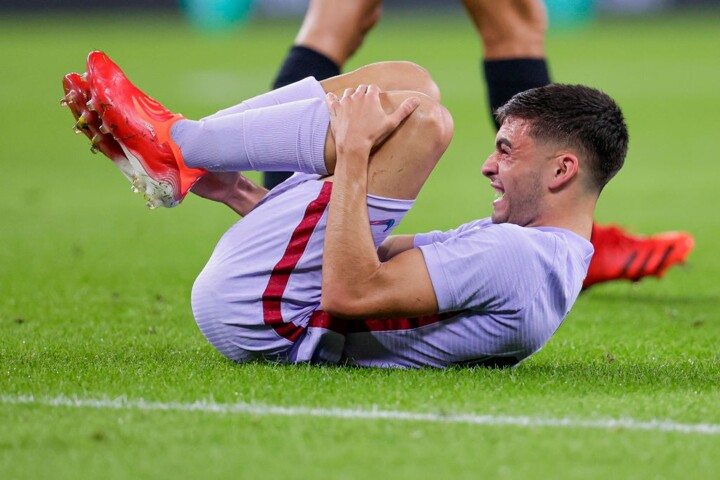
The worst news of the night for Barcelona was midfielder Pedri suffering a muscle injury.
Around the midpoint of the second half, Pedri went down clutching the back of his thigh—his reaction said it all.
Almost everyone—including Pedri himself—immediately realized he had suffered another muscle injury. Flick’s expression turned visibly worried as Pedri carefully got up and limped off the pitch.
Earlier this season, the 23-year-old missed two Champions League matches due to injury. Pedri is vital to every aspect of Barcelona’s play: his short and long passing sets the team’s tempo, and his intensity and game intelligence are crucial in stopping counterattacks and regaining possession.
Although Pedri seemed to instantly recognize something was wrong, the severity wasn’t immediately clear. Initial assessments pointed to a right hamstring strain—the same area where he experienced a minor issue in the autumn and similar to more serious injuries in previous seasons.
Given his injury history, everyone at Barcelona hopes the medical tests over the coming days don’t reveal worse news.
But it wasn’t all bad news
Despite Yamal’s suspension and Ferran Torres’ injury, the match still demonstrated Flick’s depth in attack.
Barcelona’s first goal was a work of art—initiated by Eric García aggressively carrying the ball into the opposition half, followed by a clever layoff from Raphinha, a precise through ball from De Jong, and Fermín finishing powerfully from a tight angle.
Just before halftime, Fermín scored his second. As Yamal’s replacement, Balde played the ball back to Pedri, who turned and slid a pass across to Fermín. Fermín created space and unleashed a thunderous strike from 20 yards into the top corner.
With five goals in six matches, Fermín became Barcelona’s top scorer in this season’s Champions League, surpassing Rashford, who has four. The player who nearly joined Chelsea last summer has now become one of the first names on Flick’s team sheet, making it even harder for the out-of-form Olmo to start.
Olmo came on for Pedri when the score was 2-2 and almost immediately showed his quality. Receiving the ball on the edge of the box, he controlled it with one touch and blasted a stunning shot into the top corner with his second—a goal that marked his first in this season’s Champions League.
As the game opened up, Flick introduced Rashford, the forward on loan from Manchester United, who also made an impact. His low cross struck Lewandowski and bounced up, allowing the Polish striker to acrobatically hook the ball into the net.