


According to The Athletic, Mauricio Pochettino is leaving his post as head coach of the United States men's national team after two years. He will join Manchester United following Tuesday's CONCACAF Nations League quarter-final second leg against Haiti, departing with a series of candid assessments of American soccer.
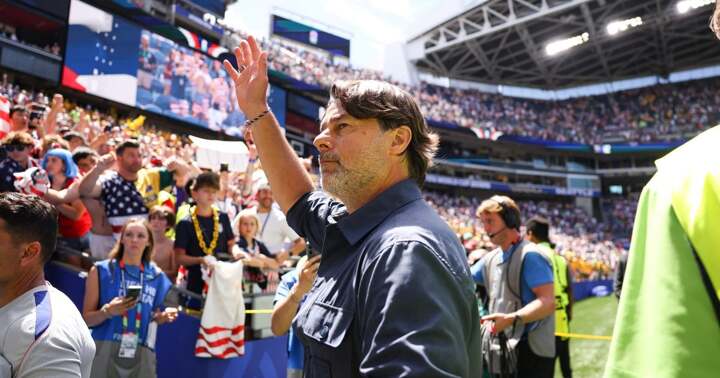
Pochettino took over the United States men's national team in 2024, after a period that included the 2025 Nations League Final Four and crushing 7-2 friendly defeats to Belgium and Portugal. He insisted that the U.S. would play its best football at the 2026 World Cup. At the 2026 World Cup, the U.S. topped their group with a modern attacking style but exited in the Round of 16. In August, Pochettino signed a second full-cycle contract, but three months later, an offer from Manchester United ended his tenure with the U.S. in a tearful press conference on Friday.
Pochettino's tenure with the U.S. Soccer Federation lasted just over two years. The World Cup he claimed the U.S. could win ultimately ended in the Round of 16. The youth movement he pushed after the World Cup—eight teenagers making their senior national team debuts—will continue without him.
Pochettino will depart for Old Trafford after Tuesday's CONCACAF Nations League quarter-final second leg against Haiti in FC Cincinnati. The U.S. won the first leg 6-0 last Saturday, making the second leg largely a formality. Barring an unimaginable historic collapse, Pochettino will leave his successor or interim coach a semi-final berth as a parting gift, while waving goodbye to enthusiastic American fans before stepping into the more hostile environment of Manchester.
Pochettino never intended to temporarily relocate from his London home to the United States. Living near the national training center in Fayetteville, Georgia, was not a strict requirement. His relationship with U.S. Soccer, seemingly genuine, also carried a temporary nature. Thus, we are left with his candid views on American soccer—views that matured and rounded out as Pochettino adapted to the job and molded the national team into his ideal vision.
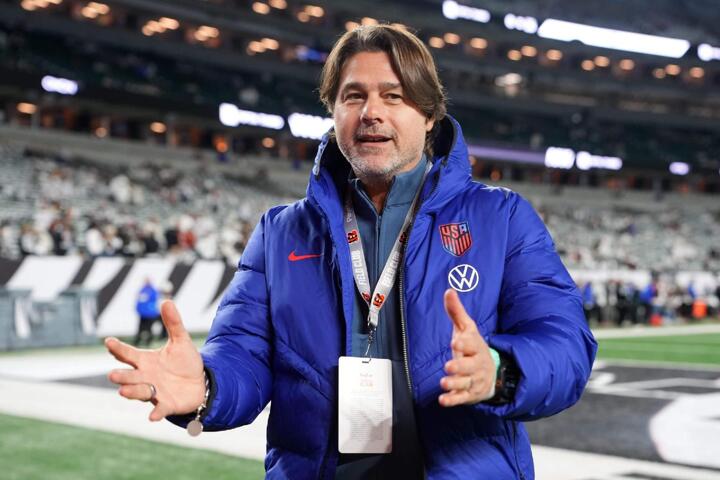
Disappointment with American Soccer's "Complacent" System
In Pochettino's view—and he was not afraid to say it publicly—American soccer was held back by complacency and a lack of competitive pressure. "American sports reward losers," Pochettino told Spanish newspaper El País in June last year.
"If you start in MLS, don't win a game for three months, and are at the bottom of the table, what are the consequences if there's no promotion/relegation, no international competition?" Pochettino questioned. "Football is different: if you reward those who don't win, if there are no goals, you won't fight. What happens if I lose? Nothing. They'll just fire the coach."
Pochettino continued: "American players are disciplined, but there's a complacency that's bad in football. It took us a year and a half to change that mentality."
When it was suggested he should better understand American athletes, Pochettino sharply retorted: "I understand football culture." He had a friendly relationship with the U.S. Soccer press corps but was often dissatisfied with their reporting.
Last November, the U.S. defeated Uruguay 5-1 in Tampa, with several key players absent. When a reporter described the lineup as resting "regular players," Pochettino became agitated.
"Excuse me, I don't want to be negative, but I hate that phrase 'no regular players'," Pochettino said. "What does that mean? This is the United States," he said, tapping the U.S. men's national team crest on his jacket. "Stop that mentality. This is the national team. Every time we decide the starting XI, it is the United States men's national team on the field. After a year, I think you should really know me; I hate talking like that. It's so disrespectful."
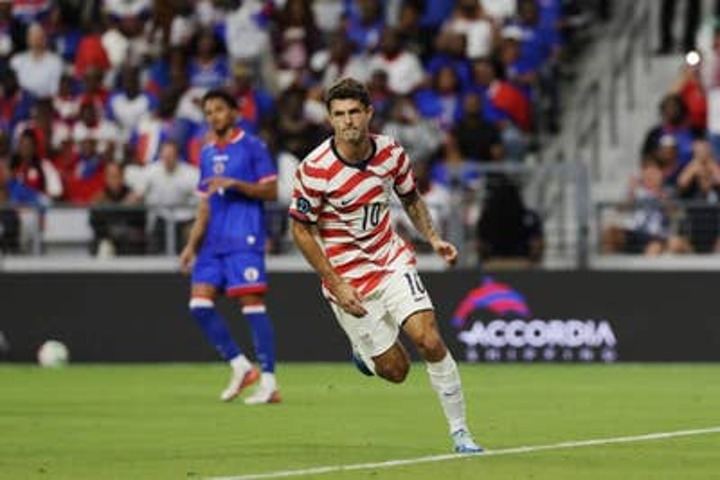
Love for American Life, Music... and Even Politics
Yet, the same culture the Argentine often criticized also won him over. Pochettino's two years in the U.S. turned him into a fan of country music and Whole Foods. He seemed flattered when he met Donald Trump at the 2026 World Cup draw in Washington D.C., telling the president the U.S. could win the World Cup. Pochettino's brief foray into American culture also included the spectacle of college football and a brush with political scandal.
First, to a lesser extent, he publicly criticized U.S. winger Tim Weah's comments on ticket prices before the World Cup.
"First, I think players need to speak on the field, play football, not off the field," Pochettino said in January. "It's not his job to evaluate ticket prices. My job is to prepare the team—the U.S. men's national team—in the best way. We are not politicians. We are sportspeople and can only talk about our work. If FIFA does something or makes a decision, they know why, and it's their responsibility to explain it. But it's not our place to give an opinion."
Then, he became embroiled in the controversy surrounding FIFA's decision to rescind Balogun's red card suspension after the U.S. team's 2-0 victory over Bosnia and Herzegovina in the Round of 32.
"That was never a red card," Pochettino said at the time. "We didn't gain anything extraordinary from all of this," he added after Balogun was deemed eligible for the Round of 16 match against Belgium. "I mean, ultimately, we are not the victims, but we are not the villains of this story either."
In September, Pochettino changed his tune. He admitted that the 4-1 loss to Belgium was affected by the global backlash triggered by the Balogun incident. "I realized at that moment I should have been more involved, or should have been part of the decision-making process for what happened after the Bosnia game, right?"
He told Andrés Cantor's "LaLiga Football" show: "At the time, I didn't fully understand the criticism and everything else. But now, looking back with time, the truth is you have to learn from things, from mistakes. I think sometimes things that happen during a tournament should just stay there."
Welcome to American politics, Mauricio. His admiration for American life was complicated by his naivete in sports and international relations. Pochettino had previously coached in a Champions League final. He had managed Paris Saint-Germain with Lionel Messi and Neymar. But he had never been a national team coach, let alone a central figure in a global event co-hosted by a nation embroiled in high-stakes geopolitics. Lessons learned.
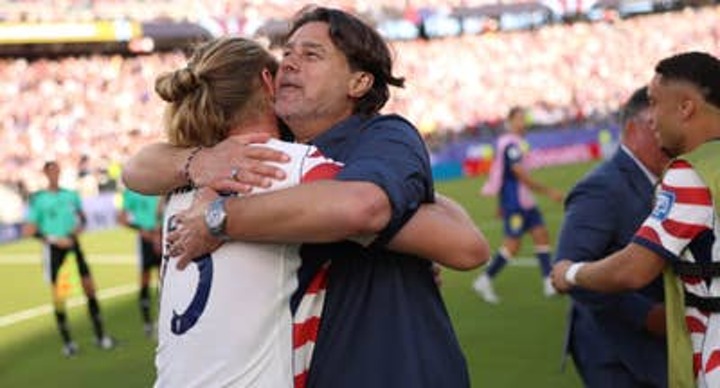
A Brief Farewell
Yet, Pochettino did humble a group of players considered a golden generation but who had not delivered on their talent. After publicly and privately challenging the players, the team accepted it. It was a great story until a disgruntled Belgium taught the U.S. a lesson in humility.
Pochettino, the most famous U.S. men's national team coach to date, will be praised by some and criticized by others. He brought a gravitas to the position that had been missing since the peak of the Bruce Arena era (including the 2002 World Cup quarter-finals). Pochettino could have equaled or surpassed that achievement, truly etching his name into American soccer history, but he and the team failed to do so.
As he heads to Manchester and the U.S. awaits its next coach, he leaves behind a legacy of both success and unfulfilled potential. Coach, we barely knew you.