


The scene is a corridor in the depths of Hill Dickinson Stadium, shortly after Everton's 0-0 draw with Aston Villa last September.

Harvey Elliott has just made his debut for Villa as a second-half substitute. As he walks towards the team coach, the young midfielder is asked for his thoughts by a few journalists on the Villa beat.
Elliott makes his way over, shakes each by the hand and introduces himself. When he accidentally knocks a reporter's dictaphone to the floor, he apologises profusely and moves away to retrieve it before resuming the conversation.
It might seem a fairly unremarkable scene yet in modern football, such interactions are all too rare. Many players will go to significant lengths to shun media duties altogether, let alone engage voluntarily.
The story illustrates the way Elliott has conducted himself during what has been the most difficult period of his career. One minute, he thinks he will have the chance to help an ambitious club reach the Champions League and then sign for them next summer.
The next, Elliott is in limbo, with the manager effectively admitting in public that he does not rate him, as Unai Emery did in early January.
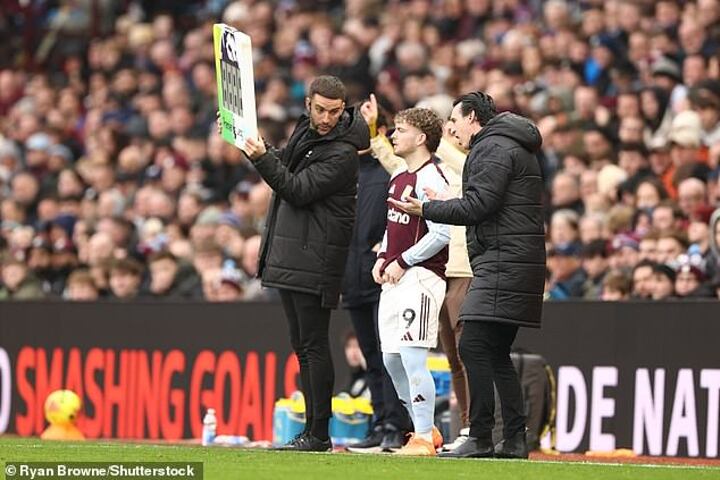
'We decided two months ago that we are not convinced to sign him, spending the money we would need to sign him,' admitted the Villa boss. And because Elliott played twice for Liverpool before joining Villa, he cannot represent another European club in 2025-26.
Daily Mail Sport revealed this week that Villa and Liverpool were due to open talks about altering the terms of Elliott's loan deal – namely, that Villa are obliged to sign the 22-year-old for £35million at the end of the season, if he makes at least 10 appearances. So far, Elliott has seven. After a gap of nearly four months, he has featured in the last two matches.
Villa have been at pains to praise Elliott's conduct – as well they might. Few could have blamed Elliott had he let it be known via intermediaries that he was unhappy with his treatment. Had he been critical of Villa, it would have been justified. Instead, Elliott has refused to rock the boat.
If nothing changes now, his patience will be stretched to its limit. It is difficult to see who benefits from the status quo: Elliott's playing time will remain restricted, Villa will have a player they can barely use, and Liverpool one whose value declines by the week.
Football clubs rarely deal in common sense. On this occasion, though, it must prevail and Emery confirmed on Friday that the clubs were now talking, which was welcome news indeed.
Transfer confusion
Just because football's financial rules seem designed to protect the wealthy elite, it should not give challengers like Aston Villa a free pass when they act chaotically in the transfer market.
Midway through the summer window, Villa were one of several clubs who were informed Elliott was available. They did not act then, as it was felt Elliott was not a natural fit for Emery's tactical requirements.


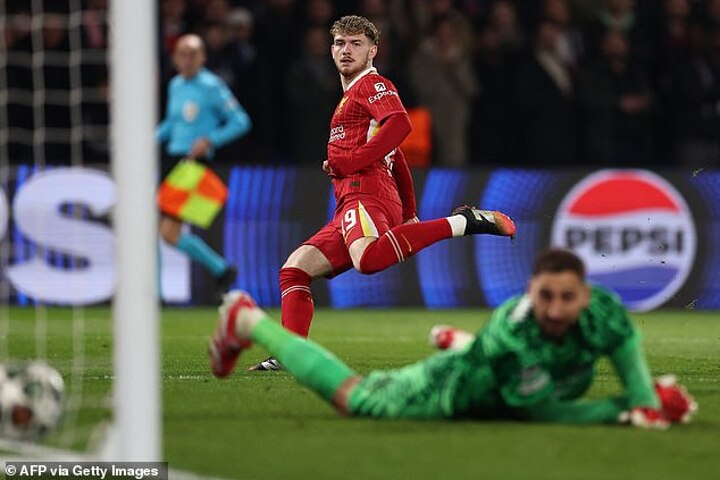
If he was not the answer in mid-July, how could he possibly be the solution on September 1 – the day the window closed?
And if Emery had doubts about his suitability, why on Earth did Villa agree to such restrictive terms? Nobody was hammering down Liverpool's door to sign Elliott. Surely a loan with an option to buy – rather than an obligation – was the way to go. If Liverpool would not agree to that, walk away.
Monchi paid the price for Villa's chaotic summer. The former transfer chief's spell at Villa Park ended less than a month after the window closed. Yet as unimpressive as Monchi's two years at Villa were, nobody is signed behind Emery's back. The Villa boss has such an encyclopaedic knowledge of teams and players that there is no way he would have been unaware of Elliott's playing style. The same is true of Evann Guessand, moved out to Crystal Palace on loan less than six months after Villa paid £30million for him.
The deals for Elliott and Guessand are symbols of a club under significant financial pressure, but also of one without a clear plan of how to operate in the market. Sometimes doing it on the hoof works, as it did to an extent with the signings of Marcus Rashford and Marco Asensio 12 months ago. But it is not the way to manage things in the medium or long term.

Elliott has many qualities but few would suggest he is a classic Emery player. He is not particularly powerful, nor especially quick. Tactically, too, he struggled to adapt to what Emery wants. Emery prizes control over just about everything during a game.
Several times you will see him making a 'calm down' gesture on the touchline. He would rather his players take a few extra passes than look for the killer ball straight away. Elliott likes to put the ball at risk and take the daring option. That is not always what his manager wants – and for that, Elliott has suffered. For his part, Elliott would be entitled to ask that if Villa knew all of this about him, why did they do the deal in the first place?
Elliott emerges with credit
Elliott has never 'downed tools'. He has attended virtually every match despite knowing he would not be involved in the majority of them.
At the club's Bodymoor Heath training ground, his demeanour is said to have been exemplary. No grumps, no sulking. None of the classic training ground tricks deployed by out-of-favour players – walking through sessions, hoofing the ball on to another pitch when they receive it, disrupting fitness drills, turning up late. Neglecting gym work or interrupting meetings.
For his part, Emery is not usually a manager who will send a player to a 'bomb squad'. Even if he does not count on certain members of his squad, he will still involve them in training sessions. It might not make the exclusions any easier but at least there is mutual respect.
There were tentative discussions that Elliott could join MLS club Charlotte FC, who are managed by former Villa boss Dean Smith. Yet ending the loan arrangement would have been tricky and Elliott was not wildly enthusiastic about the prospect. Which leads us to where we are today: two more 'free' appearances for Elliott before the tipping point comes.

Speaking on the Football Boardroom podcast, former Liverpool managing director and Villa CEO Christian Purslow said: 'Unai needs to get together with the key player on the Liverpool side. This is Michael Edwards level - he is the CEO of football. He believed he had sold Harvey Elliott on a deferred transfer and it hasn't worked out.
'I believe that if the three parties all agree, they could modify the agreement. Liverpool have plugged into their financial models that they will receive a transfer fee for Harvey next summer but he is not going to be bought by Villa.
'If I were Michael Edwards, I would think that if he gets more minutes at Villa between now and the end of the season, his value will be maintained higher. But if he doesn't play football for a purely contractual reason for the next four months, everyone loses.'
There is an alternative possibility. Imagine the clubs altered the arrangement only for Elliott to help Villa pip Liverpool to Champions League football next season. Already frustrated with Villa's handling of the transfer, the Reds would be furious if a contribution from Elliott – however minor – thwarted their ambitions.
Now it is a question of who blinks first. Do Villa want to pay extra to change the terms? Do Liverpool want to risk strengthening a rival? In the middle, a young footballer, blameless in this situation, is left powerless to stop his career from stalling.