


Arsenal appear to be fully committed to Dry January once again.

It’s becoming an annual problem, the time of year when the title jitters creep in and their results start to suffer — the latest example being Sunday’s 3-2 defeat by Manchester United, which extended Arsenal’s winless run in the Premier League to three matches, following goalless draws with Liverpool and Nottingham Forest.
With Manchester City in the rear-view mirror, a feeling of dread is growing, but it shouldn’t be a complete surprise. This is a trend.
Take the Gunners’ last five campaigns. In 2021-22, in all competitions, they went five games without a win in January. In 2022-23, it was four games with no victories in a run across January and February, while the 2023-24 season saw one win in seven matches between December and January.
The first few months of 2025 saw a costly home loss to West Ham, and cup exits to Manchester United and Newcastle. So, why do Arsenal start to slump at this time of year — and can they shake it off this season?
1. Set-piece reliance
‘Set-piece FC’ is the term widely used by rival fans to mock Arsenal — and there is some credence to it.
Even opposing players have leaned into this narrative, with United’s Amad Diallo replying to a fan on X on Sunday: ‘Your only hope is corner.’ Put simply, the Gunners are over-reliant on set-pieces.

Across all competitions, from the start of the campaign to the end of December, 31 per cent of Arsenal’s goals came from set-pieces (18 goals of 59). That has climbed to 53 per cent during January (eight goals of 15). On Sunday, Arsenal’s scrappy second goal, converted by Mikel Merino, came from a corner.
When they have faced adversity, desperately needing a goal from somewhere, anywhere, it has often been a corner which has proved the solution. But when that well dries up, the Gunners struggle, as highlighted by the goalless draws against Liverpool and Forest who repelled their set-piece threat.
The Reds nullified it by reducing Arteta’s men to a mere three corners, while Forest had to deal with nine but were well-equipped to do so with powerful, combative centre halves.
Every team is aware of the threat Arsenal offer at set-pieces. They have scored 26 goals from dead-ball situation across all competitions — the most of any team in Europe’s top five leagues. It’s a great goal avenue to have, of course, but this over-reliance must be rectified — and fast.
2. Feeling the heat
If only the Arsenal men’s side could adopt the mantra of their women’s star Chloe Kelly.
As she would say: ‘Pressure? What pressure?’ Except there is pressure, real pressure which has hampered this team over the last few years — and could do so once again.
Those scars inflicted by City in previous seasons are still raw. The most painful stem from the 2022-23 season, when Arsenal had led the way for 248 days before Pep Guardiola’s men overtook them with six games to go.
In the following season, City went on a 23-match unbeaten run from December 10, 2023 to pip their rivals by two points. Such memories don’t fade easily. Only winning major silverware will ease the pain.
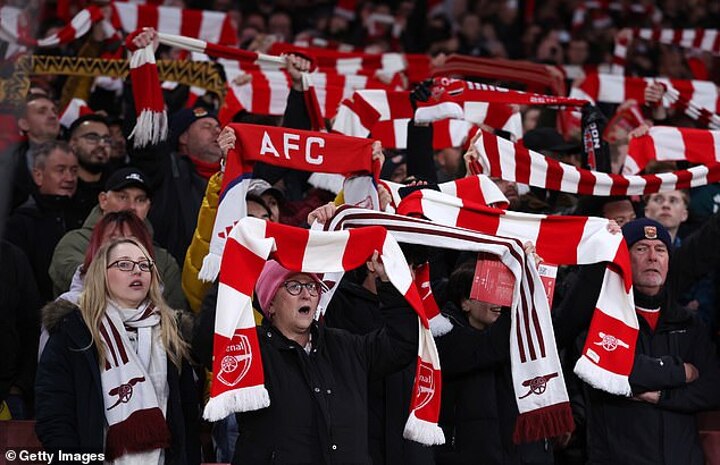

Liverpool had a free hit at the title under Arne Slot last season. They weren’t expected to be genuine contenders and anything beyond a top-four finish was seen as a bonus, rather than a requirement. They sailed to the title on a tide of joyous momentum.
At Arsenal, there is a feeling of having to win the Premier League, not wanting to win it. It’s make or break, having finished as runners-up for three consecutive seasons.
Plus, City have gone big in the January window. Their signings of Antoine Semenyo and Marc Guehi are a statement of intent: they are going all out to try to trip up Arsenal once again.
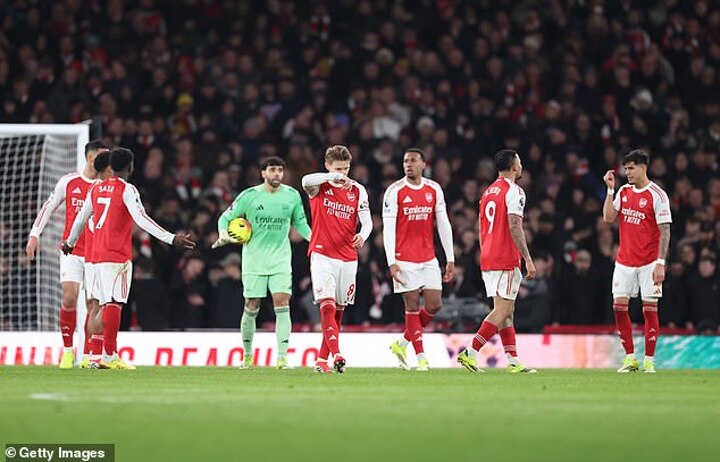
There was a feeling of apprehension and angst at the Emirates on Sunday, but also in a number of other home games this season. In the minutes leading up to Tolu Arokodare’s equaliser for Wolves on December 13, anxiety seemed to wash down from the stands and on to the pitch. There was a sense of inevitability that the Midlands club would snatch a goal because of the nervousness around the stadium. A Yerson Mosquera own goal saved the day for Arsenal but it was a near miss.
In general this season, a mis-placed pass or two have been eliciting groans, and when the 80-minute mark is passed, danger feels inescapable.
What makes this bizarre is the wider context: Arsenal are top of the league, top of the Champions League, and were unbeaten at the Emirates across 16 games before the United defeat. Most teams would kill for such a record.
Is the pressure from their own fans dragging the players down?
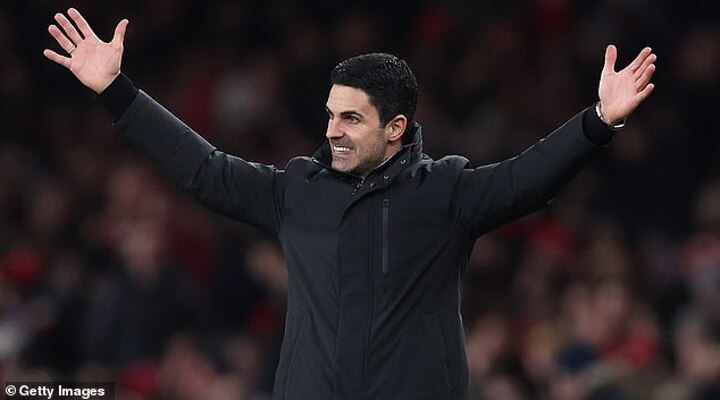
Mikel Arteta likes his quirky methods (pick-pockets, a dog called Win et cetera)... but this is the moment for the club's psychologist to step up and rid the players of the nerves that need not be overbearing.
3. A familiar problem up front
When one of your top-scorers is a player called ‘own goals’, there is clearly a problem in attack. Only Viktor Gyokeres and Leandro Trossard (five each) have surpassed Arsenal's 'OG' tally, of four.
The £64million signing of Gyokeres in the summer was supposed to solve Arsenal’s long-running striker problem, to be the missing piece of the puzzle. But his arrival has not filled the gaping hole the Gunners have up front (he was dropped on Sunday for Gabriel Jesus) and it has led to the over-reliance on set-piece goals.
In the league, Arsenal have a lower expected goals (xG) total from open play (25.9), than City (32.3), Liverpool (29.8), Chelsea (28.5) and United (28.1). In other words, they create less.
That makes for stark reading, and goes some way to explain why the north London club have become stuck of late.
Gyokeres’ struggles are more evident because of the limited No 9 options Arteta has at his disposal. Jesus was anonymous on Sunday in his first league start since January 4, 2025, and Kai Havertz is slowly on his way back from a knee injury.
That puts a heavy load on the Swede, who has been underwhelming. He has yet to show he can be relied on for a goal out of nothing, a piece of magic. And when it comes to syncing with his team-mates, such a connection is still to be forged, as seen by the number of passes or crosses which have evaded him in recent weeks.
Fingers can’t all be pointed at the strikers, though. The lack of creativity from the attacking midfielders has been a contributing factor, too.
When their talisman Martin Odegaard is not on song, that spark is often lacking.


Eberechi Eze appears to be suffering from a lack of confidence, having made just 11 league starts this season. He was ineffective on a rare start against Inter Milan in the Champions League last week, and didn’t have an impact when introduced in the second half on Sunday.
Their other attacking midfielder who has magic in his boots is Ethan Nwaneri, but he has been sent out on loan to Marseille.
4. Saka's worrying stats
The Gunners have long relied on their 'Starboy'.
The most consistent creative force across Arteta’s tenure, Bukayo Saka is still the route Arsenal turn to most when in the final third.
When it works, it is devastating, as seen by his goal involvements in seasons gone by. Saka managed 25 goals and assists in the 2023-24 season and 16 last term. So far in this campaign, he is on just seven. The output has dried up, yet the Gunners still try that avenue most of time because it is so familiar to them.

It can all feel rather predictable - and therefore easy to deal with.
Opposition defences often focus on neutralising Saka as the primary threat. Two or three players typically shadow the talented forward, which makes his task doubly hard.
Developing alternative creative avenues is crucial. This would alleviate the burden on Saka — but it requires his team-mates to step up.