


Over the past decade, arguably the most successful part of Arsenal has been their academy.

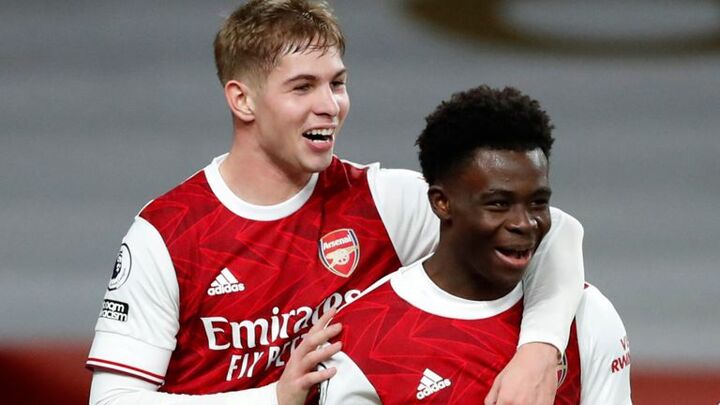
The emergence of now-England internationals Bukayo Saka, Emile Smith Rowe, Eddie Nketiah, Myles Lewis-Skelly from Hale End into the first team has created great excitement over the last decade.
There are more big talents either in the pipeline or even already through it, namely Max Dowman, Marli Salmon and Andre Harriman-Annous.
The recent success has ensured Arsenal have successfully continued their modern tradition of giving a first-team debut to a teenager in every season since the 1998/99 campaign.
Which is why the loss of Per Mertesacker as academy manager is a huge blow for the Gunners. The German will step down from his role at the end of the season as he seeks a new challenge.
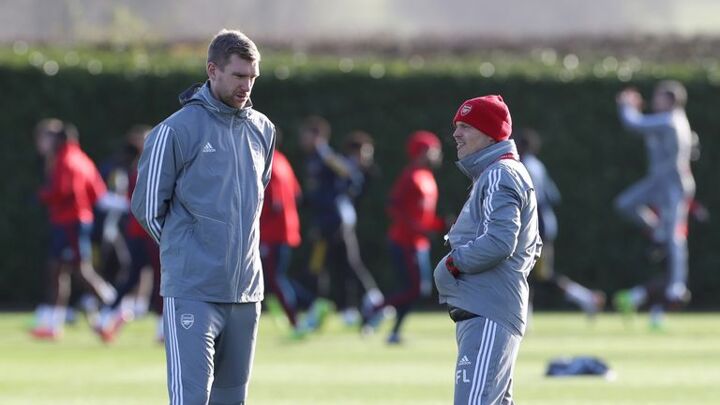
And while everyone in football can be replaced, this is a key and popular pillar of Arsenal's current structure being removed.
This is a key ally of Mikel Arteta - the pair joined Arsenal as players at exactly the same time on Deadline Day 2011 and became part of the key leadership voices in the dressing room under Arsene Wenger. The pair also lifted the FA Cup together in 2015 as the two captains of the side.
But crucially, Mertesacker has led an excellent academy process since he came into the role in 2018. Since then, Arsenal have seen multiple players emerge from Hale End in waves.
Saka and Smith Rowe came together, as did Ethan Nwaneri and Lewis-Skelly. Now Dowman and Salmon are coming through together. And as Williams says: "If you can get two through a year, that's success."
"The unique thing Arsenal have is an academy manager who won the World Cup," says Temisan Williams, who worked in Arsenal's academy and coached the likes of Dowman and Salmon.
"Having someone who has been at the top of the game - he knows what it means to get there and what you need to do to get there.
"As a coach speaking to him, he brings such patience and calm around the environment. It also brings ease to the players.
"Academy football is an environment that few get through to the first team but he makes it an enjoyable environment."
The reason why Mertesacker is such a popular figure at Arsenal is due to his character. During his playing days, the German was known in the dressing room for his fun-going personality.
But there is a serious side too to him. Mertesacker was also one of the key figures in driving the culture that Arteta has helped transform.
"The first thing you notice with Per is he remembers everyone's names - coaches, parents and especially the players.," says Williams. "It doesn't matter if you're nine years of age or 16, 17."
How Mertesacker created 'Strong Young Gunners'
High up in Arsenal's statement announcing Mertesacker's departure, the club referenced his project of creating a project called 'Strong Young Gunners' - which guided the entire process of bringing young players through the age groups.
As part of Mertesacker's academy philosophy, the 'Strong Young Gunners' was made up of four key parts:
Champion mentality is a phrase commonly used by key figures in the Arsenal academy. It was the same phrase used by the club's scouts when Saka came through and there are multiple areas where players need to show 'champion mentality'.
A lot of it comes on the field. "It's encapsulated in football leadership," says Williams. "How do you do that on and off the pitch? On the pitch, when you go to tournaments, what is the mentality you show to win?
"When things go well and not well, will you still put in as much? Will you encourage your team-mates?"
But other parts of champion mentality involve how they approach analysis sessions, gym work - and how they look after each other off the pitch with their diet.
One common way of testing champion mentality is moving players up an age group or two. That was the case for Dowman, who was playing U18s football from the age of 13. Nwaneri was in and around the U21s when he was 15 and 16.
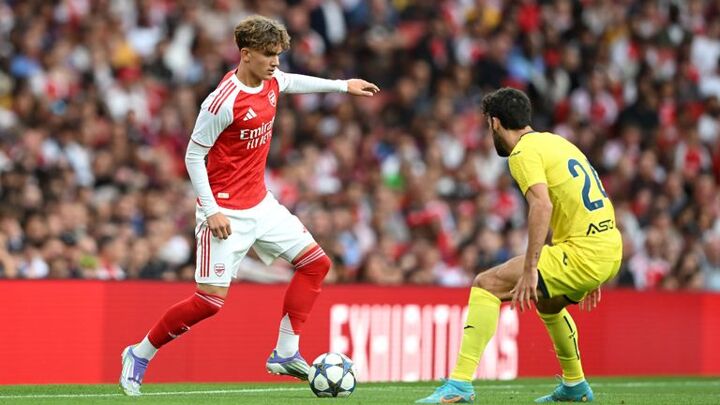
A lot of it is to prepare players for the scenario of first-team football. If they make their debut at 17, then are up against players in their prime who are at least 10 years older.
"It's a stretch in terms of being around players who are older, faster, stronger," says Williams about moving Arsenal players up one or two age groups.
"How do you showcase that mentality when you're up an even greater challenge than your individual age group?"
Part of champion mentality is being a lifelong learner - how good academy players are at picking up new information whether it be a new skill, position or tactical information from separate managers.
"It's a case of: how are you showing that you're always ready to learn, pick up new information, execute it and continue that through your Arsenal academy journey and beyond?" says Williams.
"If you want to be the best player, you have to be the best person."
But lifelong learner holds a special importance as it proves crucial for those who don't make it as a professional player. "The reality is that a majority of these players are not going to be playing professional football as a long-term career," adds Williams.
Education is a key part of that and Mertesacker's Arsenal structure is very strong on academy players taking their schoolwork just as seriously as their football skills.
But it is not just GCSEs that Arsenal push players towards. The club have pushed players to take on musical instruments, which may be helpful in later life.
Mertesacker was a key driver of that. "It's about showing you're excellent in other ways as well," says Williams. "He was very much like: 'We're still going to be proud of you even if you don't make it as a professional player.'
"We wouldn't highlight these skills as a fall-back option, it's more: this is something you can do as well as being a professional player.
"If you're purely focused on the football, and it doesn't work, they could end up struggling. So many people end up in their 30s and struggle to venture out into other things."
Effective team player is another key branch from 'champion mentality' - with this skill split into two sections: individual and collective.
"It's about understand what you can do individually; your super strength and how it can support the team in terms of playing identity and playing style," says Williams.

"You want them to express themselves as an individual. It's the individual that goes through to the first team but it's also the context about trying to understand how you contribute to the team."
That's where the attention players give in analysis sessions is crucial - understanding why the overall team does certain tactics such as high-pressing or playing out from the back.
And again, putting players in higher age groups helps to see whether academy players tick the 'effective team player' box.
"When you look at Max, Ethan, Myles, Saka - their understanding of an effective team player comes from having to mentally process at a quicker rate and make decisions faster," says Williams. "They have to recognise those situations a little bit earlier."
And finally effective mover analyses football coordination, with Premier League testing taking place on academy players every two or three years. Strength and conditioning is a key part of how players com through the academy, but there is also patience in this department given some players can grow later on in life.
That is where developing a players technical skills as an effective mover is just as important as their natural strength.
"On the pitch, how can you utilise those players to be effective with the football? If you can't receive the ball 360 degrees, it's going to be difficult."
How do Arsenal replace Mertesacker?
The results in Mertescaker's Strong Young Gunners programme have been positive and are still ongoing.
With Saka, Nwaneri, Lewis-Skelly, Dowman, Salmon and Harriman-Annous already in the first-team picture, there are more on the way.
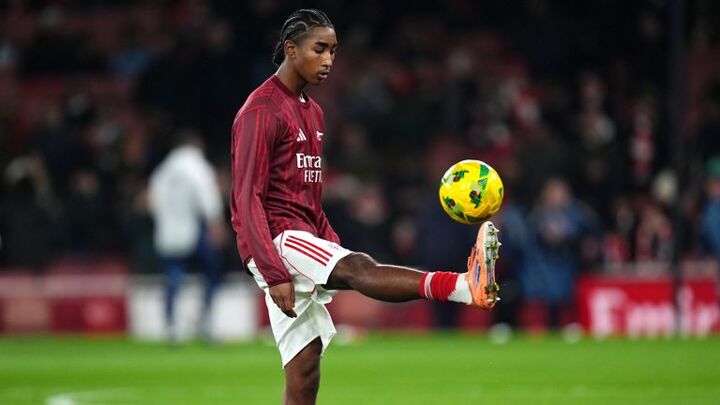
There is big belief in academy goalkeeper Jack Porter, who made his first-team debut last season, while there is another Nwaneri brother in Emerson, currently with the U18s and is backed to be a good utility player.
Change can sometimes be a good thing at the top end of a football club like Arsenal. It's worth remembering back to last season when the loss of Edu Gaspar to Evangelos Marinakis' group of clubs was considered a blow, but Arsenal took that opportunity to move forwards with Andrea Berta and many have marvelled at how the club now has the best of the best in sporting directors.
But you would go a long way to find an academy director who has lived the Arsenal experience as a player, won the best trophies in the game for club and country - and produced academy success like this.