


This article is reproduced and translated from the BBC, originally published on June 6, by Rhia Chohan.
Lead: In 1990, playing soccer in the US was almost considered unorthodox, but a group of semi-professional players and indoor soccer players made it to the FIFA World Cup. Against Italy, Desmond Armstrong locked down Gianluca Vialli, and after the World Cup, he made a groundbreaking move to play in Brazil. Today, American defender Richards sports a similar mustache to his predecessor, telling Armstrong: "It all started with you guys."
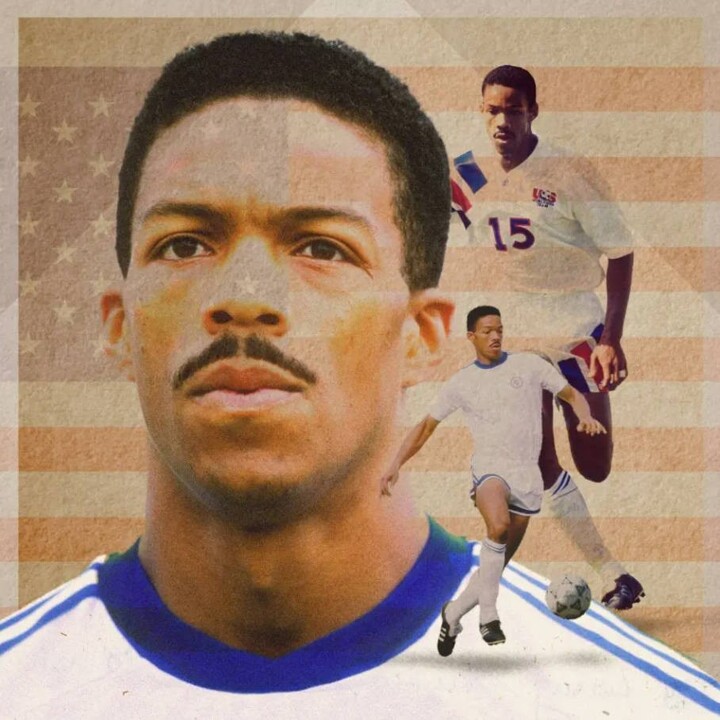
When Desmond Armstrong faced the media during the 1990 FIFA World Cup in Italy, the first question he was asked wasn't about the US team's achievement of qualifying for the World Cup for the first time in 40 years.
"Why don't you play basketball?" This question was posed to Armstrong, then 25, the first Black American-born player to represent the US in a FIFA World Cup.
He said: "Nobody congratulated me. Nobody asked me, 'How excited are you to be here?' The stereotype was, 'You're American, and you're Black, so you should be playing basketball.' Aside from Americans not really belonging here to play soccer, why are you, a Black person, here?"
Days later, in a match against host nation Italy, with excellent man-marking defense, he successfully prevented Gianluca Vialli from scoring – this match marked a huge turning point for US soccer and for Armstrong himself.
The impact of that match continues to this day.
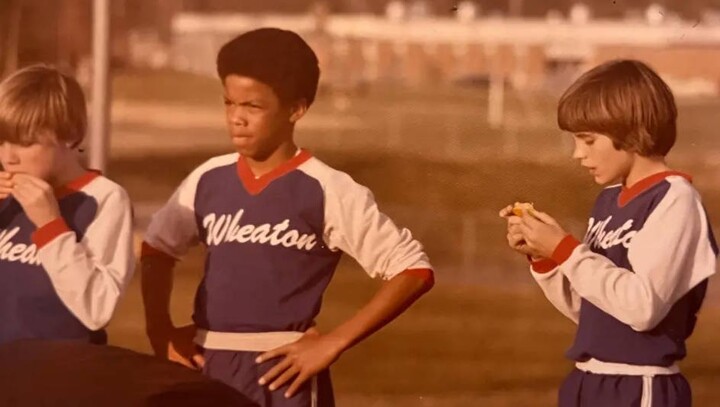
Armstrong grew up in the suburbs and was introduced to soccer through television.
When he was young, his family moved from southeast Washington D.C., eventually settling in a predominantly white community in Maryland. There, he met the son of a soccer coach. One afternoon, the coach called Armstrong over to the TV.
He pointed to a Brazilian wearing a New York Cosmos jersey.
Armstrong said: "That was Pelé. His movement reminded me a lot of point guards in basketball, but he had a ball at his feet. He was one of the few Black players on the team, and that resonated with me."
While Pelé learned to play soccer barefoot on the streets of Brazil and popularized the sport, a large part of grassroots soccer in the US was built on privilege.
In Europe and South America, clubs like Ajax and Barcelona invested in young talent, while soccer development in the US has long adopted a pay-to-play model. Families had to bear huge costs or seek sponsorship to give their children the opportunity to develop – this created a system that disadvantaged children from less affluent families.
Frank Dell'Apa, who has been a soccer columnist for The Boston Globe for 40 years and has covered the sport since the North American Soccer League (NASL) was founded, said: "It's completely contrary to the nature of the sport. "
"It's the simplest, easiest sport to get into. People all over the world play it. They don't need money, they don't even need a ball, they don't need shoes. Here, it's the exact opposite."
Armstrong is very aware that his story could have been completely different, saying: "If my parents hadn't moved to the suburbs, I definitely wouldn't have played soccer."
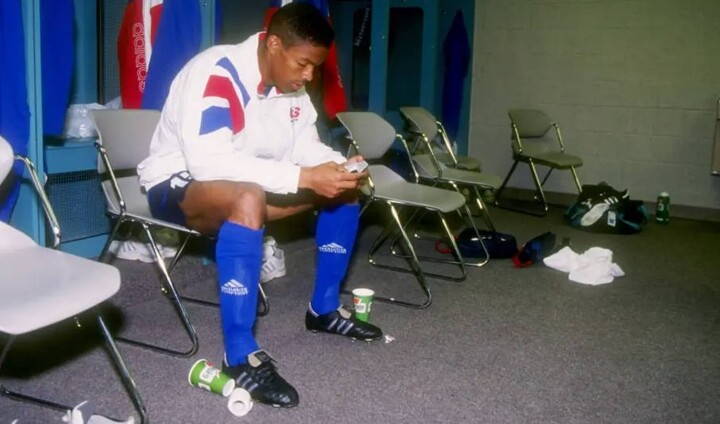
Socioeconomic factors were not the only barrier.
In 1985, while Armstrong was still playing in college, the North American Soccer League (NASL) folded, limiting the career paths of him and his peers, whose careers ended before they even began. He said: "For me personally, it was absolutely devastating."
He transitioned to the Major Indoor Soccer League, becoming a professional player, and based on his excellent performance, he made his debut for the US team in 1987, subsequently qualifying for the 1988 Seoul Olympics.
He said: "I remember being on the field, hearing the national anthem, and thinking, 'This is where I'm supposed to be.'"
In the same year, FIFA chose the United States to host the 1994 FIFA World Cup finals – the first time the event was held outside Europe or Latin America, bringing them into the global spotlight.
Dell'Apa said: "The US had no influence whatsoever in world soccer. I remember Desmond often playing on artificial turf, which was tough for those players. They had to fight for playing time, for fields, for stadiums."
With no elite outdoor professional league in the US, the player pool was dispersed, largely consisting of college students, semi-professionals, and indoor players like Armstrong.
To address this, the US Soccer Federation tried signing a core group of players to full-time contracts, essentially making the national team their professional club, an unconventional approach quite similar to tactics in Eastern Europe.
They appointed a German-Hungarian head coach named Bob Gansler, and Armstrong, along with a group of young players, was given an almost impossible task: to lead the team to qualify for the 1990 FIFA World Cup in Italy.
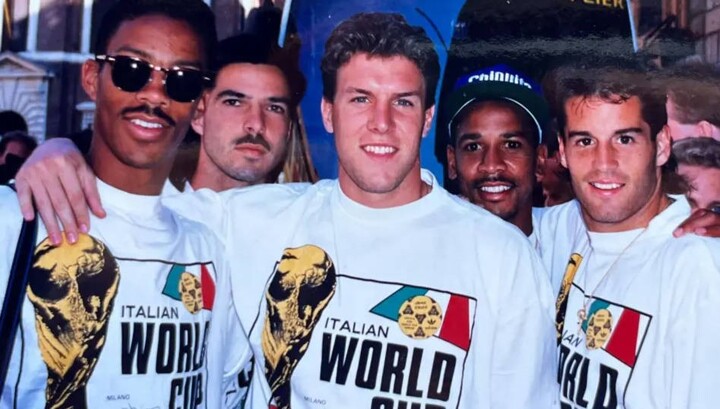
On Sunday, November 19, 1989, ESPN's catchy staccato theme music played on American televisions.
Announcer Bob Ley excitedly said to the camera: "We have soccer news – what we call soccer – what the rest of the world calls football."
The US team pulled off an upset victory against Trinidad and Tobago in Port of Spain, securing the last spot for the 1990 FIFA World Cup in Italy. The home team, Trinidad and Tobago, only needed a draw to qualify, and the government was so confident that it even declared the next day a national holiday before the match.
"This was undoubtedly the most important soccer match for the United States in two generations," Ley said, reading the game commentary, explaining the significance of the result to American audiences.
Armstrong, sidelined with an ankle injury, ran onto the field after the final whistle. He said: "Everyone went crazy. We did all this when the US didn't even have a professional league. It was incredible, but Americans just didn't care."
In 1990, racial tensions in the US were escalating. In 1989, the killing of Black teenager Yusef Hawkins by a white mob in Brooklyn sparked protests and exposed deeply entrenched racial oppression in the US, setting the stage for the beating of Rodney King by white police officers in 1991 and the subsequent Los Angeles riots.
However, Black people were beginning to gain a foothold in mainstream American society – whether it was Carole Gist becoming the first Black woman to win Miss USA, or the explosive rise of hip-hop music.
Armstrong recalled that artists like NWA and Public Enemy "told everyone what was happening in our communities through a medium everyone was paying attention to."
Against this backdrop, Armstrong stepping onto the field in Italy was more than just a sporting achievement.
He said: "For an African American who started playing soccer at 12, not only to make the national team but to play and start in the FIFA World Cup – it was incredible."
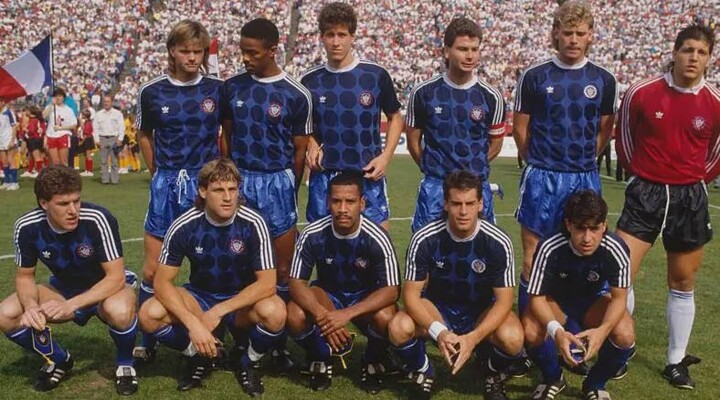
The US team in the 1990 FIFA World Cup
At the Municipal Stadium in Florence at the time, Frank Dell'Apa witnessed the US team's 5-1 loss to Czechoslovakia in their opening group stage match. He said: "It was a real wake-up call for the US. They had to tactically understand their identity and capabilities."
Their realization would be tested in the next match, to be held in Rome against host nation Italy, in front of 73,000 spectators.
The Italian team showcased the strength of Serie A, featuring stars like Baresi, Maldini, and Donadoni, and even had the luxury of keeping Juventus's record-breaking new signing Roberto Baggio on the bench.
The Olympic Stadium was expecting a "massacre" of the US team by Italy.
Armstrong's task was to stop Gianluca Vialli. He said: "Vialli was an amazing figure, and I was going to be his shadow. I looked across the field, our eyes met, and I thought to myself, 'You're not getting the ball.'"
In the 11th minute of the match, Italian midfielder Giuseppe Giannini scored a goal, but after that, the Italian team did not establish a large lead. Neither Vialli nor Salvatore "Totò" Schillaci, whom Armstrong marked in the second half, managed to score.
After the match, the British media commented: "Italy's performance was very disappointing, which will cause some indignation and hostility from their media tomorrow."
They also praised the US team's "tenacious" performance: "People thought they would get hammered in Rome, but they actually left the field with a very respectable result."
Although the US team was eliminated after a 2-1 loss to Austria in their final group stage match, they had laid the foundation for the future of American soccer.
As for Armstrong, he gained attention for his defensive abilities.
The following year, he trained with Luton for two weeks, and Luton, then in the First Division, was interested in signing him, when his agent called to ask if he would be willing to go to Brazil.
"Yeah, I want to go to the beach. I'm in England right now, it's cloudy everywhere, and these guys are actually drinking tea at halftime. Oh yeah, what club?"
"Santos."
"Get me the ticket."
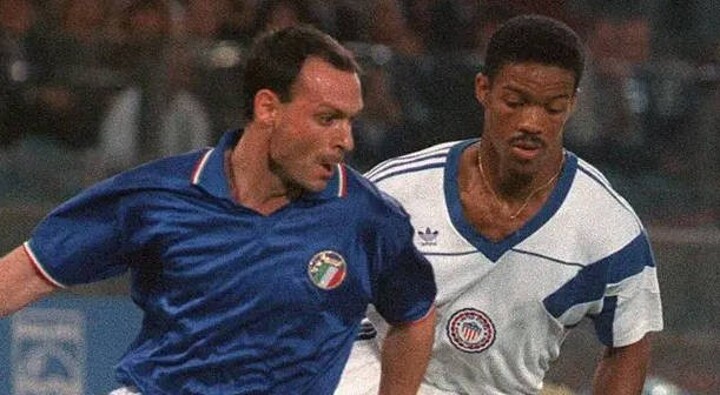
Armstrong marking Schillaci, who was the top scorer of the 1990 FIFA World Cup
After that, Armstrong became the first American player to sign a professional contract in Brazil, playing one season for Pelé's club.
He described the scene of media swarming him after he got off the plane. Although he didn't realize it at the time, the person translating for him was Edinho, a goalkeeper for the club and Pelé's son.
When asked by reporters how he would communicate without speaking Portuguese, Armstrong replied: "I guess I'll just have to smile."
He had no idea the interview was being broadcast nationwide, and when he walked into the Santos locker room, every one of his new teammates had a huge smile on their face.
Armstrong recalled the incident, bursting into laughter: "That was the peak of my career, because I used to watch Pelé play all the time. It was a wonderful, amazing experience."
After playing one season in the American semi-professional league, Armstrong ended his playing career in 1996 at the age of 31, transitioning to coaching.
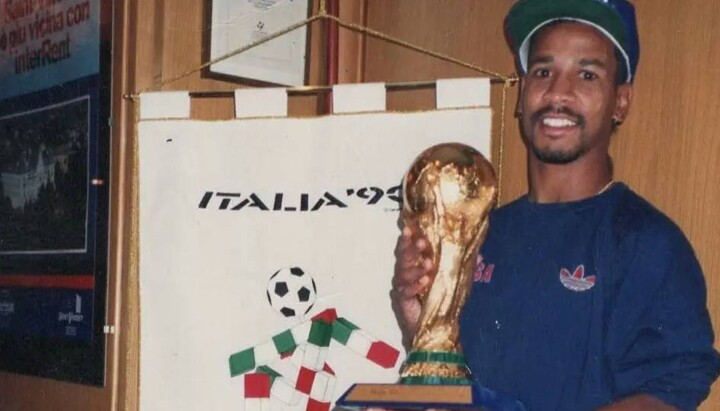
One cannot talk about Desmond Armstrong without mentioning Jimmy Banks – or as Armstrong affectionately calls him, "J."
Banks was the only other Black player on the US team, and although he didn't play in the first match of the 1990 FIFA World Cup, he started in the subsequent two group stage matches, helping to strengthen the team's defense.
Banks was diagnosed with cancer and passed away in 2019 at the age of 54. Armstrong still vividly remembers being roommates with Banks in Italy and going to a Janet Jackson concert together, saying: "I have so much love for him and our time together."
The two met at a game when they were 15, both finding themselves the only Black players on their respective teams. They exchanged jerseys and became friends due to their shared dream – making the national team.
After both became coaches, they ensured their teams played against each other.
Not far from downtown Nashville, the home of country music, Armstrong loaded soccer balls into his pickup truck and headed to the melting pot community of Antioch.
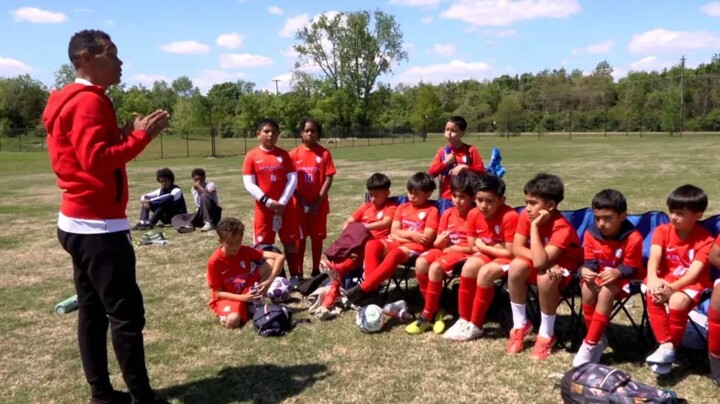
Now, wherever he goes, he is warmly embraced. At the Kurdish Cafe (Turkish coffee), people shout "Galatasaray" and "Amedspor," and at gas stations, workers from Egypt and Iraq all want to talk to him about Salah. Soccer is the universal language here.
For the past 14 years, through his grassroots club, he has brought soccer to the city's large immigrant population – driving kids to games, finding fields, and often paying for jerseys and registration fees out of his own pocket.
He said: "There are a lot of very talented kids here."
Now he has joined ArmadaFC as Coaching Director, gaining access not only to dedicated facilities but also a better geographical location.
Armstrong stated that due to increased activity by US Immigration and Customs Enforcement (ICE) in Nashville over the past year, as part of the Trump administration's crackdown on immigration, members of the Hispanic community avoid leaving Antioch, meaning some children cannot attend games.
He said: "They don't want to be pulled over by the police when they're playing, they want to play in the areas where they feel most comfortable and least harassed."
Armstrong's youth program has strengthened the sense of community among parents, who have set up group chats to coordinate rides for families with frightened children.
"If you're not comfortable taking your kids out of town, we're always here," said Maria, who was there to watch her younger brother play.
She was among many Hispanic family members, who were shouting "vamos, vamos!" to cheer on the children.
"Different cultures brought us together."
Abdi and Kailan, two teenagers discovered by Armstrong, are very grateful to Armstrong for introducing them to the sport, but it wasn't until they saw photos that they truly realized his pioneering status.
Abdi stared at a photo of his coach in a US uniform and said, "1990, wow!"
Kailan laughed and said Armstrong's vintage look was awesome: "He tucked his shirt into his pants, and he didn't even have a mustache."
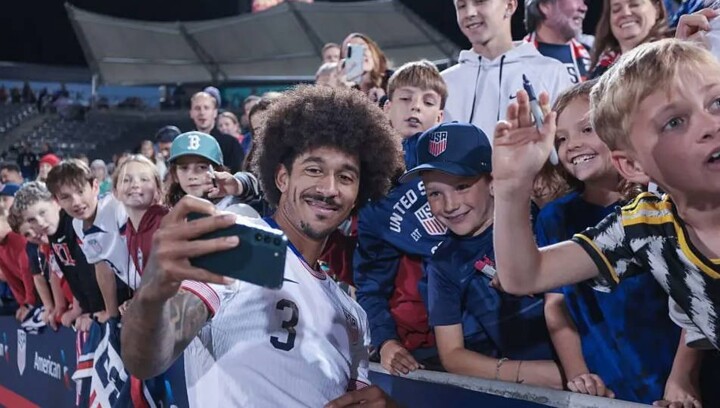
Current US national team players know who Armstrong is, and one admirer even sports a similar mustache.
Armstrong said in a video call: "Look at your mustache, that's awesome, man."
About 4,000 miles away, Crystal Palace defender Chris Richards appeared on screen, laughing, "I'm trying to bring back the old-school vibe!"
Chris Richards, 26, born in Alabama, is a key member of the US team's 2026 FIFA World Cup roster, which is the most diverse lineup in team history.
Richards told Armstrong: "It took a long time for people like us to get to this point, and you were one of the pioneers in that."
He is on a mission to expand the reach of youth development in the US – "so that kids like me never have to leave home to chase their dreams."
Although the rise of MLS-funded youth academies paved the way for him and other US internationals like McKennie and Tyler Adams, Richards knows that for those who cannot access MLS academies, the path to professionalism is not smooth.
Richards told Armstrong: "Playing at home is expensive, and I see a lot of kids giving up the sport because they can't afford it. Without your contributions, your bravery, and your courage, I wouldn't be standing here, so I really want to give all the credit to you guys."
"Your generation might be the least talked about, but I don't want you to feel like your contributions are overlooked, because we cherish our history very much, and it all started with you."
AF's PC site is now live! Browse full news, comments, match details and stats on your computer. Visit: www.allfootballapp.com