


A calm conversation over coffee with Julio Salinas is like talking to an honest, passionate man full of stories. He shared dressing rooms with some of the greats of the 80s, 90s, and early 2000s.

Julio Salinas was part of Johan Cruijff's "Dream Team" that won the Champions League at Wembley, and he wore the jerseys of Athletic Club, Atletico Madrid, Barcelona, Deportivo La Coruña, and Deportivo Alavés, in addition to a stint in Japanese football.
Today, Julio Salinas observes football from another perspective. He is a regular on social media and often appears in media like Mundo Deportivo, expressing his clear views without hesitation. In this new installment of "Café Culé" – Mundo Deportivo's interview segment – he talks about Yamal, Flick's Barca, Johan Cruijff, the Wembley final, Diego Maradona, the dressing rooms he experienced, and how the sport has changed.
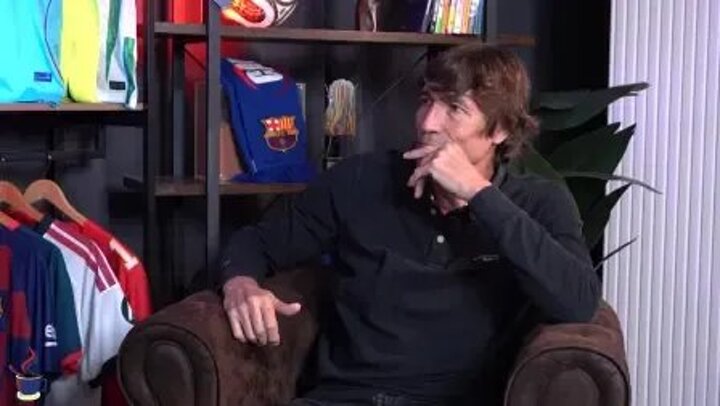
Yamal and criticism: "In this country, we undermine our own stars"
Julio Salinas enthusiastically follows Flick's promising Barca and is puzzled by some controversies surrounding Yamal during the last international break. Especially those regarding his physical condition and the controversy surrounding Luis de la Fuente's decision to rest him before the match against Czech Republic due to knee discomfort.

The former striker believes that an "absurd debate" has been created about how to treat the player and unhesitatingly supports the national team coach's handling of the situation. "I think Luis de la Fuente's handling was excellent, perfect. He earned everyone's respect, the player himself respects him, and it's also good for the national team," he asserted. When talking about the young Barcelona player, his assessment is even more emphatic. "Yamal is a genius, but not everyone is the same; it's a lie to say everyone is the same. We are not all the same, don't even think about it," he stressed.
Julio Salinas believes that in Spain, there is a tendency to question great athletes rather than cherish their talent. "People just love to undermine our stars. We are lucky enough to have the best in all sports, like Fernando Alonso, Sainz, Marquez, Rafael Nadal, and now Carlos Alcaraz Garfia, and yet we get tired of them winning. For example, in England, players are highly revered," he said. In his opinion, people should be "prouder of great athletes instead of constantly looking for reasons to criticize them, create debates, and talk nonsense."
Flick's Barca and the Champions League
Analyzing the current Barcelona, Julio Salinas believes that Flick's team has every reason to aim for winning the Champions League. "They have a great squad and reasons to fight for the Champions League. Barcelona has a great team," he insisted.
However, he believes that the Blaugrana still need to learn to better control certain moments of the game, especially when they are leading and nearing the end. "Sometimes you get distracted and then say: oh, a draw isn't bad. There's no need to actively give up winning, but you also don't have to push everyone forward and then concede a goal," he reflected.
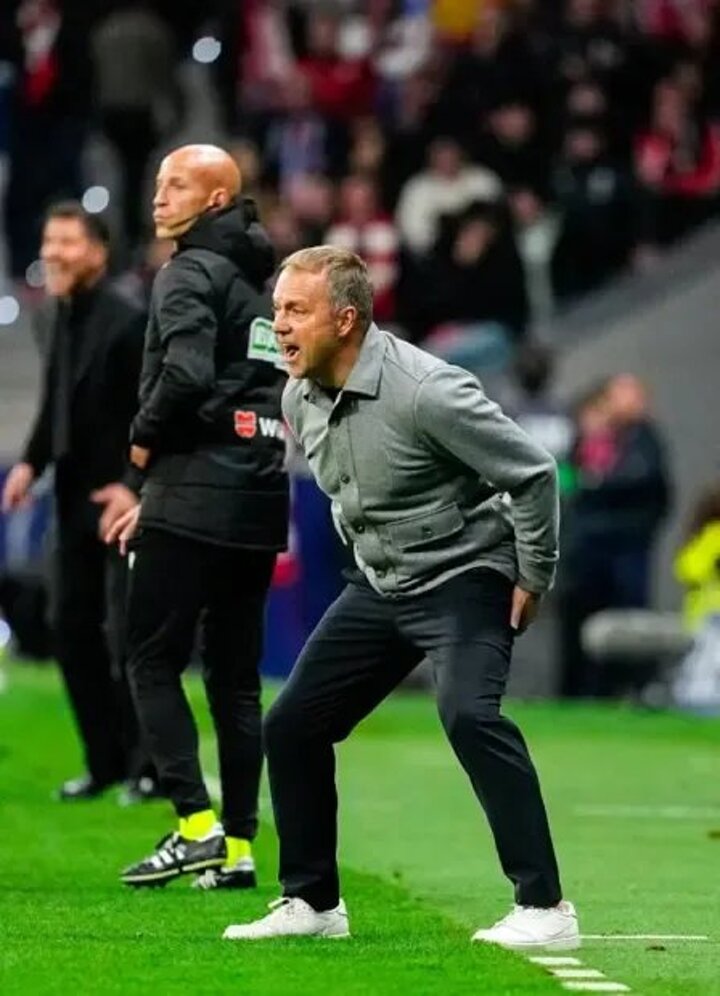
"I would sign a center-back tomorrow, but we have enough defense to fight for everything"
Regarding squad composition and Barcelona's defense, he believes the team needs to strengthen the central defense. "I would sign a center-back tomorrow," and he would have tried to keep I. Martinez. "Letting him leave was a mistake. I would have convinced him to renew for two years. Cubarsi is one of the best players in the world, Eric Garcia is a fantastic player. Kounde I would let go tomorrow, you also have Xavi Espart, and Balde, in my opinion, is also an excellent player. I like him a lot. Cancelo has a lot of defensive problems. But we have a defense good enough to fight for everything," he asserted in his analysis.
The TV show Johan Cruijff stopped
One of the key figures in Julio Salinas's career was Johan Cruijff, his coach during his time in the legendary "Dream Team." The former striker speaks of him with great admiration but also remembers his unique personality. "Johan was a genius, but he was difficult to deal with, he was like Jules Verne (elusive)," he explained.
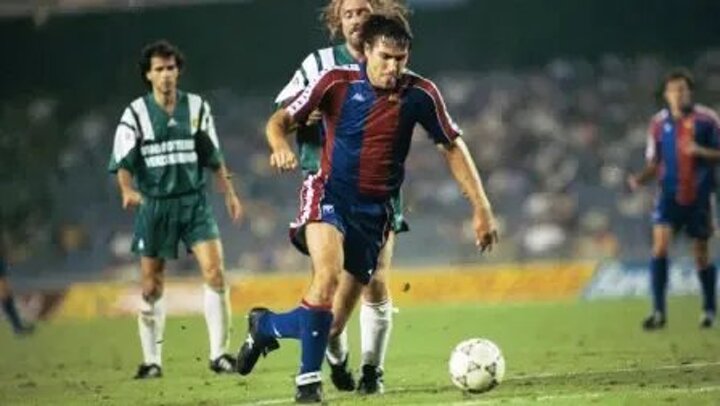
One of the most interesting anecdotes from that era was the story of "Fantàstic" – a TV show Julio Salinas produced with several teammates on TV3. Participants included Guardiola, Eusebio, Alesanco, and Txiki Begiristain, among others.
It was a weekly show that included competitions and interviews with players and famous personalities. The project grew and even considered a national broadcast version. In addition, they embarked on other businesses, such as a restaurant and a clothing store.
For Julio Salinas, all of this stemmed first from the general admiration for those players and a promising team. However, Johan Cruijff did not particularly like this endeavor. The coach believed that these activities could cause jealousy among other players and asked them to abandon it.
Salinas tried to explain to him that they were not doing things at the expense of their teammates, but rather shared some of the project's benefits with them. But Johan Cruijff's reply was a phrase the former player still remembers: "I've taken a weight off my shoulders... now I'm finally at peace because this way I can control all of you."
According to Salinas, Johan Cruijff explained to him that he himself could do other things, but "players like Guardiola and Eusebio had to focus entirely on football." Soon after, the show was canceled.
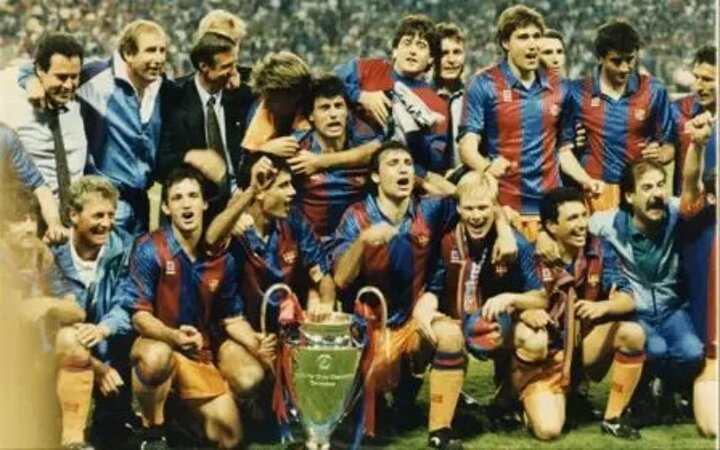
Wembley and the famous "go out and enjoy yourselves"
Salinas also wanted to clarify in "Cafè Culé" a famous quote attributed to Johan Cruijff before the 1992 Champions League final: "Go out and enjoy yourselves." "He might have said that to someone, I didn't hear it," he clarified with a laugh. "I experienced that final with tension, anxiety, and pressure. I never enjoyed myself in football."
The former striker started in that historic Wembley final, even though getting into the starting lineup was a complete surprise to him. "Johan called me on a Friday and asked me to his office; I thought he was going to kick me out because my contract was almost up, but he told me I was going to start. I thought he was crazy," he recalled. Johan Cruijff also gave him advice for that match: "He told me to take care of myself and not go out on the weekend. I was young and single, but I wasn't the type to go out partying. I don't smoke or drink, only juice or Cola Cao."
Diego Maradona, Andoni Goikoetxea, and a very difficult night
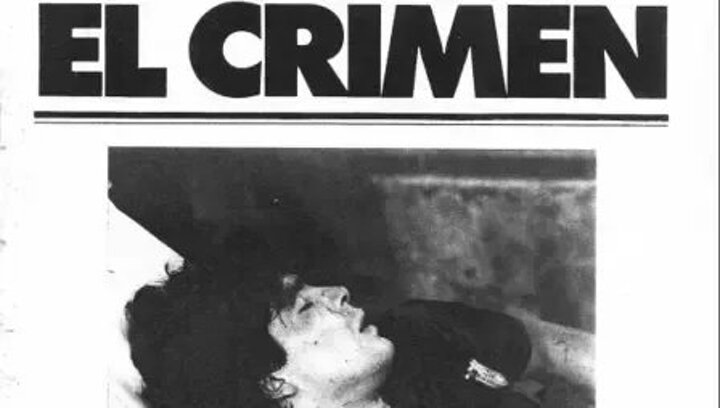
Another past event Julio Salinas recalled was the unfortunate night of September 23, 1983, when Diego Maradona suffered a serious injury after being tackled by Andoni Goikoetxea.
Julio Salinas was on the Athletic Club bench at the time and experienced the scene up close. "Such tackles were commonplace back then," he explained when comparing the football of that era to today's. However, what impressed him most was the atmosphere they faced after that match. "The way back to the Princesa Sofía hotel was very difficult. Everyone was cursing us. Of course, we injured Diego Maradona and also lost 0-4," he recalled. "Today's players are more protected," he concluded.
His conflict in Japan and Jose Maria Garcia's call
Julio Salinas also recalled his experience in Japan, specifically in Yokohama, where he had a complicated episode with Toño de la Cruz. The legend recounted his conflict with de la Cruz after the latter took over as coach "without notifying the person who held the position at the time" after Azkargorta was dismissed. "You did something very disloyal," Salinas reproached him.
But if there was one thing that particularly impressed him during that period, it was the call from legendary journalist Jose Maria Garcia after a match. This anecdote perfectly reflects how sports journalism worked back then. "They would notify you that he wanted to talk to you, ask where you were having dinner, and then call your landline. They would make you wait for over an hour so you couldn't talk to anyone else. But you couldn't refuse."
Julio Salinas explained that the show started at midnight, but the call could come much earlier: "He would call you at eleven, make you wait until half past twelve so you couldn't go on any other radio station. You would finish at twenty to one in the morning, and by then it was impossible to have dinner. You could only order dessert. See who could resist not ordering."
This is yet another story from a career full of experiences, characters, and anecdotes that help understand the journey of this great figure of Spanish football.