


After 22 matches in Serie A, Inter Milan have scored 50 goals. Among Europe's top five leagues, only Bayern Munich and Barcelona have scored more than Inter Milan, with those two teams netting 72 and 54 goals respectively in 19 and 20 matches.
However, in direct clashes against top-tier opponents this season, they have yet to demonstrate a lethal finishing edge. Statistics show that in the major matches they have faced so far, the Nerazzurri have scored only 9 goals. They scored 7 goals in Serie A (3 across both legs against Napoli, 3 against Juventus, and 1 against Roma) and 2 goals in the Champions League (1 each against Atlético Madrid and Arsenal).

Considering their overall scoring figures—50 goals in Serie A and 69 across all competitions—their output against strong opponents is clearly too low.
This season, Inter Milan have scored more than 3 goals in 10 matches and more than 2 goals in 19 matches, but against teams currently in the top six of the league table, they have secured only two victories.
Serie A firepower at full throttle
Despite this, Inter Milan still possess the most potent attacking force in Serie A and hold multiple records: highest expected goals (44.2), most shots on target per game (6.2), most big chances missed (62), most successful crosses per game (7.5, led by Dimarco), most touches in the opposition box (771), most corners won (152), and highest average ball recoveries in the final third.
Inter Milan’s goals come from many sources
Inter Milan employ a variety of goal-scoring methods, particularly through their left-flank combinations. Dimarco has contributed 5 goals and 7 assists (a unique feat across Europe’s top five leagues), while Bastoni has delivered 4 decisive passes. His most recent cross assisted Pio Esposito in scoring his third Serie A goal of the season. Across all competitions this season, 15 different Inter Milan players have scored (14 in Serie A alone, with Lautaro leading the scoring charts with 12 goals). Inter Milan have built a system where everyone contributes offensively, with striking partnerships such as Lautaro–Thuram, Lautaro–Pio Esposito, and Boni repeatedly delivering results.
Weakness and potential in Champions League attack
Inter Milan’s attacking performance in the Champions League has been a completely different story compared to their domestic form.

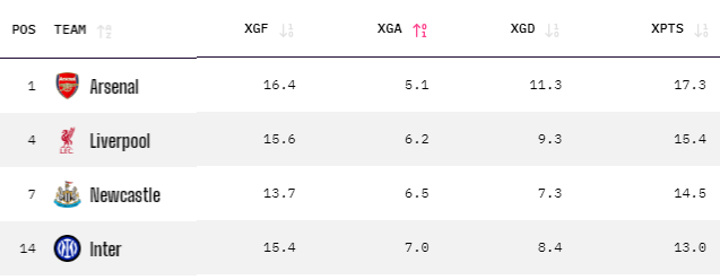
Having scored 13 goals in 7 Champions League matches, their attacking output ranks only 15th among the 36 participating teams. They have managed just 2 goals in their last 3 matches. Yet, they rank sixth in expected goals (15.4), 13th in shots on target per game (5.4), and second in big chances missed (24)—a clear reflection of creating numerous opportunities without converting them into goals. They are third in successful crosses per game (5.6), seventh in opposition box touches (232), and tenth in corners won (39).
On the Champions League attacking metrics, Inter Milan rank sixth in terms of offensive effectiveness.
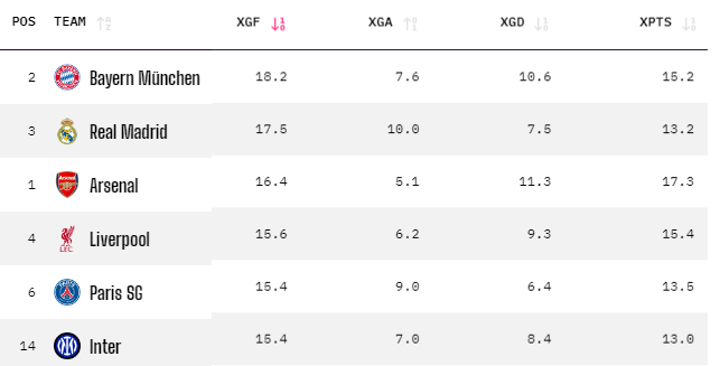
In terms of opponents’ expected attacking output— that is, defensive quality—they rank fourth.
In expected points from matches, Inter Milan rank eighth.
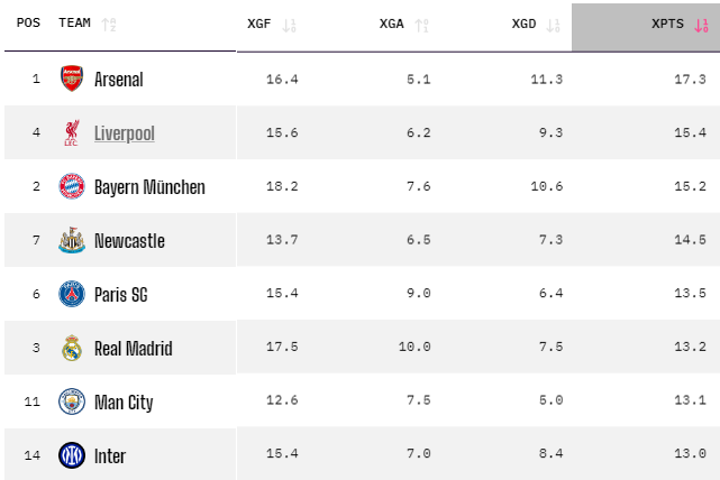
Yet their actual standing in the Champions League is only 14th.
Clearly, from both attacking statistics and performance metrics, if Inter Milan can improve their finishing efficiency, they should be earning more points.

Their next match comes on Wednesday evening, when Inter Milan face Borussia Dortmund in the Champions League. A win could, albeit with very low probability, allow them to advance directly to the Round of 16 without entering the knockout playoff stage. Inter Milan will still rely on their attack to try and break the deadlock.
Borussia Dortmund, meanwhile, have lost only once this year at their intimidating home ground, Signal Iduna Park.