


This article is reproduced and translated from The Athletic, originally published on October 31, 2026, by Simon Hughes.
Introduction: Araujo's Liverpool debut initially raised doubts, but in just two months, his relentless fighting spirit has changed perceptions and made him an indispensable player in Andoni Iraola's squad.
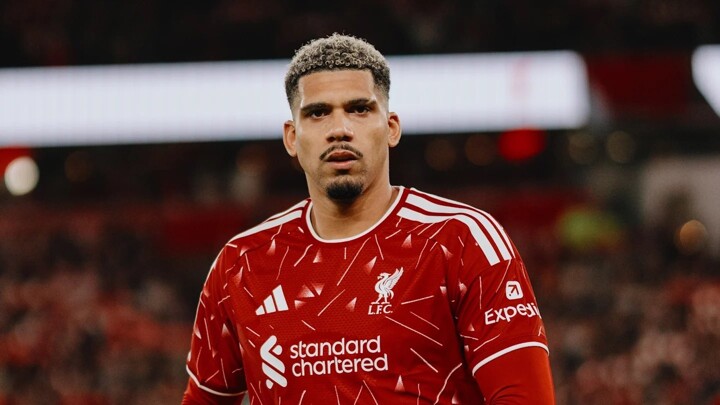
Araujo made his Liverpool debut against Nottingham Forest, coming off the bench to play at right-back. He lumbered onto the pitch like a wardrobe on billiard-table legs.
In recent years, he mostly played as a center-back for Barcelona, but Liverpool valued his versatility and big-game experience, which were hard to discern from that substitute appearance alone: Barcelona sometimes deployed him at right-back against Real Madrid, and he successfully contained Vinicius.
It was a blustery August afternoon in Merseyside, and Araujo looked awkward. He was short of match fitness, Andoni Iraola was still new to the job after taking over in the summer, and the whole team was adapting to a new tactical system. Liverpool ultimately salvaged a fortunate 2-2 draw.
Two months later, everything has changed. Andoni Iraola has steered the team through a tough run of fixtures and won five consecutive matches, and the "vertical football" he promised is beginning to take shape.
Meanwhile, Araujo has shown that first impressions can be misleading. He has firmly established himself as a starter, and his aggressive style and fighting spirit have fired up the Anfield crowd. His raw, impactful play makes this Liverpool team under Andoni Iraola even more compelling.
There's an unwritten rule in football: don't fall in love with a loanee. But at Liverpool, fans may already have fallen.
In several matches at the end of October, Araujo created moments that fans will remember. Against Villarreal, he scored the equalizer, then ran into the stands to celebrate with the supporters. The club even invited a young fan to meet him at the training ground.
Five days later, against Brighton & Hove Albion, he made a diving header clearance to avert danger in front of the Kop. Towards the end of the match, a fierce tackle from him lifted the whole crowd. Against Chelsea, he had a chance to score for the third time in five games, and he remained tenacious throughout.
In the 2017-18 season, Ramón Planes, then sporting director of Getafe, met Sergio Cabrera, the father of his player Leandro Cabrera. Sergio had coached the Uruguayan club Rentistas, where Araujo began his career as a forward.
Although Araujo was a decent goalscorer at the time, Sergio Cabrera believed he would only fulfill his potential by moving into defense, which he then did.
Planes asked Sergio Cabrera to recommend promising Uruguayan players, and he mentioned only one name: "There's a young man, a former player of mine, and I have high hopes for him. His mentality means his potential is immeasurable."
Planes said, "Uruguay was already a market I was watching closely, but at that time, I knew nothing about Araujo."
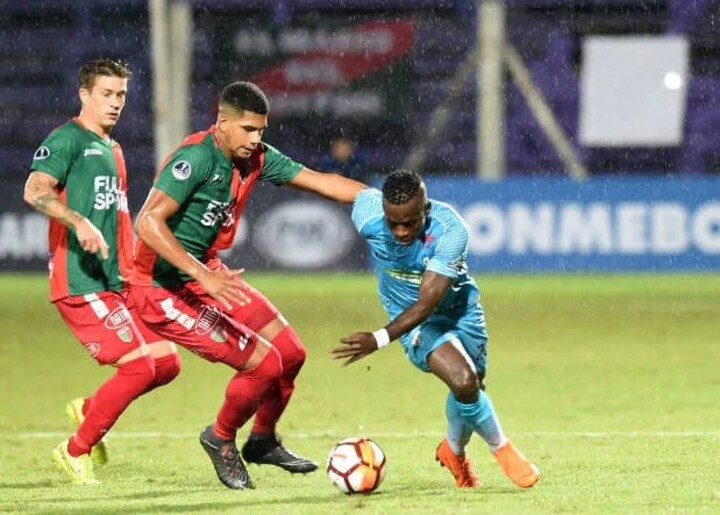
Over the previous 30 years, Planes had signed about 20 Uruguayan players. After an excellent season at Rentistas, Araujo moved to Boston River, in the Florida department, about 90 kilometers north of Montevideo.
Planes said, "Most Uruguayan players go from smaller clubs like Boston River to Peñarol or Nacional before attracting the attention of European teams."
But even as a teenager, Araujo already looked like an adult, with the physical attributes to handle a high-intensity league. This impressed Planes: "I flew to Uruguay to watch him play, and I watched two full seasons of his videos online. I decided to sign him, believing he could contribute to Getafe's first team immediately."
While Planes was pursuing Araujo, Barcelona made him an offer. In the summer of 2018, he decided to move to Camp Nou and persuaded Araujo to join him, with the player initially playing for Barcelona B.
"Playing for Barcelona would be difficult for Araujo, with very high expectations. But it's also a place that has forged many tough defenders," said Planes, citing Puyol and Miguel Nadal, two captains who led the club in different glorious eras.
"I told him that not only could he play for Barcelona, but with his character, he could even wear the captain's armband in the future."
Planes was also responsible for signing Pedri, who has since won three La Liga titles and a World Cup with Spain. Planes admitted that he was particularly drawn to Uruguayan players and admired their unique qualities.
Shortly before discovering Araujo, he had brought Mathías Olivera to Getafe, who later won two Serie A titles with Napoli. "Olivera was highly rated at Nacional but was unable to play for nearly a year because of a contract dispute. After coming to Getafe, he fought with all his might to prove himself. This fighting spirit is very common among Uruguayan players; none of them will easily say they can't do something."
In Uruguay, this fighting spirit is called "garra charrúa." Roughly translated, "garra" means claws or grit, and "charrúa" refers to the indigenous Charrúa people, who fiercely resisted European colonizers.
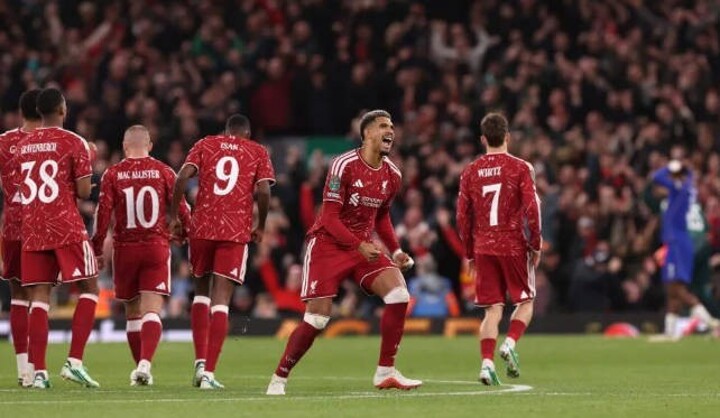
The term now stands for the fighting spirit ingrained in Uruguayan football. Uruguay won Olympic gold medals in 1924 and 1928 and the first World Cup, at home, in 1930. Twenty years later, they beat hosts Brazil against all odds at the Maracanã to lift the World Cup again.
After reaching the semifinals of the 2010 World Cup in South Africa, Diego Forlán explained it this way: "It's that drive to push a little more, even when you're completely exhausted."
Uruguay has also won 15 Copa América titles, only slightly fewer than Argentina and more than Brazil. Ondino Viera, the Uruguayan coaching legend who worked extensively in Brazil, famously said: "Other countries have their own history, Uruguay's history is football."
Uruguayan writer and publisher Andreas Campomar said: "Uruguayans inherently feel special, even though our population is far smaller than our neighbors'. We genuinely believe we can succeed."
Uruguay has a population of about 3.5 million, Argentina nearly 45 million, and Brazil an estimated 214 million. Sandwiched between two football powerhouses, Uruguay inevitably feels overshadowed, and the need to gain attention translates into an all-out effort on the field.
"Uruguayan players are used to leaving everything on the field. Many say this is true of all South American players, but the style of play in some northern South American countries is different. In Uruguay, hard, physical defending is considered part of the game, and at the same time the country keeps producing technically refined players."
Campomar pointed to a long-standing contradiction in Uruguayan football: the coexistence of elegant, delicate footwork and raw, fierce physicality. At the 1986 World Cup, in a draw with Scotland that helped Uruguay advance from the group, José Batista was sent off after just 56 seconds, which remains the fastest red card in World Cup history.
Campomar said: "Araujo clearly enjoys defending. You can feel it when he clenches his fist after blocking a cross. This is a manifestation of the Uruguayan character: there is a strong defensive culture in the country, but it also embraces technical players. While defenders worldwide are now required to take part in attacks, Uruguay still respects the value of traditional defenders, and stopping opponents is as much a source of pride as beating them."
Araujo was born in Rivera, Uruguay's northernmost border city. His mother is Brazilian and works as a cleaner; his father works in the timber industry, and Araujo saw him only at weekends. He recalled in a 2023 interview: "My dad would leave for work on Monday. That's how it was for me growing up, and there was often not enough food at home." His parents are simple country folk, and whenever they came to Barcelona, they wanted to go home after a few weeks.
Uruguay's tourism board promotes "Natural Uruguay," drawing tourists to its vast inland grasslands. Campomar said there is another contradiction here: the pastoral legends of the Pampas on one side, and on the other the reality of a large population settled in Montevideo.
Araujo is not the only Uruguayan star from a small rural town: Suárez and Cavani were born in Salto, and Núñez comes from Artigas. Campomar said: "These players are proud of their hometowns, but they know they first have to go to Montevideo and then, most likely, to Europe."
"They endure immense culture shock, unprecedented scrutiny and heavy pressure from matches. Araujo later went through a rough spell at Barcelona, and I'm surprised that more players don't crack under the pressure."
Before Araujo joined Barcelona, other teams were already interested in him. Planes thought highly of him, but at the time some also questioned whether Araujo's style fit Barcelona's footballing DNA.
In a 2022 interview with Barcelona's official website, Araujo spoke about the club's unique football philosophy. Initially, in training drills in tight spaces, he often lost the ball in all three of his attempts. Frustration drove him to stay on the training ground for long periods to hone his passing and ball control, and he even bought cheap balls from discount stores for extra practice: "If there was training in the morning, I would come back in the afternoon for extra practice."
He also said that he reviews footage of every match he plays and studies opponents' videos to prepare, analyzing which foot an opposing player prefers and in what situations he cuts inside or changes direction: "I can watch eight games in one weekend. Sometimes my wife complains that I'm glued to the TV all day."
Araujo only began playing competitively in his teens, and these training sessions were never a burden for him. Planes believes that not being immersed in the European youth academy system from an early age allowed Araujo to keep a strong thirst for knowledge: "Everything new excited him. I still remember the sparkle in his eyes the first time he walked into Barcelona's training ground."
Araujo first captained Barcelona B, then wore the first-team captain's armband. At that time, the Messi era was drawing to a close and the club was going through a huge transition. Araujo became one of the most vocal players in the dressing room; whenever new signings arrived, he would welcome them and organize team barbecues.
In his first-team debut in 2019, Araujo received a red card, but just three years later he signed a contract running until 2026 with a €1 billion release clause. He won La Liga with the team, and several top European clubs came calling, with Tuchel keen to bring him to Bayern, but Barcelona refused to let him go, seeing him as a cornerstone of their new-era defense.
Planes said that Araujo's speed and strength allowed Barcelona to push their defensive line high and play their characteristic short-passing, possession game in advanced positions: "He always had the potential to be a world-class defender. Besides his physical talent, he is focused and humble.
But at Barcelona, it's not easy for such players to survive. The club adheres strictly to its football style. Once a mistake is made, the pressure from fans and media is overwhelming."
In 2024, Barcelona lost 4-1 to Paris Saint-Germain, and Araujo was sent off for pulling Barcola's shirt. He was heavily criticized after the match. Gündogan's comments further fueled doubts about his ability, with Gündogan saying directly that the foul "ruined the game."
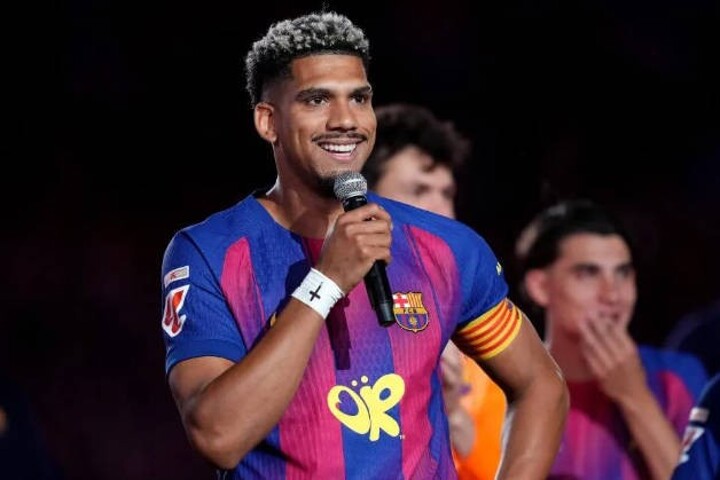
The team then won La Liga in both 2025 and 2026, and Araujo was appointed captain during this period. But last season, after receiving another red card in a match against Chelsea, he chose to step away temporarily. Araujo later explained that the overwhelming online abuse and death threats against his children forced him to stop.
In an interview in June this year, he said: "It's not easy for someone at a club like Barcelona to say, 'I'm in trouble, I need help, I need a break,' but when I said it, I had no fear because I understood that I needed help, and I was willing to bear all the consequences."
"I am very grateful that the club took it seriously and gave me immense support. Deco, Alejandro (an advisor close to Joan Laporta), everyone on the board, my teammates: everyone understood and helped me. We should be more open about these things. There are too many taboos in football, and these kinds of difficulties exist throughout society."
When he returned to the field, the Camp Nou stands chanted in unison: "Uruguayan, Uruguayan." His contract with Barcelona runs until 2031, but sources with knowledge of the situation say that this summer, after discussions with Deco and Flick, he wanted a fresh start.
Planes believes Liverpool and Anfield are the perfect destination for him: "I know Andoni Iraola very well. His tactical style, which focuses on one-on-one duels, is very suitable for Ronald. Araujo is an extremely strong battler, and Anfield is already responding to him with cheers."
Sources within Liverpool say that Araujo does not feel Barcelona owed him anything. On the contrary, he appreciates the club's honesty and thanks Barcelona for doing their best to find him an ideal destination.
At the start of this summer, Liverpool had not planned to sign another defender, but Joe Gomez's injury in pre-season forced the club to adjust its transfer plans. Like Gomez, Araujo can play at least two positions, and he was willing to accept a pay cut. The loan deal includes an option to buy, with the fee set at €55 million.
Liverpool have historically rarely made loan signings permanent, but fans are already hoping the club will trigger the option on Araujo. Last season, the team often found itself at a disadvantage in duels. With Araujo's arrival, plus another new tall defender, Jérémy Jacquet, who stands over 1.8 meters, defensive stability in the box has improved markedly.
Sources say that Araujo's English is improving rapidly, but for now he communicates more smoothly in Spanish. This has not affected his ability to command the defense on the field. In the tunnel before matches, he can always be heard shouting loudly.
Andoni Iraola's training focuses on breaking down opponents' high presses. Araujo's recovery speed has repeatedly helped the team out of dangerous situations, offsetting the inherent risks of this style of play. In recent fixtures, he has been substituted at halftime twice, both times for tactical adjustments, but this has not dented his confidence in the slightest.
Before the League Cup victory over Chelsea, Trey Nyoni told Liverpool's official media: "Araujo inspires everyone to fight... he's willing to give everything, and seeing teammates like that makes everyone understand even more what it means to play for Liverpool."
Campomar also believes that Araujo's background and character are a better fit for Liverpool than for his parent club, Barcelona: "Camp Nou is very demanding, even of players who have served the club well, but Anfield is different; they remember."