


Portuguese media outlet A Bola published an opinion piece reflecting on Ronaldo's farewell from the national team, noting that although the 41-year-old star did not depart in the ideal manner, the memories and goals he left behind will endure.
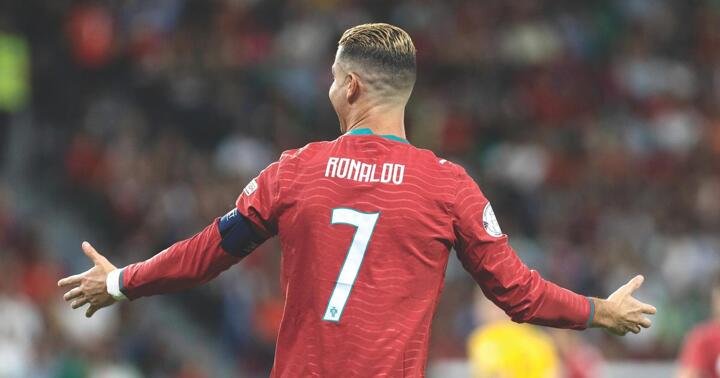
We had imagined a different scene. A packed stadium. A real match. And, of course, Ronaldo scoring. Because even at the moment of farewell, we still demanded goals from him. Then, with the national team jersey tight against his body, at that moment, a man would look at the stands and realize he no longer needed to run. He could stay there. We waited.
But it wasn't like that. What remained was a video. Before that, a bench appearance in Norway, a warm-up without playing, some words Ronaldo claimed were taken out of context, and a departure from the training camp. The last game had already happened. No one knew it would be the last. This is always the saddest part of such endings. Sometimes, life closes doors when we are elsewhere.
Certainly, this was not the farewell Ronaldo dreamed of. But he also had a hand in writing it. And many who once revered him as a god were, at some point, eager to interpret the text to crucify him. It was the extremism that overwhelmingly defeated moderation and prudence. Because the only thing a crowd likes more than elevating an idol is watching him fall. Some approach the decline of a great player with the joy of finally finding a rich man among the unemployed. As if getting old were an admission of guilt. As if time had finally proven them right all along.
Falcao, one of Brazil's football stars, once said that players die twice. The first time is when they stop playing. No matter who they are. These words came from a man who controlled Brazil's midfield in 1982 and is still considered one of Roma's greatest players. He knew the absence of football before he knew football itself. The other half of the same sentence, also from Falcao, reveals the cruelty of unrequited love: "It's not the player who leaves football. It's football that leaves us."
Ronaldo fought against this first death for many years. He arrived early. Trained more. Refused a dessert, a sleepless night, an afternoon without extra training and rest. There is something touching in this stubbornness. This man lifted weights as if barricading a cabinet against a thief. For a long time, it worked. To some extent, it still works. At 41, with every precise shot he scores in Saudi Arabia, he gets closer to a thousand goals. But the thief is still at the door. Waiting patiently.
The end can be postponed. Avoiding it is another matter. At some point, the legs still obey, the goals still come, but the position is changing. The coach looks at the bench. A youngster starts warming up. Football doesn't even need to take our ball away. It just needs to stop promising that the next one belongs to us.
This departure always seemed difficult to be peaceful. Not only because of Ronaldo's personality. But also because of the world we built around him. For years, he was responsible for solving the problems of an entire team. He saved coaches from embarrassing explanations. He gave teammates nights grander than their own abilities. When a man does this so often, he eventually confuses gratitude with entitlement.
The flaws are not new. There was always that annoyance – he seemed to believe that every ball deviating from his path was a small injustice. Then he would score two goals. Or three. The stadium would rise, and the arguments would subside.
Ancelotti once described the ease of working with this professional. Zidane also understood him and, under his wing, won three consecutive Champions League titles at Real Madrid. There's no need to deny their contributions to acknowledge the problems. There was effort, intelligence, and an intense desire to win. There were also enough goals to make many things tolerable. Football has remarkably flexible morals when winning.
It was a shared education. He nourished the team. The team nourished the idea that everything depended on him. Now asking him to sit quietly and accept that he is just one of many possibilities is like asking a man to learn another profession without changing jobs. Should he do it? Yes. But it's always easier to talk about others.
This week's video had a dignity that other moments lacked. Ronaldo spoke about the national team. About the people. About Portuguese people far from home. The nation was there. His footprint in Portugal. Disagreements were excluded, which is good. It doesn't resolve what happened. Nor does it need to. A farewell is not a courtroom, no need to bring witnesses to prove who started it.
The issue with Jorge Jesus might have accelerated the end, but it did not create the abyss. Ronaldo himself admitted that he wrote a farewell letter after the World Cup. The feeling of ending his journey with the national team existed before recent events. But it existed. Only he knows how long that piece of paper was hidden in his heart.
There's no need to pardon him to feel sad. Nor to condemn Jesus to thank Ronaldo. One day we will be able to talk about these years without turning every memory into a vote for or against the captain. It's still difficult now. The argument is close at hand. We can barely see the pitch.
But we will see it. Three goals against Sweden. Three goals against Spain. And many other goals. Those nights when Portugal seemed small, and he refused to accept that scale. These will remain. Controversy has the shelf life of an open can of soda. Memories are nourished by something else.
As Falcao said, players die twice. But some works continue to breathe in the eyes of those who have seen them. Ronaldo will leave the pitch. Football will continue to search for him in each of us.