


According to reports from El Correo de Andalucía, Antony's current poor form may be due to psychological factors. This season, apart from his stats, we haven't seen the decisive, direct, and daring player of Real Betis. He has gone from being a fan favorite to being criticized multiple times for his performance. He hasn't played a full 90 minutes since the match against Porto and has been the first player substituted in five consecutive games. Only in the match against Málaga was he not the first to be replaced, as he came on as a substitute, so that doesn't count as being the first one subbed off.
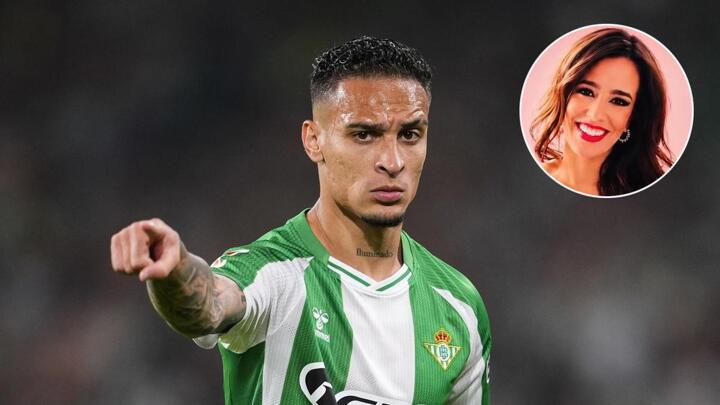
Furthermore, in these situations, the games were not settled. Antony was not the primary ace to resolve games or rely on in critical moments. He is far from his best form, and he himself seems aware of this through his actions. Therefore, El Correo de Andalucía contacted psychologist Lara Ferrero to understand his situation from a psychological perspective. "The more desperately we try to get back to our best, the further away we get from it," she said about the Brazilian player's level.
Ferrero explained: "We are talking about a footballer known for his joy, spontaneity, willingness to take risks, and emotional connection with the fans. However, based on the behavior observed on the field, he now appears more withdrawn, insecure, and frustrated." She added that this could lead Antony to "enter a cycle of pressure that ultimately affects his performance."
Before making any assessment, the psychologist, author of the book "No More Fools!: The Ultimate Guide to Loving Yourself and Finding the Perfect Partner," emphasized the importance of understanding Antony's psychological profile. Referring to the Real Betis winger, she said: "We are talking about a footballer characterized by intense emotional expression, a strong sense of competitive protagonism, and a playing style closely linked to self-confidence." When talking about the Brazilian player, we refer to "an athlete who finds significant sources of motivation in interaction with his environment and in the satisfaction derived from feeling capable of changing situations."
How Real Betis' ambitions affect Antony's performance: "His security relies too much on applause or criticism"
We already know the importance of the fans to this player. One of the most striking things since his arrival in the winter transfer window has been the connection established between the player and Real Betis fans. He has been connecting with Real Betis fans both on the field and on social media. However, as Ferrero explained, this can be a double-edged sword: "When someone places excessive importance on the approval of others, their sense of security risks becoming overly dependent on applause, criticism, or results."
"Self-demand can also play an important role," added the psychologist, explaining that "it becomes a problem when it turns into rigid perfectionism." That is, "he might interpret mediocre performances as personal failures and experience disproportionate frustration," making it crucial to analyze "how he interprets his mistakes and his expectations of himself."
Antony's current performance on the field worries Real Betis fans because it doesn't align with their impression of the player. The playing style characteristic of Real Betis' "number 7" has not been evident at this stage of the season. He has yet to score a goal this season and has only provided one assist, but beyond the statistics, we also don't see the confident player who dares to take on defenders in the final third. Ferrero elaborated: "One of the psychological phenomena that can explain this shift is the transition from a enjoyment-oriented mindset to a mindset focused on avoiding failure."
"In sports psychology, we know about the phenomenon of analytical paralysis, which occurs when a person tries to consciously control skills that were previously performed automatically. The player starts to overthink, hesitates before acting, and loses the spontaneity that allowed him to perform: the more he tries to ensure everything is perfect, the more likely he is to get stuck," she analyzed.
Similarly, what is known as "performance anxiety" can also occur, which is a psychological response that arises when athletes feel they must meet certain expectations and fear they cannot achieve them. As Ferrero explained, this can lead to "more conservative decisions, less aggressiveness, and a constant feeling of being under scrutiny."
The importance of player confidence: "He might focus more on his mistakes than on the game"
Another crucial aspect is "the vicious cycle that can arise when a footballer is in a slump." Ferrero explained that "what might initially be a temporary sporting difficulty can end up becoming a self-perpetuating confidence problem." At that moment, "internal dialogue is crucial." "When thoughts like 'I'm not who I used to be,' 'I can't do anything right,' or 'I'm going to fail again' appear, the person can enter a state of hyper-vigilance where they focus more on their mistakes than on the game," the psychologist detailed.
Likewise, another vital psychological concept in this context is "football self-efficacy, which is a person's belief in their ability to successfully execute certain actions. When a footballer accumulates positive experiences, their self-efficacy usually increases, but it diminishes when mistakes and criticism follow," she emphasized. However, contrary to what many might think, "the problem is not about recovering technical ability, but about rebuilding the psychological security necessary to use that technique naturally."
One issue that might currently be putting pressure on Antony, similar to what he might have experienced in the past at Manchester United, is "the burden of expectations." He was a player Real Betis invested heavily in, and his contribution to the team's results could have been significant. Now, with the increased level of demands, especially personal ones, additional pressure arises when players start to feel they must constantly live up to this star image.
Ferrero explained that this could be related to "maladaptive perfectionism and self-esteem overly linked to performance." "Athletes may experience intense fear of disappointment, as they feel that not only their professional performance is affected, but also the recognition and admiration they have gained," she added.
How Antony might perform in the Real Betis vs. Sevilla derby: "A top-level competition represents an opportunity to prove one's worth"
Now, Real Betis' next match will be away at the Sánchez-Pizjuán, which could be the most anticipated league match for Pellegrini's team. However, Ferrero stated that the importance of the match could be a "watershed moment" for Antony. "When a footballer feels that a top-level competition represents an opportunity to prove their worth, they can experience immense emotional pressure," the psychologist explained, adding to the importance of the match: "The psychological danger is if Antony approaches this derby with the mentality of needing to prove he is still that decisive player who captivated the fans."
Ferrero warned that this could be crucial for a player in Antony's situation: "If he sees this match as a decisive exam, he might end up suffering from the pressure of having to stand out." She analyzed: "This is the paradox of this type of match: the perfect opportunity the player imagines to relieve pressure might precisely become the scenario where he experiences the most pressure."
Antony expresses the importance of happiness for performance
We must also understand the importance of players maintaining happiness in their daily lives. After qualifying for the Champions League last season, Antony said: "Brazilian players need to be happy to play, right? No matter how good you are, you can't perform when you feel unhappy and lack confidence. I say this because I believe that when you reach the level of a European professional player, no one needs to teach you how to play. The important thing is to take care of your mind and stay in good spirits to perform on the field." These remarks perfectly explain his performance in the first half of this season.
For Ferrero, in this situation, the "flow state" becomes particularly important. "The flow state occurs when a person is completely immersed in an activity and feels that their abilities match the challenge they face," she explained, to understand Antony's contrast: "It is harder to achieve this state when worries, self-criticism, and fear of making mistakes dominate."
Summarizing the case, Laura Ferrero explained: "This raises a problem that affects many elite athletes: the fear of not meeting expectations, and perhaps even the impostor syndrome in football, which is when you feel you are not good enough and the image others have of you puts pressure on you. Fans often demand a lot from them. Athletes can get caught in the dilemma of knowing what they can do, what they think they should achieve, and the fear of disappointing those who trust them."
Therefore, for Ferrero, Real Betis fans play a crucial role in helping their star return to his best form: "What is truly important is to help him recover a healthy relationship with his profession, strengthen his self-esteem beyond results, and rebuild the psychological freedom he needs to display his talent."